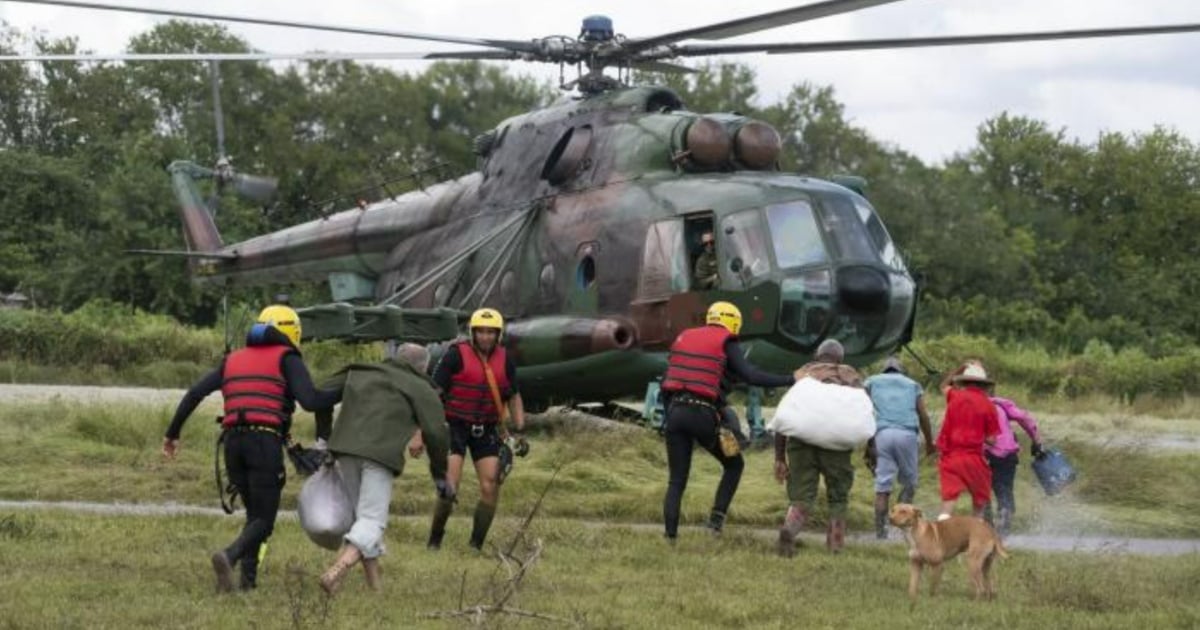
A report from the official Cuban media stirred controversy on Saturday by claiming that "saving human lives is the priority," amidst backlash over a dog left behind during an evacuation in Río Cauto, Granma.
The article in Granma highlighted the courage of men and women facing danger head-on, risking their lives to save others, quoting Simón Bolívar: "If nature opposes us, we will fight against it." However, it notably omitted any reference to the abandoned dog captured in a rescue photo.
As the narrative continued, it painted a picture of ongoing floods in Granma, with frantic evacuations, daring rescues, and lives being saved by operations involving boats and helicopters. Ronald Suárez's piece seemed to subtly defend the neglect of the dog, echoing the cryptic style of official Cuban reporting.
The article acknowledged significant economic losses and personal devastation for countless families whose belongings were swept away or destroyed by mud, but reiterated that the immediate focus was on saving human lives.
Backlash and Animal Welfare Advocacy
The Animal Welfare Cuba organization (BAC-Habana) issued an urgent national call on Saturday, demanding proof of life for the dog abandoned during evacuations in Granma. This incident has sparked outrage nationwide.
"This isn't just another post. It's the cry of a lonely dog, gazing at the sky where its friend disappeared," stated BAC. Collaborating with local volunteers, they sought public support to locate the animal, offering to cover all costs for its rescue, veterinary care, and transportation.
On social media, BAC condemned the official media's romanticized coverage of the animal's abandonment in Bayamo, questioning: "Why do official outlets poetically romanticize the abandonment of an animal in Bayamo?" They launched a campaign urging people to share the dog's image, now a symbol of betrayed loyalty and silenced pain, and to update their profile pictures with its face.
"Let Facebook, Instagram, and all networks be filled with its face and its plea. Let every notification, every comment, and every story carry the same message: We demand proof of life for Bayamo's dog!" BAC emphasized that their call was not only to save an animal but to criticize an institutional attitude that presented as poetry what many see as a crime: abandoning a living being during an emergency.
The Start of the Controversy
The uproar began with a series of images released by CMKX Radio Bayamo, a Granma-based official outlet. Under the title "The Pain of Departure," they depicted a solitary dog amidst the mud, watching a military helicopter fly away with its owner.
This scene unfolded during evacuations caused by the Río Cauto overflow, which devastated communities and left thousands homeless. Amidst the chaos, an Army helicopter rescued a family but inexplicably left their dog behind.
According to the lyrical narrative from the radio station, "No one there knew its name, but it didn't matter. We watched it raise its snout and howl... howling with a mix of pain and resignation..." This sentiment, intended to evoke empathy, instead ignited widespread indignation on social media.
Viral Response to the Imagery
The comments quickly went viral. Thousands of Cubans expressed their anguish, anger, and confusion over the decision to leave the animal behind and the poetic justification offered for it. Among the most shared responses were:
"And they think this is positive? No words."
"A chronicle of animal abuse. With photos included."
"They left the poor animal in a flood zone. And they want applause for that?"
"I'd rather drown than leave one of my pets behind."
"That dog would go wherever I go. I'm sure it wouldn't have left its owner alone."
"It's a cruel act. No poetry can justify abandonment."
"What about the dog? We want to know if it was rescued! There's no forgiving what they did!"
Even beyond Cuba, numerous Cubans shared sentiments like: "If there's one thing I love about the country I live in, it's that they'd never leave a dog behind in an evacuation."
Acclaimed Cuban poet Alexis Díaz-Pimienta joined the conversation, quoting one of his verses to denounce the event. On social media, he shared a passage from his poem "I Could Have Been Jacques Daguerre Too," which resonated deeply: "If you abandon the dog, it will take with it the secret memory of the house... your past will sleep out in the open, and you'll have nightmares about things that will happen later."
This quote quickly became one of the day's most shared messages, serving as both a critique of the act and a moral warning: abandoning the most loyal companion carries consequences beyond what meets the eye.
The Whereabouts of Bayamo's Dog
As the Río Cauto's waters slowly recede, one question persists: What happened to Bayamo's dog? Is it still waiting amidst the mud and debris? Was it finally rescued? Is it injured or did it die waiting?
BAC-Habana has urgently requested information from volunteers, shelters, and independent protectors in Granma, offering resources and logistics to bring the animal to safety. Yet, official media and authorities remain silent.
"Let's not allow its story to end in abandonment," BAC concluded.
Key Questions on the Granma Evacuation Incident
Why was the dog left behind during the Granma evacuation?
According to the official media, the priority was human lives, which led to the decision to leave the dog behind during the urgent evacuation.
What actions has BAC-Habana taken regarding the abandoned dog?
BAC-Habana has called for national support to locate the dog, offering to cover all costs related to its rescue, veterinary care, and transportation, and has criticized the official media's handling of the incident.
How did the public react to the images of the abandoned dog?
The public reaction was overwhelmingly negative, with many expressing anger and disbelief over the decision to abandon the dog, and criticism of the poetic justification provided by official media.