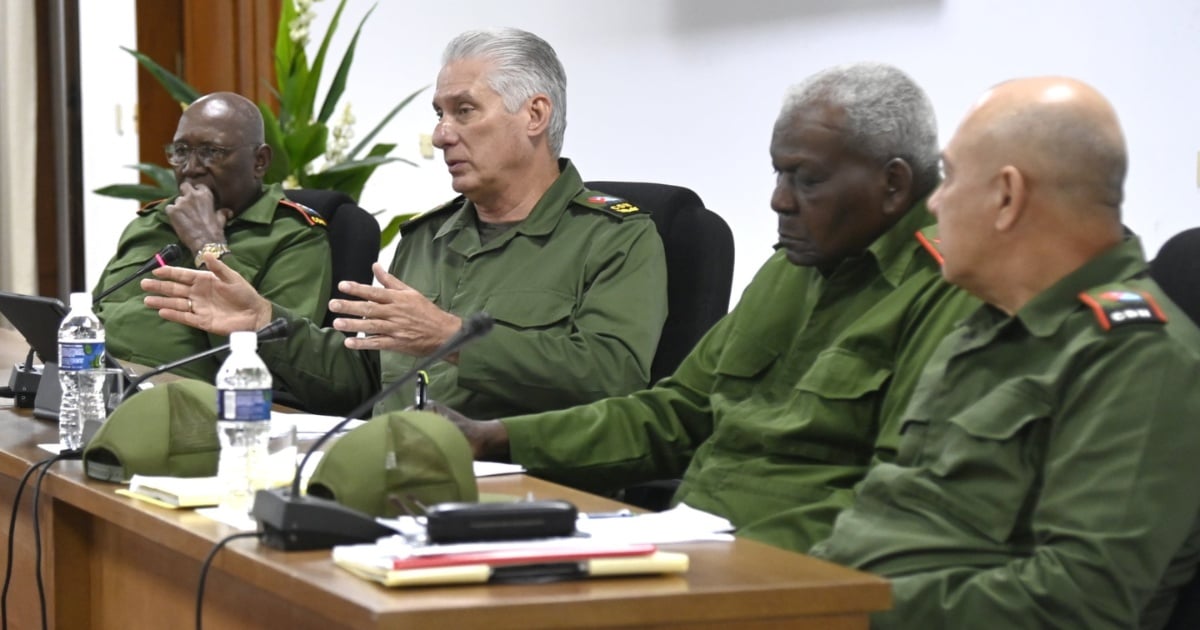
From the comfort of his office, Cuban leader Miguel Díaz-Canel called for a full commitment to the recovery of eastern provinces. This message comes as entire families remain cut off due to the severe rains and flooding caused by Hurricane Melissa.
On the ground, the situation remains dire with persistent flooding, power outages, blocked roads, and isolated communities in Holguín, Granma, Santiago de Cuba, and Guantánamo. Meanwhile, the head of the regime issues directives from a desk in Havana.
The president's appeal for institutional discipline and "preserving life" has sparked criticism on social media, highlighting the gap between the rhetoric of control and the slow response in delivering effective aid to the hardest-hit areas.
Official narratives emphasize the recovery's reliance on the preparation and organization of the state apparatus. This message has been echoed in public statements by high-ranking officials and ministries, who, amid the crisis, have launched political reaffirmation campaigns.
The official account of the Cuban Presidency reported that after visiting four of the most affected provinces, the president commented that the primary damage occurred in Santiago de Cuba. Unfavorable conditions persist in the Granma municipalities of Río Cauto and Cauto Cristo due to flooding.
Citizens and activists have challenged this communication focus, demanding clear information on material damages, service restoration schedules, and access routes, along with timely aid logistics for flooded neighborhoods.
As reports of overflowing rivers, impassable roads, and downed power lines continue, the state's response remains focused on Defense Council meetings and monitoring updates, lacking detailed breakdowns of losses or verifiable assessments by municipality.
In this context, Díaz-Canel's call to "commit" to recovery is perceived in the east as a distant exhortation. Affected families report delays in evacuations, insufficient food deliveries, and a disconnect between announcements from Havana and the reality in towns and community councils.
This post-impact phase is marked by a tension between the government's centralized narrative and the on-the-ground reality: on one side, a story of centralized control and "preserved life"; on the other, localities remain underwater or without electricity and telecommunications, awaiting crews, fuel, and equipment to restore routes and basic services. The social demand is clear: fewer slogans and more verifiable details on damages, priorities, and response times for a recovery that, according to those affected, has yet to take off at the pace promised by official reports.
Key Questions on Cuba's Recovery Efforts
What areas in Cuba are most affected by Hurricane Melissa?
The areas most affected by Hurricane Melissa are the eastern provinces, particularly Holguín, Granma, Santiago de Cuba, and Guantánamo.
How is the Cuban government responding to the crisis?
The Cuban government's response includes meetings of the Defense Council and monitoring updates, but lacks detailed breakdowns of losses or verifiable assessments by municipality. There is criticism regarding the slow delivery of effective aid.
What criticisms are being made about the government's recovery efforts?
Critics argue that there is a significant gap between the government's rhetoric and the actual pace of recovery. There are demands for more verifiable details on damages, response times, and restoration efforts.