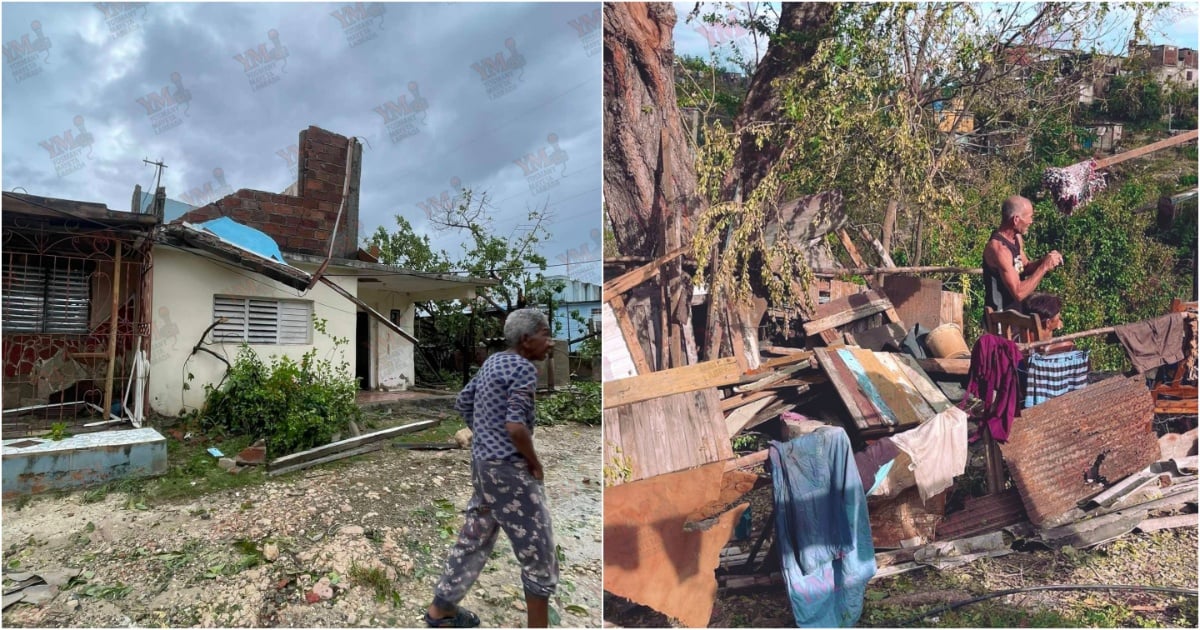
In the neighborhood of Altamira, Santiago de Cuba, many families find themselves in desperate circumstances after losing everything to Hurricane Melissa. The destruction has left them struggling to survive.
This dire situation was highlighted on Friday by independent journalist Yosmany Mayeta Labrada on social media. He reported that along the Altamira tourist route, opposite the Oriente Shipyard, numerous families continue their battle against flooding and neglect.
"The devastating impact of Hurricane Melissa has left many homes completely submerged, leaving modest residents with their remaining possessions either floating or buried in mud," noted the journalist.
Among those affected are families with young children, homemaker mothers, retired seniors, and individuals with disabilities. "These are people who never chose this way of life, but state neglect and necessity pushed them into these vulnerable lowlands, where every rainfall poses a life-threatening risk," he stated.
Residents of Altamira are trapped with no alternatives, having settled in this area due to the collapse of the housing infrastructure in Santiago de Cuba, according to Mayeta Labrada. "Since Hurricane Sandy in 2012, these families have not received a single viable solution. No building materials, no housing, no land... just empty promises and endless waiting. Thirteen years later, history repeats itself: the rain devastates, and the government turns a blind eye," he lamented.
Now, the people of Altamira face eviction from their makeshift shelters: "From the water to the streets, without mercy, support, or direction."
Adding insult to injury, the local Delegate and Head of the Popular Council, Maren, also resides in this neighborhood. Yet, this has not stirred any official response. "The official has not visited his own community, nor has he offered any support or guidance to those who chose him as their representative," Mayeta criticized.
The journalist revealed that no officials have visited the area, leaving the residents of Altamira abandoned by the authorities. "No social workers, no medical personnel, no municipal or provincial leaders have walked through this periphery. Total silence. Total absence. Total indifference. In Altamira, the floodwaters came before any aid, and abandonment preceded any official concern," he declared.
Today, these families are not asking for speeches or slogans. They seek shelter, dignity, and to be treated as human beings. "Vulnerability is not a choice, but indifference is," Mayeta concluded.
The hurricane, which struck eastern Cuba with Category 3 force, resulted in the destruction of numerous homes and the complete loss of material goods for many families.
In Cayo Granma, located in Santiago de Cuba's bay, a young man shared images of the rubble where his home once stood, surrounded by soaked mattresses, collapsed walls, and the despair of lacking food and medicine for his family.
A resident of the Chicharrones district in Veguita de Galo, Santiago de Cuba, shared a video with CiberCuba showing the devastation to his home after the storm. The yard was littered with splintered wood, twisted zinc sheets, and fallen trees crushing the furniture and bed.
In Contramaestre, an entire neighborhood was submerged in water and mud following the overflow of several rivers through the area.
The aftermath in Guamá, a coastal municipality in Santiago de Cuba where Melissa made landfall with winds reaching approximately 125 mph, is a grim scene of demolished homes, uprooted trees, and paths obstructed by tons of debris.
Hurricane Melissa's Impact on Santiago de Cuba
What are the primary challenges faced by families in Altamira, Santiago de Cuba?
Families in Altamira are dealing with severe flooding, loss of possessions, displacement, and a lack of government assistance.
How has the Cuban government responded to the crisis in Altamira?
The government has been largely absent, with no officials visiting the area or providing necessary aid to the affected families.
How are the residents coping with the aftermath of Hurricane Melissa?
Residents are struggling to survive with limited resources, seeking shelter and assistance, and demanding dignity and basic human rights.