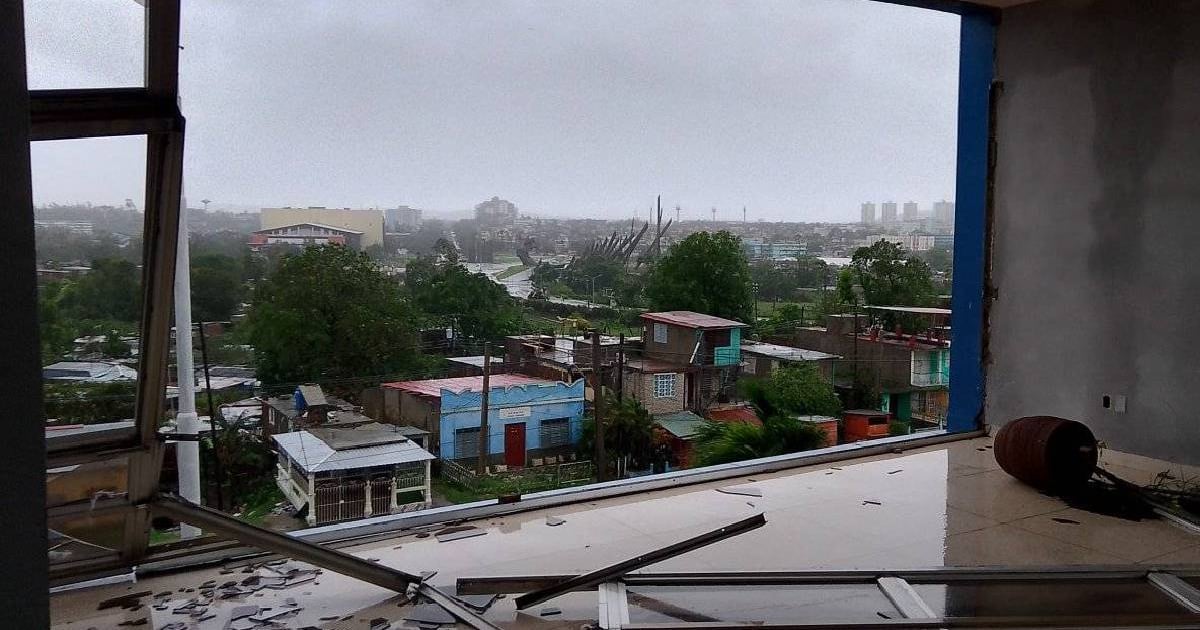
The National Electric System (SEN) is encountering one of its most severe challenges this year on Saturday, November 1, as widespread blackouts affect the entire nation. The situation is particularly dire in eastern Cuba, where Hurricane Melissa has caused floods, structural damage, and left hundreds of communities without power.
Official reports indicate that the peak power deficit reached 1,063 megawatts (MW) on Friday night at 7:20 PM, according to a statement from the Electric Union. The system failed to recover overnight, resulting in continuous power outages that have lasted over 24 hours across vast areas of the country.
From Las Tunas to Guantánamo, the scenario is exceptionally bleak. The prolonged blackouts are compounded by the hurricane's aftermath, which led to the Cauto River overflowing, road blockages, building collapses, and thousands of evacuations. In towns such as Río Cauto, Guamo, and Bayamo, the lack of electricity is hindering rescue operations and access to potable water and food supplies.
As of 6:00 AM today, the SEN's availability was a mere 1,360 MW, against a demand of 1,700 MW, resulting in a 330 MW deficit. Midday projections foresee a shortfall of up to 500 MW. The main issues are concentrated in Unit 2 of the Felton Thermoelectric Plant and Unit 6 of the Diez de Octubre Plant, both out of service due to malfunctions.
Additionally, other facilities like the Santa Cruz and Carlos Manuel de Céspedes (Cienfuegos) plants are offline for maintenance, leaving a total of 524 MW of thermal capacity out of operation. The fuel and lubricant crisis exacerbates the situation further, with 60 distributed generation plants halted, totaling 546 MW inactive due to this issue.
For the evening's peak hours, the electrical system anticipates a 1,090 MW deficit, potentially leading to power outages exceeding 10 hours in most provinces. The eastern regions will continue to be the hardest hit, as Hurricane Melissa has left downed power lines, damaged transformers, and flooded substations in its wake.
Despite the 21 solar photovoltaic parks installed in the western and central parts of the country contributing 1,770 megawatt-hours (MWh) during the day with a peak of 354 MW, solar energy remains insufficient to meet the demand of a system heavily reliant on oil and lacking stable energy reserves.
The combination of power failures and natural disasters keeps eastern Cuba in a state of emergency. In Granma, Holguín, and Las Tunas, ongoing rains and the absence of electricity prevent the refrigeration of food, disrupt communications, and hinder medical services.
Meanwhile, in Río Cauto and Guamo, hundreds of people continue to be housed in makeshift shelters without light or water after being rescued by trains and boats amid the flooding. "The darkness and uncertainty are the worst," a resident of Bayamo commented on social media.
The government has yet to announce specific emergency measures for restoring electricity in the eastern region, while reports of total outages persist in areas such as Camagüey, Sancti Spíritus, and Villa Clara.
Amid a prolonged energy crisis, the current collapse of the SEN underscores the structural fragility of Cuba's electrical system, a consequence of decades of underinvestment, inadequate maintenance, and a near-total dependence on fossil fuels.
Understanding Cuba's Power Crisis
What is causing the power outages in eastern Cuba?
The power outages in eastern Cuba are primarily caused by the collapse of the National Electric System following Hurricane Melissa, compounded by a longstanding energy crisis and reliance on fossil fuels.
How has Hurricane Melissa affected Cuba's infrastructure?
Hurricane Melissa has caused extensive damage to Cuba's infrastructure, leading to floods, road closures, building collapses, and disruptions in electricity and essential services.
Are there any measures being taken to restore electricity in Cuba?
As of now, the government has not announced specific emergency measures to restore electricity in the affected areas, although efforts to repair the system are ongoing.