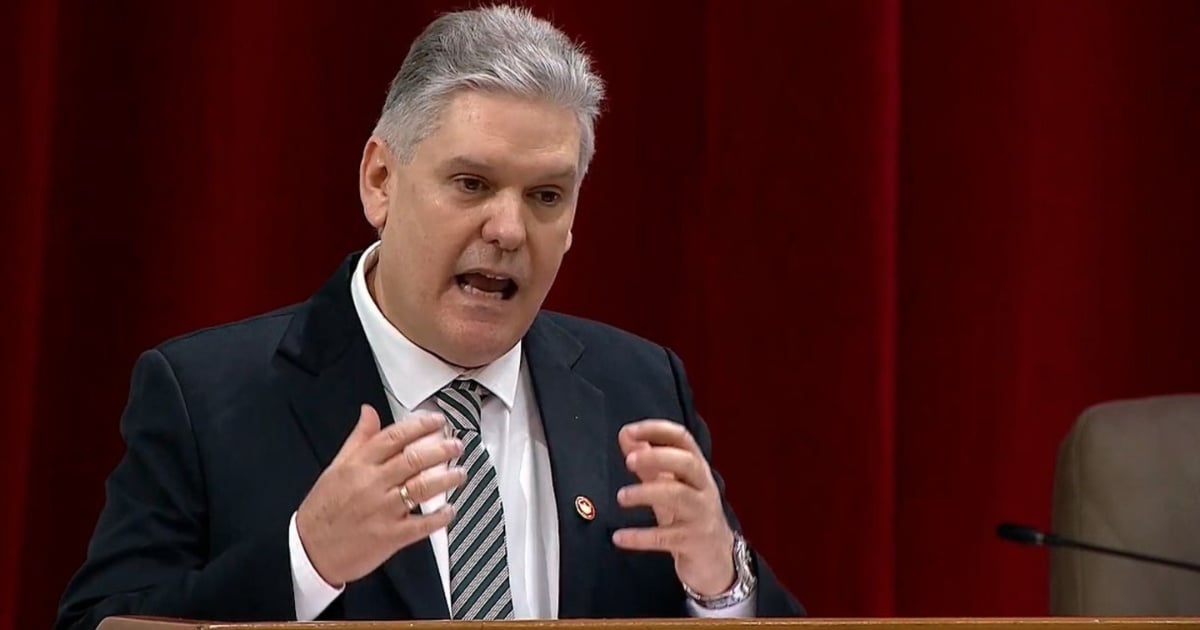
The Office of the Attorney General in Cuba announced on Friday that public criminal action has been taken against Alejandro Miguel Gil Fernández—formerly the Deputy Prime Minister and Minister of Economy and Planning—and additional defendants following the conclusion of a criminal investigation by the Ministry of the Interior.
The charges against the former Deputy Prime Minister and ex-Minister were formally presented to the relevant court, with requests for prison sentences aligning with the crimes allegedly committed.
According to a notice released on October 31, 2025, the prosecution oversaw the investigation in accordance with Article 156 of the Constitution, ensuring due process throughout the investigative actions.
The Public Ministry detailed that the prosecution seeks accountability for an extensive list of offenses: espionage, actions detrimental to economic activity or contracts, embezzlement, bribery, forgery of public documents, tax evasion, influence peddling, money laundering, violation of classified document protection rules, and theft or damage of documents or other items under official custody.
"Responsibility was sought for crimes including espionage, actions harmful to economic activities or contracts, embezzlement, bribery, forgery of public documents, tax evasion, influence peddling, money laundering, violation of classified document protection rules, and theft or damage of documents or other items under official custody," stated the prosecution.
The official statement did not provide further details on the judicial proceedings beyond the presentation of charges and the request for imprisonment for all accused individuals.
The prosecution emphasized its actions as representing the state, consistent with its constitutional mandate.
With this notification, the case against Gil Fernández moves formally to the court, awaiting subsequent actions by the competent authority.
The Scandal of Alejandro Gil
In March 2024, the Cuban government announced an investigative file had been opened by the prosecution due to "serious errors" attributed to Alejandro Gil Fernández, who had been dismissed a month earlier.
Without providing further information, the regime indicated that Gil acknowledged "serious allegations" and consequently resigned from his position as a Party member and as a deputy in the National Assembly.
The report added that neither the Party nor the government would tolerate corruption, pretense, or insensitivity, and stressed that the more trust placed in an official, the greater the rigor and inflexibility with which they would be dealt.
Gil was ousted following a disastrous year for the Cuban economy, during which citizens faced severe shortages of food and fuel, frequent power outages, and deteriorating healthcare services.
In December 2023, Gil had to inform Parliament that the planned levels for several food sectors in 2023 would not be met, with some even declining compared to 2022.
Furthermore, during a meeting of the Central Committee of the Party, Gil admitted the failure of the so-called "Ordering Task," stating it was ineffective and did not achieve its intended goals.
Legal Proceedings and Allegations Against Alejandro Gil
What charges has Alejandro Gil been accused of?
Alejandro Gil faces charges including espionage, embezzlement, bribery, forgery of public documents, tax evasion, influence peddling, money laundering, and other offenses.
Why was Alejandro Gil dismissed from his position?
Alejandro Gil was dismissed due to "serious errors" and acknowledged allegations, leading to his resignation from the Party and the National Assembly.
What was the impact of Gil's policies on the Cuban economy?
Under Gil's tenure, Cuba experienced severe economic challenges, including food and fuel shortages, power outages, and declining healthcare services.