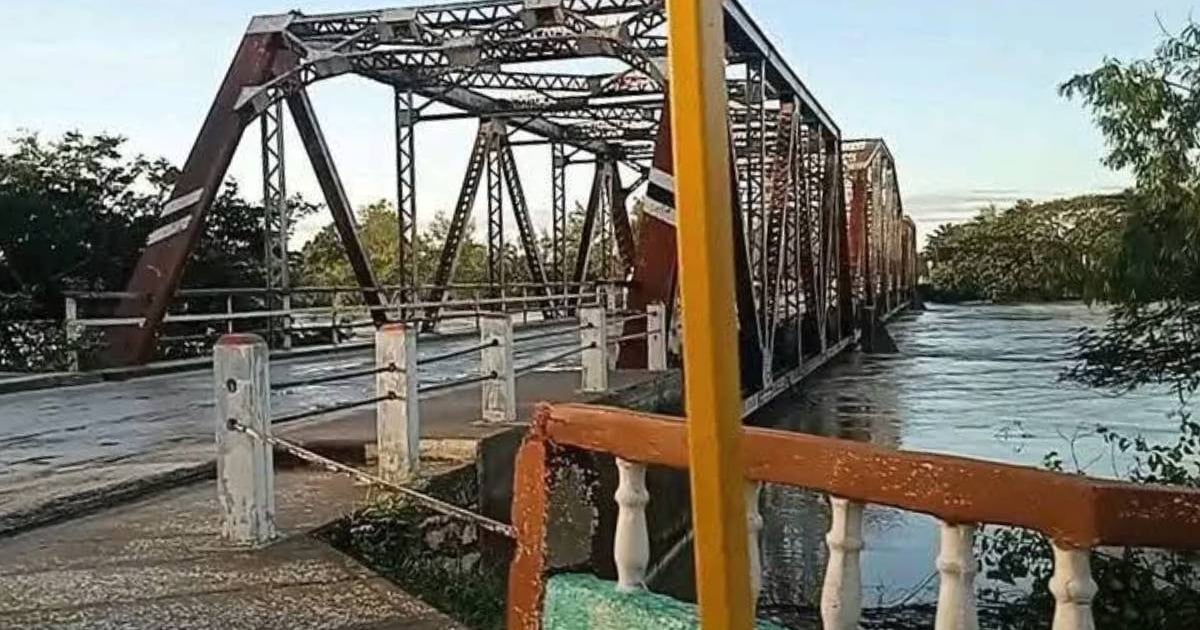
The Cauto River, the longest river in Cuba, surged to record-breaking levels this Friday following the passage of Hurricane Melissa, leading to extensive flooding and an unparalleled state of emergency in the municipalities of Río Cauto and Cauto Cristo, located in Granma Province.
Photos circulating on social media depict the river’s astonishing flow beneath the bridge leading into Cauto Cristo, with water levels reaching unprecedented heights. The area has been under alert since Friday morning.
"This is the water level at the bridge into Cauto Cristo. I've never seen it like this. Imagine downstream and the width that torrent of water takes as it heads to the mouth...," a local resident cautioned in a viral social media post.
State journalist Lázaro Manuel Alonso confirmed on-site that the river’s level at the entrance of Cauto Cristo was "simply overwhelming."
In response, local authorities have urged residents to exercise extreme caution and follow the Civil Defense's guidelines to prevent disasters.
Given the scale of the flooding, rescue and relief teams, alongside personnel from the Red Cross and the Interior Ministry, are actively deployed in the hardest-hit areas.
Official reports indicate that over 1,300 individuals have been evacuated from communities such as Guamo, Cauto Embarcadero, and Trinidad, due to the threat of further flooding.
Marbelis Campos Busquet, the provincial delegate of the National Institute of Hydraulic Resources (INRH), assured that the 11 reservoirs in Granma are in "perfect technical condition," although nine have reached their maximum capacity. "The Cauto El Paso dam continues to spill over, but within the normal parameters of its design," she explained.
Despite official statements, some citizens have complained that the situation "is not under control" and that aid is arriving too slowly. "The water is rising too fast. We keep asking for help and I won't stop until something is done," a resident of Cauto Embarcadero wrote on Facebook.
Other posts show families leaving their homes on their own, carrying belongings and receiving help from neighbors to reach higher ground. Images reveal streets turned into rivers, submerged roofs, and water engulfing entire homes.
Hydraulic authorities confirmed that the Cauto River has reached historic overflow levels due to the torrential rains accompanying Hurricane Melissa, which struck eastern Cuba as a Category 3 cyclone with winds reaching 115 mph.
The combination of saturated soil, inadequate drainage, and an extraordinary volume of rainfall — exceeding 500 millimeters in some areas — has made the Cauto a looming threat to thousands living along its banks.
Meanwhile, the National Civil Defense Headquarters maintains a cyclone alert for the municipalities of Río Cauto and Cauto Cristo, while continuing hydrological monitoring of the river and its tributaries.
Understanding the Impact of Hurricane Melissa on Cauto River
What caused the Cauto River to overflow?
The overflow of the Cauto River was primarily caused by the torrential rains brought by Hurricane Melissa, which saturated the soil and overwhelmed the river's drainage capacity.
How are local authorities responding to the flooding crisis?
Local authorities have deployed rescue and relief teams, including the Red Cross and Ministry of Interior personnel, and have evacuated over 1,300 people from high-risk areas.
What measures are being taken to ensure public safety?
Residents are advised to follow Civil Defense guidelines, and the National Civil Defense Headquarters has issued a cyclone alert while monitoring the hydrological situation.