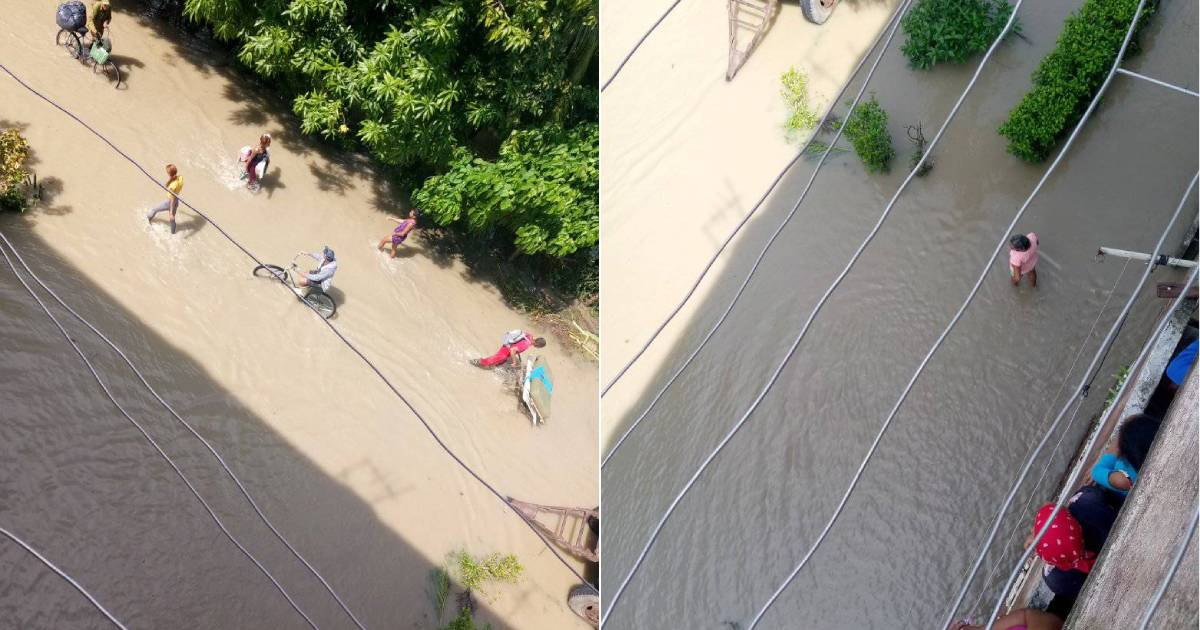
On Friday, the National Civil Defense Staff announced that the municipalities of Río Cauto and Cauto Cristo in the province of Granma will remain under a cyclone alert phase. This decision stems from the severe hydrological situation caused by heavy rains and flooding following Hurricane Melissa's passage.
The announcement came from Informative Note No. 7, released at 10:00 a.m. by the Cuban Presidency, which also declared a recovery phase for the provinces of Santiago de Cuba and Granma. However, it warned that the situation remains "critical and dangerous" in the mentioned municipalities.
"For Granma province, maintain the CYCLONE ALERT PHASE for the municipalities of Río Cauto and Cauto Cristo, where a complex hydrological situation persists, and protective measures for the population continue," stated the official communication.
Río Cauto is among the hardest-hit areas by the torrential rains left behind by Hurricane Melissa in eastern Cuba. Numerous urban and rural zones remain submerged, with reports of flooded homes, destroyed crops, and blocked access roads.
The situation has become so dire that over a thousand residents of Guamo, in Granma, were urgently evacuated overnight to the municipality of Jobabo in Las Tunas due to the imminent risk of flooding from the rising Río Cauto.
"The levels of the Río Cauto have continued to rise due to the overflow of its tributaries and the collapse of drainage in several low-lying areas," explained a provincial Civil Defense source.
"Preventive evacuations of at-risk families are ongoing, especially in areas near the Paso Malo reservoir and in the multifamily buildings of the urban center."
Meanwhile, in the municipality of Cauto Cristo, authorities report communities completely cut off and significant damage to roads, bridges, and electrical systems. Rescue teams are utilizing boats and heavy machinery to deliver food, drinking water, and medicine to the most affected areas.
The Civil Defense reported that the provinces of Santiago de Cuba and Granma have officially entered the recovery phase after Hurricane Melissa left Cuban territory, causing severe flooding, landslides, and agricultural losses.
During this phase, the Territorial Defense Councils focus on restoring basic services, clearing debris, repairing homes, and assessing damage to road and energy infrastructure.
However, municipalities along the Río Cauto will remain under close surveillance due to the river's high water levels and ongoing rains in the eastern region.
Granma province has been one of the most impacted by Hurricane Melissa. Images shared on social media by residents like Melissa Poello reveal partially submerged apartment buildings and streets turned into actual rivers. "The water keeps rising, houses are flooded up to the roof," wrote the user on Facebook.
The Civil Defense acknowledged the efforts of local leadership, media, and the population "for the discipline and solidarity shown during the preparations and response to the meteorological event."
Hurricane Melissa, which struck Cuba as a category 3 cyclone, has left a significant mark on the island's eastern region, with thousands left homeless, vast agricultural areas underwater, and severe damage to key infrastructure.
Authorities have warned that the recovery process will be lengthy and contingent upon weather stabilization in the coming days.
FAQs on the Río Cauto and Cauto Cristo Flooding Crisis
What led to the flooding in Río Cauto and Cauto Cristo?
The flooding was caused by the heavy rains and hydrological disruptions brought on by Hurricane Melissa, leading to overflowing rivers and inadequate drainage.
What measures are being taken to help affected residents?
Authorities are conducting preventive evacuations, providing essential supplies like food and water, and are focusing on restoring basic services and repairing infrastructure.
How has the community responded to the crisis?
The community, along with local leaders and media, has shown remarkable discipline and solidarity in handling the preparations and response to the emergency.
What is the current status of the recovery efforts?
While some areas are entering recovery phases, regions along the Río Cauto remain under strict watch due to persistent high water levels and ongoing rain.