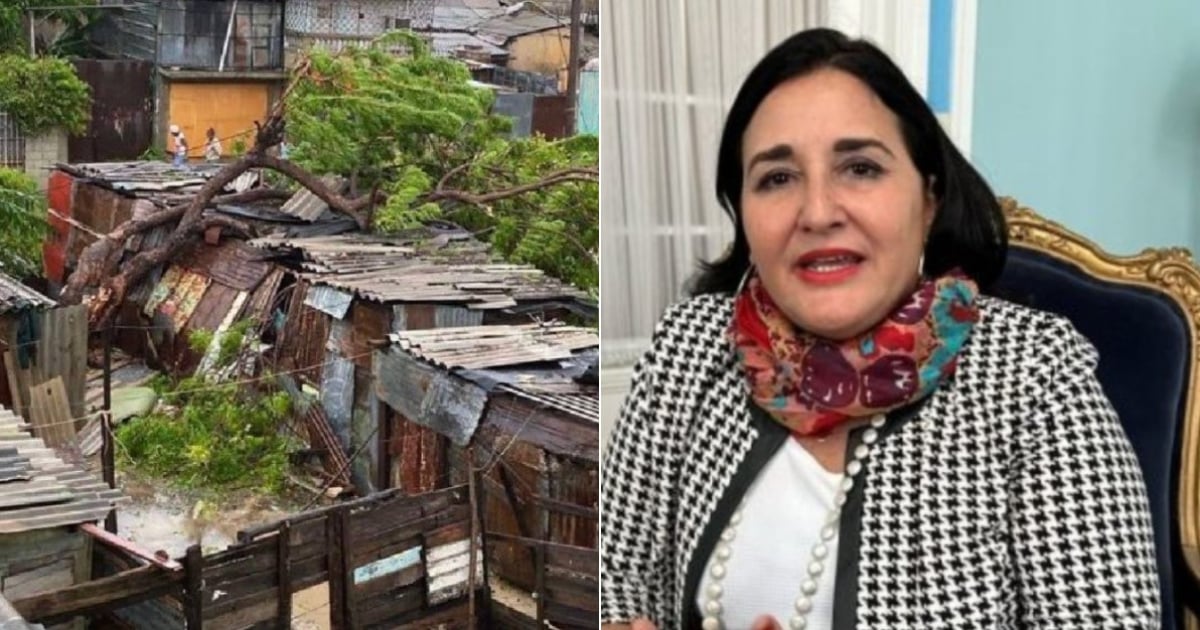
The Cuban government asserted on Friday that the United States has yet to follow through on any humanitarian aid promises following the devastating impact of Hurricane Melissa, which left widespread destruction in the eastern part of the island.
Johana Tablada, Deputy General Director of the U.S. Affairs Division at Cuba's Ministry of Foreign Affairs (MINREX), stated that the Cuban embassy in Washington reached out to the U.S. Department of State regarding the announced aid. However, she claimed that "the United States has not finalized any offer nor responded to the inquiries" about the promised assistance.
Tablada highlighted that other countries and United Nations organizations have already made offers that are in the process of being realized, emphasizing that "in no case has the Cuban government placed extraordinary conditions."
She also mentioned avenues available for U.S. individuals and organizations to channel donations to those affected, though these efforts must "overcome restrictions imposed by the U.S. government," according to the official.
From Diplomacy to Defiance
Tablada's remarks come amidst a backdrop of conflicting and defiant messages from high-ranking Cuban officials who, instead of showing concern for the humanitarian crisis, have chosen political confrontation.
Juan Antonio Fernández Palacios, Cuba's Ambassador to the European Union, sparked controversy by dismissing Washington's offer as "handouts."
"No handouts or conditions. The international community has overwhelmingly stated what needs to be done. Nothing more to add," Fernández Palacios commented dismissively, reflecting the regime's typical response to U.S. cooperation gestures.
This statement incited outrage among Cubans both within the country and abroad, who criticized the government's lack of empathy and its prioritization of political rhetoric over the people's suffering.
Politics Over People
The controversy arose after U.S. Secretary of State Marco Rubio announced Washington's readiness to provide immediate humanitarian aid directly to the Cuban people.
"We are prepared to offer immediate humanitarian assistance to the people of Cuba affected by the hurricane," Rubio stated.
The State Department elaborated in a statement that legal exemptions exist for private donations of food, medicine, and emergency supplies, urging those wishing to help to contact the office of humanitarian aid to Cuba directly.
They also issued an official guide detailing the licenses and exemptions that allow for the shipment of essential goods to the island, despite the ongoing embargo.
The Cuban regime's initial response, through Deputy Foreign Minister Carlos Fernández de Cossío, was notably less confrontational.
In a message shared on X, he acknowledged that Havana was "in contact" with the State Department to ascertain details of the offer and understand "how and in what manner they are willing to help."
However, subsequent statements from Communist Party and Foreign Ministry officials have marked a shift to overt political rejection.
Communist Party Organization Secretary Roberto Morales Ojeda deemed the U.S. offer "undignified" and claimed that true goodwill would involve lifting the "criminal blockade" and removing Cuba from the list of terrorism-sponsoring nations.
Meanwhile, Deputy Foreign Minister Anayansi Rodríguez Camejo asserted that if Washington had "any minimal concern for the Cuban people," it would "suspend or make humanitarian exceptions to the blockade" in light of the hurricane's devastation.
These entrenched positions starkly contrast with the silence of Foreign Minister Bruno Rodríguez, who has yet to comment on the U.S. aid offer or the dire situation faced by those affected.
Official Triumph vs. Ground Reality
While MINREX officials exchange statements and accusations, eastern Cuba remains in chaos.
In Santiago de Cuba, Holguín, and Granma, numerous communities are isolated, with homes destroyed, crops decimated, and hospitals lacking basic supplies.
Yet, the Communist Party-controlled state media persists with its usual narrative: "everything is under control" and "no one will be abandoned."
This rhetoric starkly contrasts with the reality of thousands who have lost everything and continue to survive without institutional support or resources.
The government insists on blaming the embargo for all woes, but the humanitarian disaster wrought by Melissa reveals a deeper issue: the collapse of a system unable to anticipate, organize, or protect its population from natural disasters.
Pride Does Not Rebuild
The United States, meanwhile, has reiterated its intention to support the Cuban people directly, bypassing the regime.
"While the embargo remains in place, the U.S. government prioritizes humanitarian support to the Cuban people," stated the Department of State.
However, for Havana, "sovereignty" remains the preferred justification for inaction, opting instead to revive the rhetoric of confrontation.
Rather than allowing aid to reach the affected communities directly, the government insists on maintaining complete control over any supply shipments, even at the cost of its people's hunger and suffering.
As families in eastern Cuba await mattresses, medicines, and food, regime officials engage in ideological debates and accuse Washington of interference.
Once more, the tragedy lays bare the reality of power in Cuba: a state that speaks of dignity while leaving its people abandoned amidst the ruins.
Frequently Asked Questions about U.S. Aid to Cuba
Has the United States provided aid to Cuba after Hurricane Melissa?
As of now, the Cuban government claims that the United States has not finalized any offers of aid following Hurricane Melissa.
What restrictions exist for U.S. aid to Cuba?
U.S. individuals and organizations face restrictions due to the embargo, but there are legal exemptions for donations of food, medicine, and emergency supplies to Cuba.
How has the Cuban government responded to U.S. aid offers?
The Cuban government has shown political resistance, with some officials dismissing U.S. offers as insufficient or politically motivated.