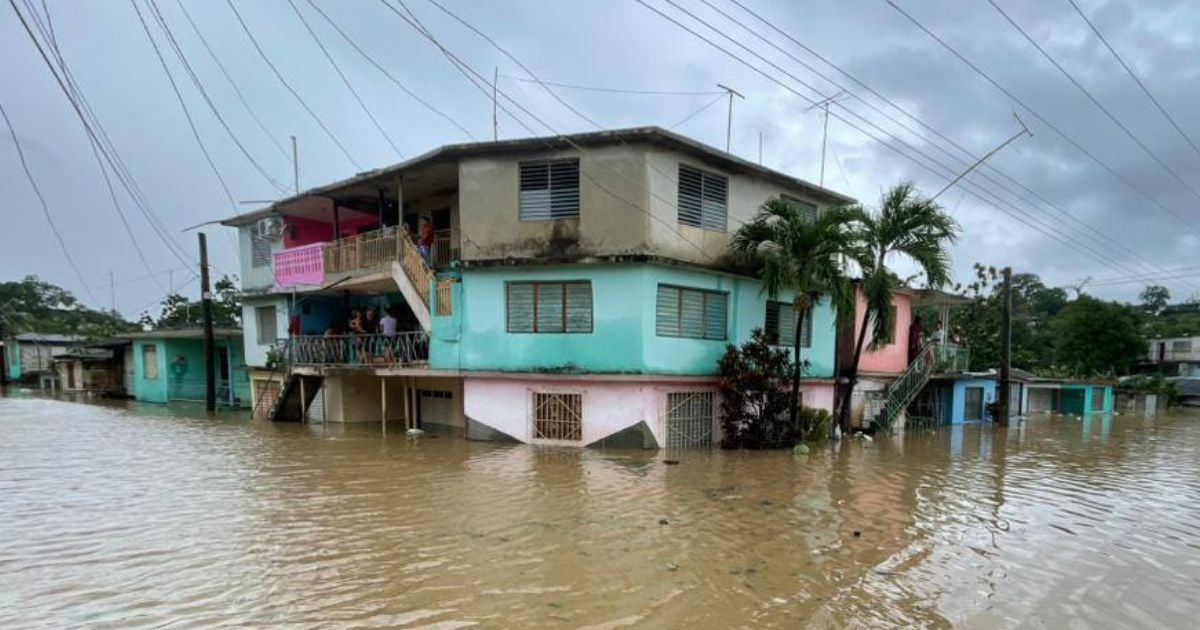
As Cuban authorities continue to assess the damage inflicted by Hurricane Melissa in the eastern part of the country, grassroots initiatives are taking the lead in organizing relief efforts for those affected by the storm.
Yankiel Fernández, head of the charitable initiative Ministry Breath of Life, proactively called for solidarity from Havana even before the hurricane's arrival.
"We still have time, and that time is crucial for saving lives, homes, and hope," he posted on social media, urging people to contribute donations before the cyclone hit.
"This is the moment to unite in prevention, to organize aid before disaster strikes, to prove that solidarity can outpace tragedy," stated Fernández, who established a collection point in the Cerro municipality, at the ministry's headquarters, to gather non-perishable food, bottled water, hygiene products, clothing, shoes, medicines, and children's supplies.
By Thursday, after Melissa had passed, Fernández confirmed that the collected items would be directly delivered to Santiago de Cuba and Holguín, two of the areas most severely impacted by the storm's rain and winds.
"Let the world see, once again, that Cuba rises united, compassionate, and resilient, not only after disaster but before it occurs," he declared.
The Project Palomas has also joined the Breath of Life initiative. Sergio E. Cabrera, one of its members, announced that the organization's headquarters in Havana would remain open for donations.
"Project Palomas' doors will be open Monday to Friday from 6:00 a.m. to 4:00 p.m. for anyone willing to help those affected," he shared on Facebook.
Cabrera emphasized that there would be no time limits or restrictions on the type of aid, as "everything can be useful to those who have lost everything or nearly everything."
Located on Almendares Street between Desagüe and Benjumeda, near the National Bus Terminal, the project's headquarters have become another donation hub in the capital.
These initiatives highlight a growing wave of civic solidarity that contrasts sharply with the sluggish response from official emergency structures.
On social media, numerous users have praised the spontaneous organization of churches, civic groups, and neighbors who, without state support, are gathering resources to send to the eastern part of the island.
Organizers of these charitable campaigns are committed to continuing their efforts in the coming days, urging that "prevention and empathy be acts of resistance and hope."
In response to Hurricane Melissa's devastation in eastern Cuba, various sectors of civil society have independently mobilized to provide assistance to those in need.
From the Isle of Youth, a local entrepreneur has called for solidarity, setting up his home as a collection center for food, medicines, hygiene products, and clothing. This action underscores a growing community awareness in the face of governmental inaction.
Moreover, several Cubans on the island have spearheaded a solidarity campaign aimed at delivering direct aid to the hardest-hit areas. The effort has been coordinated via social media, where organizers have shared lists of needs and coordinated delivery points, showcasing a high level of community self-management.
The response has also extended internationally. In Miami, members of the Cuban diaspora have joined the wave of support by organizing fundraising and supply collection campaigns to send aid back to the island.
This transnational collaboration has strengthened bonds between the diaspora and those residing in Cuba, transcending political differences.
The artistic community has also contributed. An urban singer, known for the hit "Mamá estoy brillando," announced a donation to aid the victims, joining other creators who have used their platforms to promote assistance and raise awareness about the disaster's magnitude.
Community Response to Hurricane Melissa in Cuba
How are Cuban citizens responding to Hurricane Melissa?
Cuban citizens are independently organizing relief efforts, collecting donations, and establishing collection points to assist those affected in the eastern regions of the island.
What role does social media play in these relief efforts?
Social media is being used to coordinate campaigns, share lists of necessary supplies, and organize delivery points, facilitating a grassroots response to the disaster.
How has the Cuban diaspora supported the relief efforts?
The Cuban diaspora, particularly in Miami, has organized fundraising and supply collection campaigns to send aid to the affected areas in Cuba, strengthening ties across political divides.
What contributions have Cuban artists made to the relief efforts?
Cuban artists have leveraged their visibility to promote aid efforts, with some making personal donations and raising awareness about the hurricane's impact.