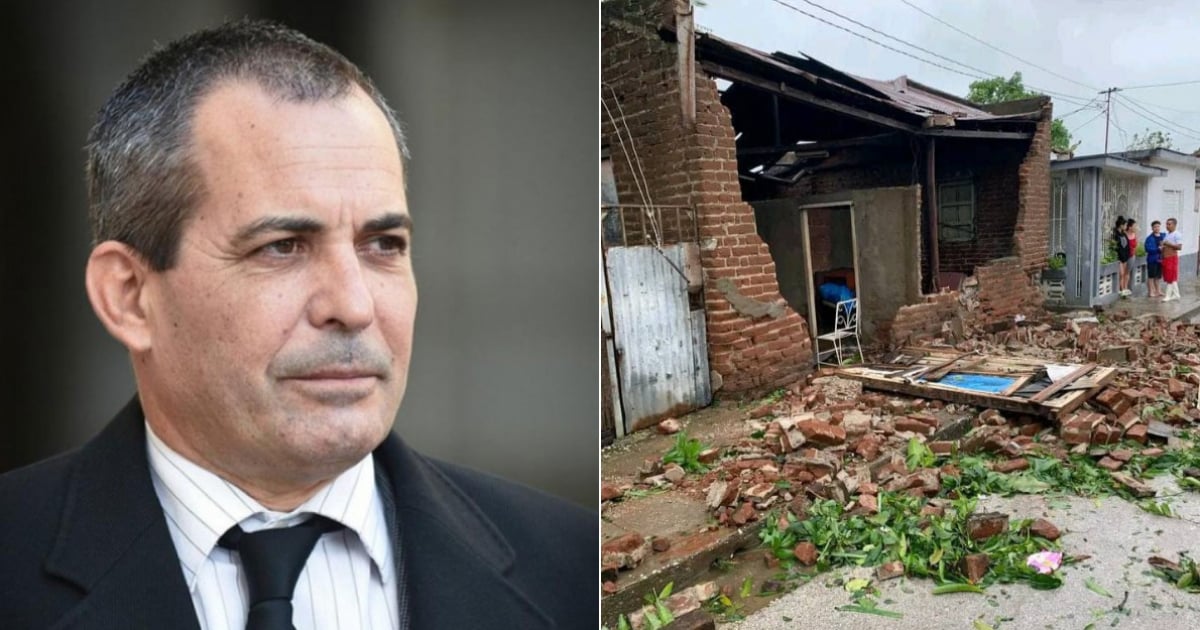
Amid the destruction left in the wake of Hurricane Melissa, the Cuban government has once again demonstrated its political arrogance.
While thousands of families in eastern Cuba are still without electricity, clean water, and have lost their homes, a senior regime official has dismissed the United States' offer of humanitarian assistance as "begging."
Juan Antonio Fernández Palacios, Cuba's ambassador to Belgium and the European Union, made this remark in a message from Deputy Foreign Minister Carlos Fernández de Cossío. He confirmed that Havana is "in contact" with the State Department to understand the details of the aid proposal.
"Not begging or conditions. The international community has overwhelmingly expressed what needs to be done. Nothing more to add," wrote Fernández Palacios on X, reflecting the regime's usual disdain for any gesture of American cooperation.
This statement has sparked outrage among Cubans both on the island and abroad. Many criticized the government's indifference to the disaster, arguing that political rhetoric is prioritized over the people's welfare.
"If you genuinely care about the people's well-being, stay out of it and stop using donations as a political weapon," expressed one user.
"The problem has always been you, wanting to manage the aid to sell it to a starving population. Thieves! Murderers!" commented another user.
"I hope you won't make the absurd mistake of refusing U.S. aid. Think of the thousands of Cubans who have lost everything!" urged another commenter.
The controversy erupted after U.S. Secretary of State Marco Rubio announced Washington's readiness to provide immediate humanitarian relief to the Cuban people without regime intermediaries.
A State Department statement clarified that legal exemptions exist for private donations of food, medicine, and emergency supplies, encouraging those willing to help to contact the humanitarian aid office for Cuba directly.
However, Havana's response remains unchanged: rejection and distrust, even when faced with an offer that could alleviate the suffering of thousands in need.
Instead of allowing the entry of essential medicines, water, and food, the government is entangled in sovereignty speeches, blaming the "blockade" for the resource shortages in disaster management.
The humanitarian situation in eastern Cuba remains dire.
In provinces like Santiago de Cuba, Holguín, and Granma, entire communities are isolated, lacking power and communication. Hospitals are devoid of basic supplies, and the rains have worsened disease outbreaks and food shortages.
Despite this, Foreign Minister Bruno Rodríguez Parrilla has yet to make an official statement about the U.S. offer.
His silence starkly contrasts with Fernández Palacios' remarks, suggesting a government more invested in preserving its ideological stance than in saving lives.
He's not alone. Julio Cesar Crespo Diéguez, a Cuban diplomat in Ecuador, expressed that Cuba is open to receiving solidarity aid, "without political conditions."
The story repeats itself: with each natural disaster, Havana chooses political pride over the citizens' welfare.
What could be an opportunity for cooperation and relief in other countries turns into another ideological battleground for the regime.
Meanwhile, the people once again bear the brunt of isolation and the regime's stubbornness.
Frequently Asked Questions about Cuba's Response to U.S. Aid
What was the Cuban government's response to the U.S. aid offer after Hurricane Melissa?
The Cuban government dismissed the U.S. aid offer as "begging" and expressed distrust, continuing its usual rhetoric of rejection despite the urgent needs of the population.
How did the Cuban public react to the government's stance on U.S. aid?
The Cuban public expressed outrage and criticized the government for prioritizing political rhetoric over the welfare of its people during a humanitarian crisis.
What is the current humanitarian situation in eastern Cuba?
Eastern Cuba is facing a dire humanitarian situation, with many areas lacking electricity, clean water, and basic medical supplies, while disease outbreaks and food shortages worsen.