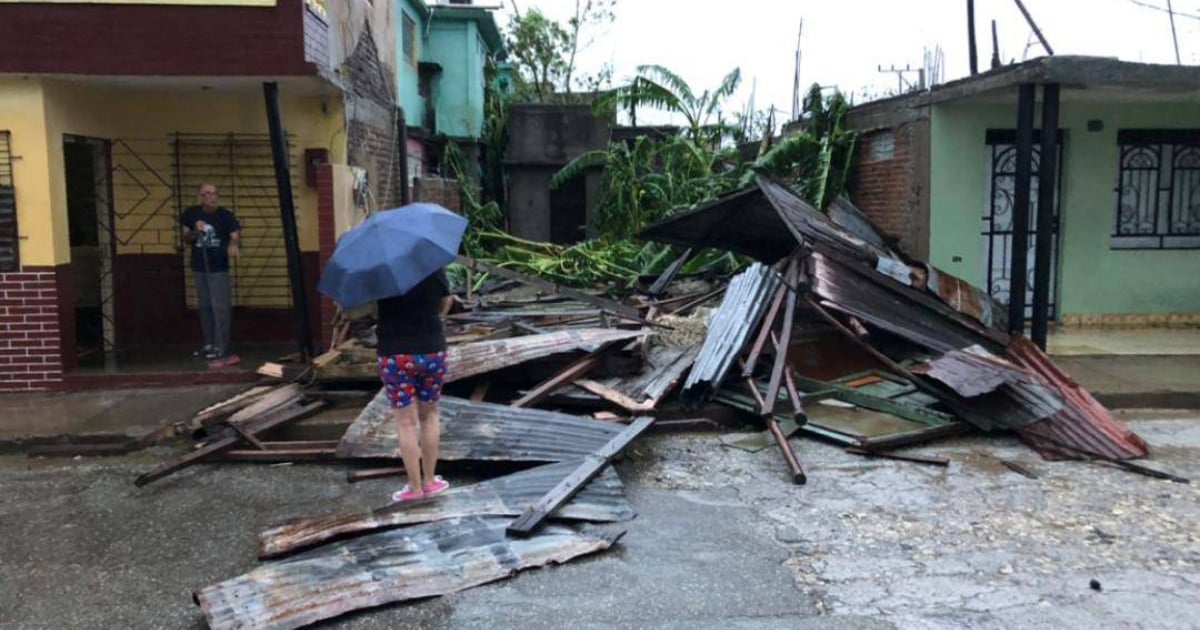
Roberto Morales Ojeda, who serves as the Secretary of Organization for the Central Committee of the Communist Party of Cuba, has publicly rejected a humanitarian aid offer extended by the United States to the Cuban people in the aftermath of Hurricane Melissa.
In a statement shared on the social media platform X this Thursday, Morales Ojeda voiced his "outrage" at the gesture from U.S. Secretary of State Marco Rubio, who announced Washington's readiness to provide "direct" assistance to those affected in eastern Cuba.
"Outraged by the aid offer to hurricane victims from Secretary of State Marco Rubio. If this government genuinely wished to support our people, they would have unconditionally lifted the criminal blockade and removed us from the list of State Sponsors of Terrorism, where we never belonged," the Cuban official stated.
The statement underscores the regime's usual stance, prioritizing its political narrative and confrontation with the United States over the urgent needs of its people, even in the face of a natural disaster like Hurricane Melissa.
As thousands of families in eastern Cuba remain without power, water, or homes, the Cuban leadership dismisses any international cooperation that does not align with their control.
Continuing with the official narrative of confrontation, Deputy Minister Anayansi Rodríguez Camejo commented on X: "If the U.S. government has any real concern about 'helping the Cuban people,' it should suspend or make humanitarian exceptions to the blockade due to the damages caused and being caused by Hurricane Melissa."
It appears that the regime's leadership intends to use the population's suffering as a bargaining tool to bolster their finances.
The reactions from Morales and Rodríguez starkly contrast with the tone of the communication from the U.S. Department of State. In his statement, Rubio clarified that the American aid would be directed straight to the Cuban people or through local partners, bypassing the regime's intermediaries.
In line with this, the U.S. Department of State released a detailed guide on Thursday aimed at facilitating the delivery of private humanitarian donations to the Cuban people after Hurricane Melissa, which caused severe damage across multiple provinces on the island.
The document, titled "Providing Private Donations of Humanitarian Assistance to the Cuban People After Hurricane Melissa," outlines the legal frameworks and licenses that allow the shipment of food, medicine, and other essential supplies to Cuba, notwithstanding the ongoing embargo.
"While the embargo remains in place, the U.S. government prioritizes support for the Cuban people," the statement emphasizes, highlighting existing exemptions and authorizations in U.S. law for sending humanitarian and disaster response goods.
FAQs on U.S. Humanitarian Aid to Cuba
What was the nature of the U.S. humanitarian aid offer to Cuba?
The United States offered to provide direct assistance to the Cuban people affected by Hurricane Melissa, bypassing the Cuban regime's intermediaries, and aimed to channel aid through local partners.
How did the Cuban authorities respond to the U.S. aid offer?
Cuban officials, including Roberto Morales Ojeda and Anayansi Rodríguez Camejo, rejected the offer, demanding the lifting of the U.S. embargo and removal from the State Sponsors of Terrorism list as a precondition for accepting aid.
What are the legal provisions for sending humanitarian aid to Cuba despite the embargo?
The U.S. Department of State has outlined legal mechanisms and licenses that permit the shipment of food, medicines, and essential supplies to Cuba, even with the embargo in place, through specific exemptions and authorizations.