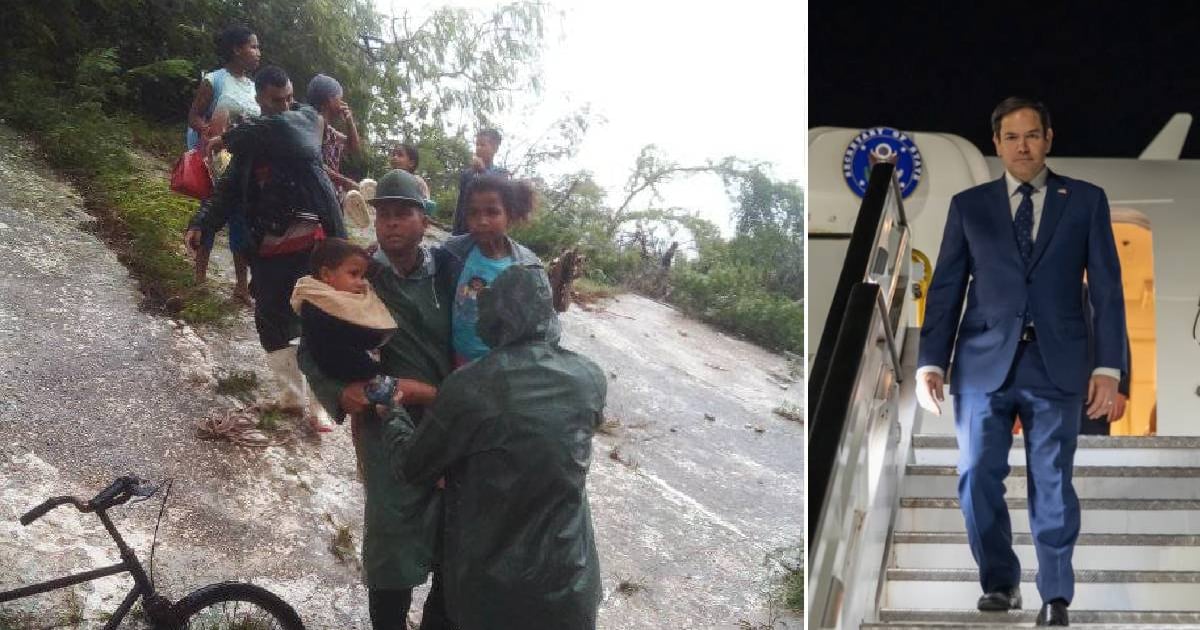
In response to U.S. Secretary of State Marco Rubio's announcement on Wednesday regarding Washington's readiness to provide immediate humanitarian assistance to Cuba following the devastating impact of Hurricane Melissa, numerous Cubans have expressed their reactions. This powerful storm wreaked havoc in the eastern regions of the island.
The announcement was met with both hope and excitement by thousands of Cubans, both on the island and abroad, who strongly advocated for the aid to be delivered directly to the people, bypassing the regime's control.
According to an official statement echoed by the U.S. Embassy in Havana, Rubio emphasized that the assistance would be "directed to the Cuban people, not the regime." The main goal is to support families enduring material losses, floods, and communication breakdowns in the hurricane's aftermath.
This gesture marks a shift in diplomatic tone, following initial U.S. aid announcements directed towards Jamaica, Haiti, the Dominican Republic, and the Bahamas—nations also affected by Melissa—while initially omitting Cuba.
Hurricane Melissa, with winds reaching up to 121 mph, severely impacted eastern Cuba, particularly the provinces of Santiago de Cuba, Holguín, Granma, and Guantánamo.
Public Sentiment and Social Media Reactions
The storm left thousands of homes either destroyed or significantly damaged, while numerous communities remain isolated, cut off from electricity and potable water. On social media, expressions of gratitude and hope mingled with skepticism towards regime authorities, who many accuse of diverting or withholding international aid in past emergencies.
Opposition leader José Daniel Ferrer expressed gratitude for the U.S. government's solidarity with those affected, via a post on his X account.
“This is a true act of humanity,” wrote one Facebook user on a CiberCuba post that garnered over 2,200 comments. Another remarked, “We'll see if the government accepts it. They don't favor aid that bypasses their hands.”
“Let the assistance go directly to the people, because if it's given to the dictatorship, they'll take it and sell it in dollars,” another user commented. Some called for setting aside political differences in light of the tragedy's magnitude. “It's time to touch our hearts and think of the thousands of families left with nothing,” said Bendi Gómez. “The aid must be accepted, as the people are suffering without resources,” he added.
One commenter stressed, “If it's direct to the people, the government will likely reject it, and that's when the people need to take to the streets and demand its acceptance.”
Details on the Proposed U.S. Aid
The aid package proposed by the United States would include food, medicine, rescue equipment, and essential supplies for those affected. Diplomatic sources cited by Reuters indicate that the plan involves delivering aid packages through international organizations and NGOs present on the island, ensuring resources reach those in dire need.
As of now, the Cuban government has not issued an official response to Washington's offer. In previous crises, such as Hurricanes Ian and Elsa, Havana rejected U.S. assistance, citing that "foreign aid with political conditions was unnecessary."
Key Questions About U.S. Aid to Cuba Post-Hurricane Melissa
What kind of assistance is the U.S. offering to Cuba?
The U.S. is proposing to send food, medicine, rescue equipment, and essential supplies directly to the Cuban people affected by Hurricane Melissa.
How is the aid expected to bypass the Cuban regime?
The aid is planned to be delivered through international organizations and NGOs operating in Cuba to ensure it reaches the people in need directly.
Why has the Cuban government previously rejected U.S. aid?
Cuba has declined U.S. aid in the past, claiming that such assistance was politically conditioned and not necessary.