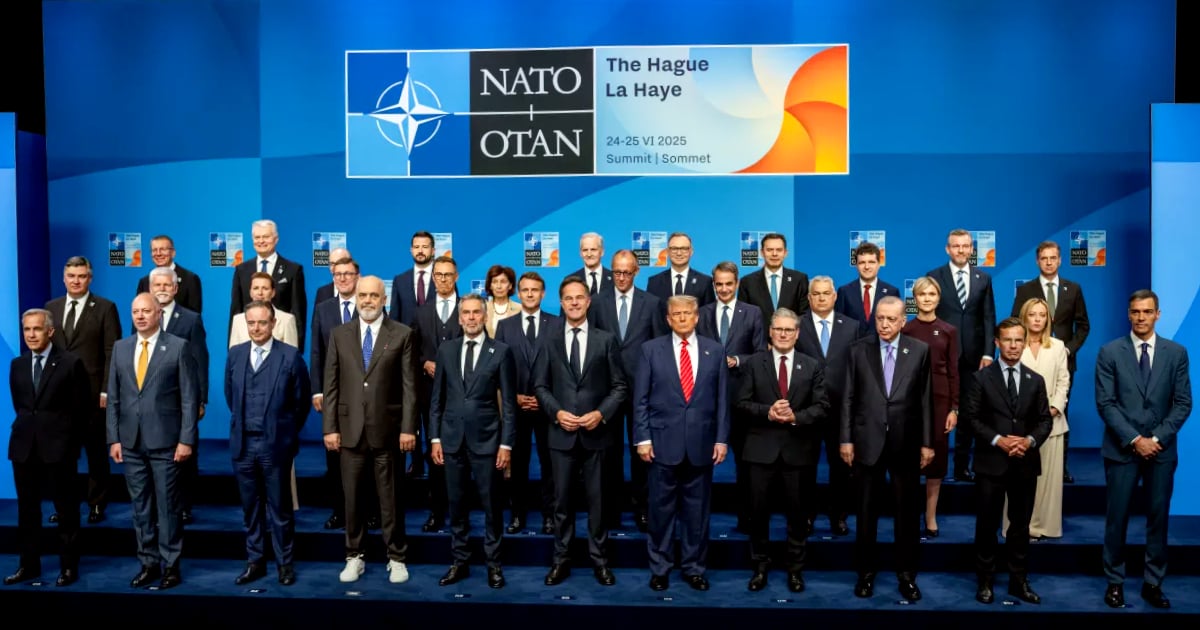
The recent United Nations General Assembly vote on the resolution calling for an end to the U.S. embargo on Cuba has exposed a diplomatic rift within the Western bloc.
Despite Washington's repeated calls for solidarity among its allies in defending Ukraine against Russian aggression, a significant number of European countries—members of both the European Union and NATO—voted in favor of the resolution backed by Havana. This aligns them with a regime that maintains military, economic, and intelligence ties with Moscow.
The contrast is stark. While Europe demands stronger U.S. involvement in the Ukraine war and tougher sanctions against Russia, the same governments that condemn the Kremlin's imperial expansion endorsed, with their vote, one of its oldest and most loyal allies: the Cuban regime.
Cuba has not remained neutral in the Russian invasion. Since 2022, it has openly supported Moscow's narrative on the conflict, consistently voting against UN resolutions condemning Putin's aggression.
More concerning is the documentation from both the U.S. State Department and Ukrainian military intelligence (GUR) regarding thousands of Cuban citizens participating as mercenaries in Russian forces. They have been recruited through a network operating since 2023 in Cuba, with the complacency—or at least the passivity—of Havana's authorities.
In September 2023, Ukraine warned of an "organized recruitment structure" for Cubans to fight in Donbas, noting that Cuban authorities had not taken effective measures to prevent it.
Months later, international media confirmed the authenticity of contracts and testimonies from young Cubans enlisted in the Russian army in exchange for salaries and promises of residency.
In 2024, the Ukrainian project 'I Want to Live' released lists with over a thousand names, claiming the actual number exceeded five thousand. Instead of cooperating with Kyiv or the United Nations to clarify this phenomenon, Havana opted to deny its existence and accused Washington of "disinformation campaigns."
It is noteworthy that several NATO allies—including France, Spain, Italy, Germany, and Belgium—joined the vote condemning the embargo without mentioning the growing complicity of the Cuban regime with Russia's war machine.
European Diplomatic Ambiguity
This stance, partly due to the European Union's diplomatic tradition of rejecting unilateral sanctions, places Europe in an ambiguous position regarding the principles it claims to uphold: the sovereignty of peoples, political freedom, and human rights.
The contradiction is clear. Europe sanctions Moscow while rewarding Havana, one of its most loyal allies.
European governments justify their vote with humanitarian arguments—the impact of the embargo on the Cuban civilian population—yet they overlook the fact that the Cuban regime manages substantial financial resources.
Recent investigations by the Miami Herald revealed that the military conglomerate GAESA, controlled by the Revolutionary Armed Forces, holds over $18 billion in liquid assets, while hospitals and schools on the island languish without basic resources.
Cuba's Strategic Alliances
It is no secret that Cuba maintains strategic agreements with Russia, China, and Iran, serving as a logistical operations platform for Moscow in Latin America. In 2023, the arrival of Russian warships at the port of Havana symbolized the return of a military alliance seemingly dormant since the Cold War.
Nevertheless, Washington's European allies preferred to support the "blockade" narrative, ignoring that Cuba freely trades with over 70 countries—including several EU members—and imports hundreds of millions of dollars annually in food, machinery, and medicine from the United States under the legal embargo exceptions.
This year's vote outcome—165 in favor, 7 against, and 12 abstentions—was the least favorable for Havana in over a decade.
However, the fact that America's main European partners maintained their traditional vote in favor of the Cuban regime highlights a troubling disconnect between Europe's rhetoric on defending democracy and its diplomatic practice.
As Ukraine withstands Russian bombings and reports the presence of Cuban mercenaries on the front lines, European chancelleries seem to look the other way, caught between diplomatic inertia and the fear of being accused of "automatically aligning" with Washington.
This year's vote not only measures Cuba's influence in the international system but also the moral coherence of the West.
At a time when Europe demands more commitment from the United States in defending Ukraine, it is challenging to explain why so many of its governments chose to extend a hand to Putin's allied regime, responsible for the harshest internal repression in decades and sending its youth to a foreign war.
Perhaps the question Brussels should ask is not whether the embargo works but whether Europe is still willing to turn a blind eye to Moscow's accomplices.
Frequently Asked Questions About European Support for Cuba at the UN
Why did European countries support the Cuban regime at the UN vote?
European countries justified their support by invoking humanitarian concerns, arguing that the U.S. embargo negatively impacts the Cuban civilian population. However, they overlooked the Cuban regime's substantial financial resources and its complicity with Russia.
What is the significance of Cuba's alliances with Russia, China, and Iran?
Cuba's partnerships with these countries demonstrate its strategic importance as a logistical platform for Moscow in Latin America, reinforcing its military and economic ties with these nations.
How does the European vote reflect on its principles?
The European vote reveals an ambiguous stance, as it contrasts with the principles Europe claims to uphold, such as political freedom and human rights, while simultaneously sanctioning Moscow and supporting Havana.