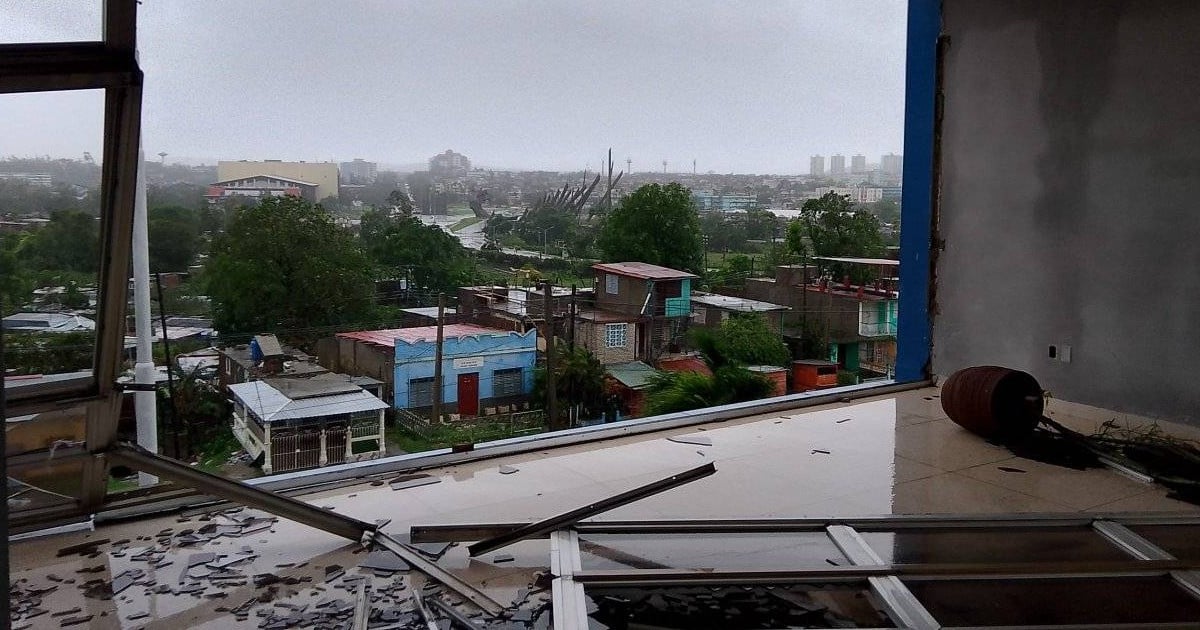
The Cuban Civil Defense issued its fourth update on Hurricane Melissa this Wednesday, announcing a return to normalcy at 10:00 am for the provinces of Ciego Ávila and Sancti Spíritus, which had been on Cyclone Alert but remained unaffected.
In the official statement, the National Civil Defense Staff commended the "discipline and solidarity" demonstrated by the population, leadership bodies, and media during the storm's passage. However, they urged citizens to remain vigilant of the rain and sea's influence and to keep defense councils active in a reduced capacity.
The Ongoing Threat
The United States' National Hurricane Center (NHC) warned at 11:00 am that catastrophic rains and flooding would continue in Cuba, maintaining a hurricane warning for the provinces of Granma, Santiago de Cuba, Guantánamo, Holguín, and Las Tunas.
Despite expectations of weakening later today, hurricane conditions remain in areas under the warning. The system's scope is confirmed by wind radii: hurricane-force winds extend up to 65 km from the center, and tropical-storm-force winds reach 295 km.
The critical threat from rains persists. Intense rainfall is expected in the east this morning, with amounts ranging from 10 to 20 inches and peaks up to 25 inches in mountainous regions, posing risks of catastrophic flooding and landslides. Rainfall is anticipated to ease by the afternoon.
Coastal storm surge is also a concern, with the NHC warning of potential minor coastal flooding in bays and inlets along the northeastern coast.
Reality vs. Official Narrative
While government offices applaud institutional performance, eastern Cuba remains in a dire situation. Intense rains, landslides, and storm surges have isolated dozens of communities, damaged homes, and devastated crops in the provinces of Holguín, Santiago de Cuba, Las Tunas, and Granma.
According to the Meteorological Institute, Melissa reached Category 5 on the Saffir-Simpson scale before making landfall, crossing eastern Cuba with winds over 160 km/h and rain accumulations exceeding 335 millimeters in some Holguín areas, leading to flooding and river overflows.
Exiting near Banes, on the northern coast of Holguín, Hurricane Melissa moved towards the southwestern Atlantic, yet its rain bands continue to affect eastern Cuba, where the saturated ground poses a high risk of landslides and coastal flooding.
Despite this scenario, authorities continue to emphasize "preparedness" and "organization."
However, in the hardest-hit municipalities, residents' testimonies paint a different picture: roofless homes, toppled power poles, impassable roads, and a population without potable water, electricity, or sufficient food.
The Harsh Truth Behind the Optimistic Facade
While official reports maintain a tone of control and self-satisfaction, the country's structural crisis exacerbates the impact of each weather event. Dilapidated sewage and drainage systems collapse with the first rains; aging asbestos and zinc roofs fail against the winds; and evacuation centers, mostly repurposed schools, lack basic conditions to accommodate thousands of displaced people.
Hurricane Melissa has once again exposed the extreme vulnerability of Cuba's infrastructure and the inadequacy of the State's response mechanisms. Despite official rhetoric lauding the "solidarity and discipline of the people," citizens continue to face these emergencies almost alone, with makeshift means and without essential resources to rebuild their lives.
With the hurricane now drifting northeast, Civil Defense announces the end of the alert in some provinces, but in eastern Cuba, a return to normalcy seems distant. The country now enters a recovery phase that, as often is the case, will rely more on individual and community efforts than on institutional effectiveness.
FAQs on Hurricane Melissa's Impact on Cuba
What areas in Cuba were most affected by Hurricane Melissa?
The provinces of Holguín, Santiago de Cuba, Las Tunas, and Granma were significantly impacted by intense rains, landslides, and storm surges.
How did Hurricane Melissa affect the infrastructure in Cuba?
The hurricane exposed the extreme vulnerability of Cuba's infrastructure, with damaged homes, collapsed drainage systems, and inadequate evacuation centers.
What measures did the Cuban Civil Defense take in response to Hurricane Melissa?
The Cuban Civil Defense issued updates, maintained a hurricane warning for several provinces, and urged vigilance regarding rain and sea conditions.