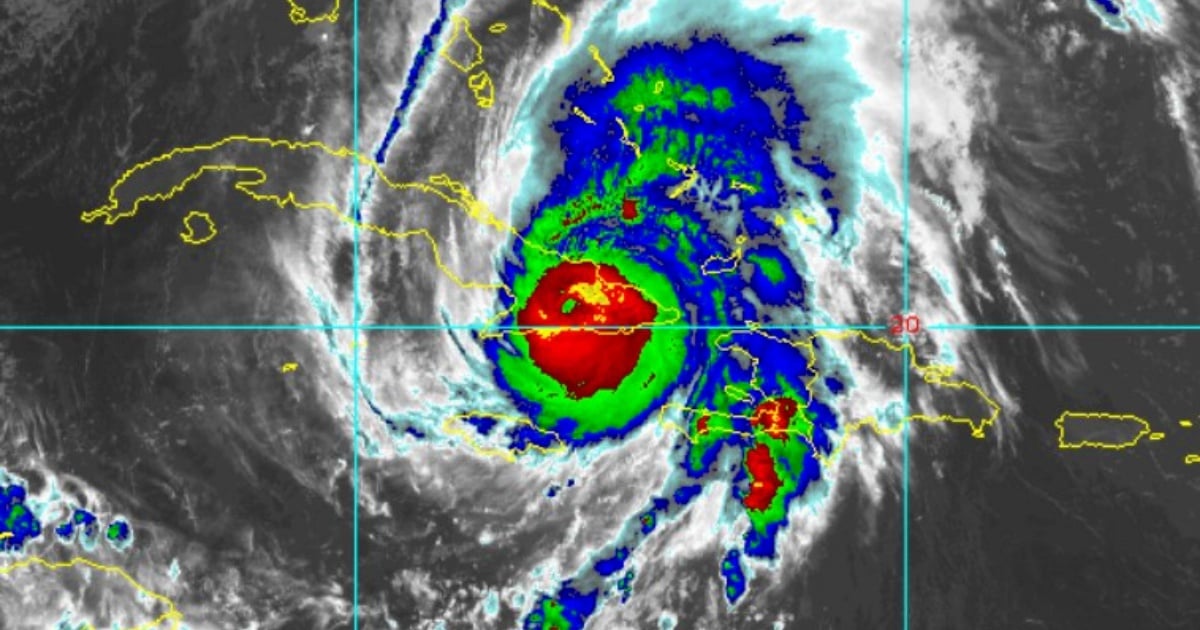
Hurricane Melissa, which made landfall early this morning in Cuba as a Category 3 storm on the Saffir-Simpson scale, is forcefully advancing over the eastern regions of the country. The hurricane is leaving behind a trail of heavy rain, widespread flooding, dangerous storm surges, and destructive winds affecting multiple provinces.
At 5:00 AM on Wednesday, the storm's center was located just 59 miles west of Guantánamo, moving northeast at a speed of 12 mph, as reported in the latest bulletin from the National Hurricane Center (NHC).
Powerful Winds and Heavy Rains
The hurricane's sustained winds have reached speeds of up to 115 mph, with even stronger gusts reported. In Leeward Point Field, located in the Guantánamo Bay, gusts have been recorded at up to 75 mph, showcasing the severe impact Melissa is having on eastern Cuba.
The provinces of Granma, Santiago de Cuba, Guantánamo, Holguín, and Las Tunas are under a hurricane warning, as confirmed by the NHC. Authorities in these areas have activated emergency protocols, and thousands of families have sought shelter in state-run facilities or safe homes in anticipation of the storm's impact.
Devastating Flooding and Landslides
One of the major threats posed by Melissa is the intense rainfall. Accumulations of between 10 and 20 inches of rain are expected in parts of eastern Cuba, with some mountainous areas, such as the Sierra Maestra and eastern Holguín, possibly receiving up to 25 inches. These conditions have already led to flash floods and landslides in rural communities where saturated soil has given way under the pressure of the water.
Local authorities have warned of potentially catastrophic flooding, particularly in low-lying areas near rivers and reservoirs. Rescue and relief brigades, along with civil defense and medical personnel, remain deployed to handle any emergency situations.
Severe Impact on Santiago de Cuba
A report from journalist Cuscó Tarradell highlights that Hurricane Melissa has severely impacted the province of Santiago de Cuba, bringing heavy rains, hurricane-force winds, and significant damage to infrastructure. The municipality of Guamá has been hit hardest, with waves exceeding 13 feet and visible damage to coastal homes.
In the city of Santiago de Cuba, urban flooding and damage to the Zona+ recreational center have been reported. In El Cobre, the river's rise has affected key buildings and left 17 people stranded in Loma del Cimarrón, where rescuers have been tirelessly working. Palma Soriano has experienced the overflow of the Charco Mono dam, with over 6 inches of rain falling in less than an hour.
In Contramaestre, Segundo Frente, and San Luis, reports of flooding, isolated communities, and the total loss of productive areas like Poza Blanca have surfaced. Rescue and relief teams are spread across the province, and the civil defense has warned that the next few hours will be critical. Authorities have urged residents to stay indoors and follow official information channels.
Coastal Storm Surges and Future Path
Apart from the wind and rain, Melissa is generating significant storm surges, with destructive waves pounding the southeastern coast of Cuba. Near the hurricane's eye, wave heights are estimated at 8 to 12 feet above normal tide levels, causing coastal flooding in several localities and damaging fishing infrastructure and homes.
Wave surges of 5 to 8 feet are also expected in the southeastern Bahamas, where Melissa is headed in the coming hours, and up to 4 feet in the Turks and Caicos Islands.
The NHC forecast indicates that Melissa will continue its northeast trajectory, moving faster throughout the day. The system is expected to pass through the southeast or center of the Bahamas this afternoon and near or west of Bermuda between Thursday afternoon and evening, still as a major hurricane.
Regional Impact and Preparations
The Bahamas are already preparing for the hurricane's arrival, with active warnings throughout the region. Meanwhile, Bermuda remains on hurricane alert, with possible impacts starting Thursday night.
Hurricane Melissa's impact has not been limited to Cuba. In Jamaica, where 12 to 24 inches of rain have already accumulated, flash floods and landslides persist, especially in mountainous areas. Although winds are beginning to decrease on the island, authorities have urged the population to remain sheltered.
In Haiti and southern Hispaniola, significant rainfall has also been reported, with accumulations possibly exceeding 1,000 mm in certain areas. These heavy rains are affecting vulnerable infrastructure and causing communication disruptions.
Hurricane Melissa: Key Questions and Answers
What areas in Cuba are most affected by Hurricane Melissa?
The eastern provinces of Granma, Santiago de Cuba, Guantánamo, Holguín, and Las Tunas are most affected, with severe flooding, landslides, and infrastructure damage reported.
What measures have been taken to ensure safety in Cuba?
Authorities have activated emergency protocols, opened shelters, and deployed rescue and relief teams across the affected regions to ensure public safety and provide assistance.
What are the expected impacts of Hurricane Melissa outside of Cuba?
The Bahamas and Bermuda are preparing for potential impacts, while Jamaica, Haiti, and southern Hispaniola are experiencing heavy rainfall, flooding, and infrastructure challenges due to the storm.