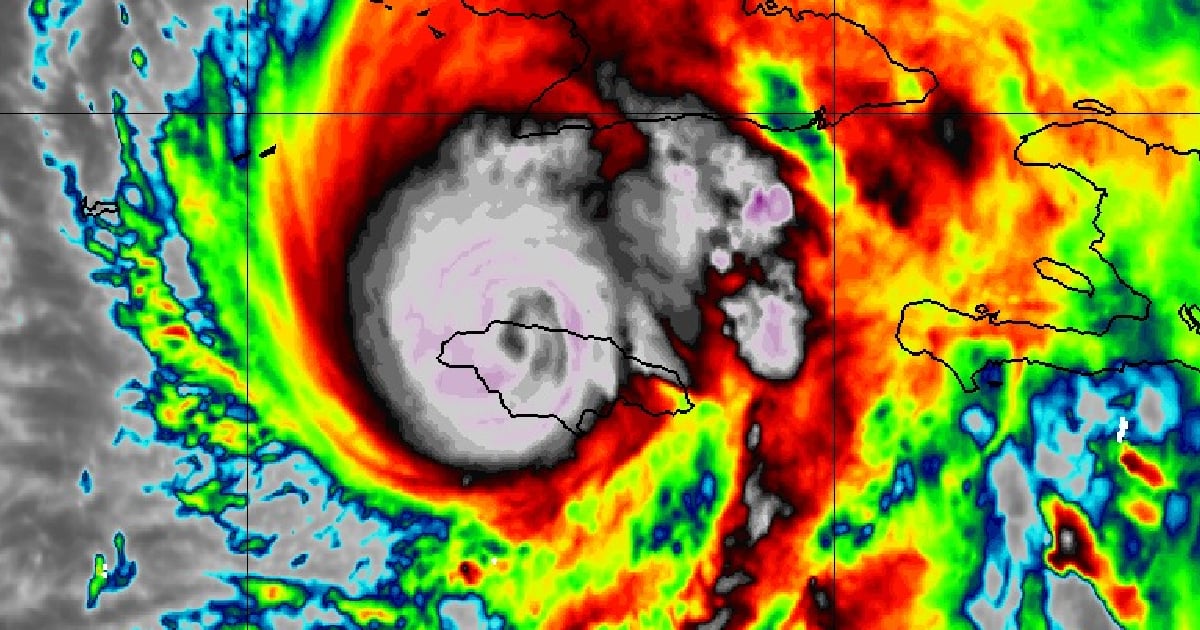
The once-mighty Hurricane Melissa has weakened to a Category 4 storm on Tuesday afternoon, yet it remains a significant threat as it barrels through northwest Jamaica with catastrophic winds, severe flooding, and intense storm surges, as reported by the U.S. National Hurricane Center (NHC).
In a 4:00 p.m. update, the NHC emphasized, “This is an extremely dangerous situation and poses a threat to life.” Residents on the island are urged to stay in their shelters and are advised to remain there throughout these life-threatening conditions.
"To shield yourself from the wind, it's crucial to place as many walls as possible between you and the outside," the advisory suggested to Jamaicans. "Seek refuge in an interior room without windows, ideally somewhere away from falling trees; this is the safest spot inside a building. Consider using a mattress for cover and wear a helmet for added protection."
Melissa made landfall in Jamaica at midday on Tuesday as a Category 5 hurricane on the Saffir-Simpson scale. The fierce cyclone struck the southern part of the Caribbean island with sustained winds reaching up to 185 mph (295 km/h) and even higher gusts. Its minimum central pressure was recorded at 892 mb upon entering Jamaican territory, according to the NHC.
As it moved across the island nation, Melissa unleashed havoc with winds up to 270 km/h, torrential rains, and storm surges with waves over three meters high, leaving a trail of devastation in its wake: collapsed roofs, widespread power outages, overflowing rivers, and landslides.
The hurricane's eye slowly traversed the western part of the island, leaving behind scenes of total destruction in Montego Bay and nearby rural communities. Local authorities urged residents to remain in their shelters, while emergency services described the situation as "catastrophic" and feared substantial material losses across the western region of Jamaica.
Now a Category 4 storm, Melissa continues to cover a vast area of the Caribbean, with hurricane-force winds extending up to 45 kilometers from its center and storm gusts reaching as far as 315 kilometers away.
By around 5:00 p.m., the hurricane's center emerged along the northwestern coast of Jamaica. Melissa is now heading toward eastern Cuba, bringing maximum sustained winds of 145 mph (230 km/h).
Cuban provinces in the east, particularly Santiago de Cuba, Guantánamo, Granma, and Holguín, are under hurricane alert due to the impending impact of this meteorological phenomenon, which could lead to coastal flooding, landslides, and severe infrastructure damage.
The independent global weather visualization platform Windy forecasted on Tuesday that Hurricane Melissa will make landfall in Cuba near the Uvero–Chivirico area on the southern coast of Santiago around 7:00 a.m. Wednesday, with maximum winds of approximately 138 mph (222 km/h).
Key Questions About Hurricane Melissa's Impact
What precautions should residents in Jamaica take during Hurricane Melissa?
Residents should stay in their shelters, seek refuge in interior rooms without windows, and use mattresses or helmets for additional protection against debris and strong winds.
What are the potential impacts of Hurricane Melissa on eastern Cuba?
Eastern Cuba could experience coastal flooding, landslides, and significant damage to infrastructure due to the hurricane's strong winds and heavy rains.
How have local authorities in Jamaica responded to Hurricane Melissa?
Authorities have urged residents to remain in their shelters and have described the situation as catastrophic, anticipating significant material losses.