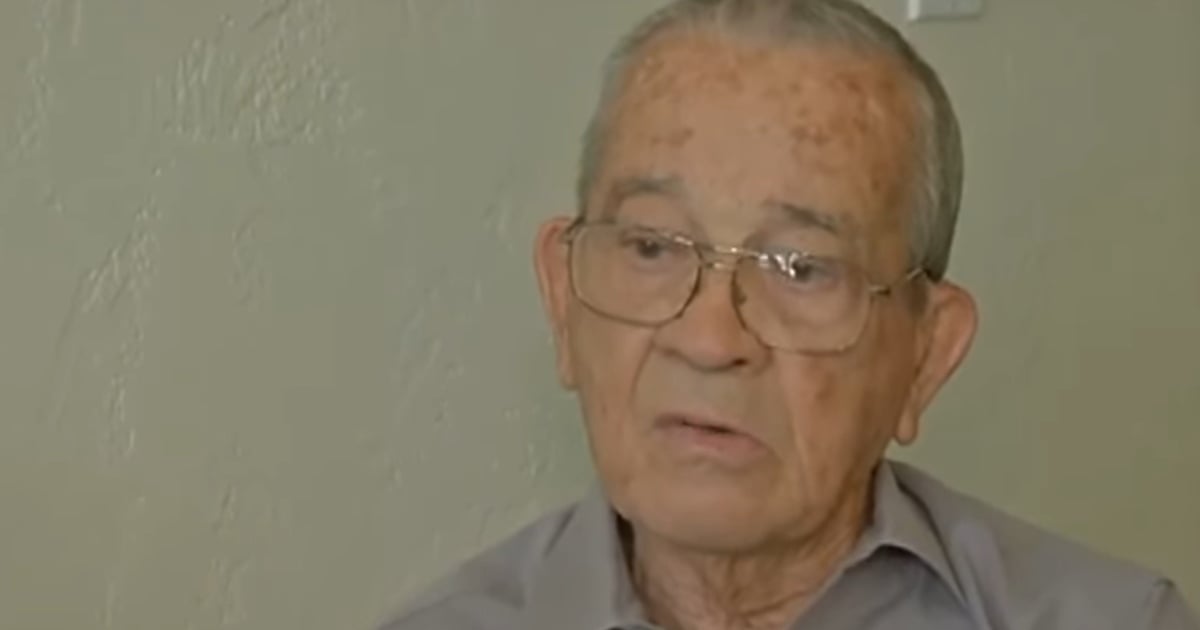
Former political prisoner Orlando Castro García, the last surviving participant of the attacks on the Moncada and "Carlos Manuel de Céspedes" barracks who later sought refuge in the United States, passed away on Saturday in Miami. He was 97 and spent his final days at an elderly care facility in the southwest part of the city.
The news of his passing was confirmed by his wife, fellow former political prisoner Georgina Cid, to Cuban journalist Wilfredo Cancio. Those who knew Castro remember him as a man of unyielding "dignity and decency," who retained his clarity of mind and unwavering belief in a democratic future for Cuba until the very end.
An Unyielding Spirit
Born on July 14, 1928, in Unión de Reyes (Matanzas), Castro studied at the School of Commerce in Havana. He was working as a financial supervisor for the Sabatés company when Fulgencio Batista's coup drove him to join the July 26, 1953 armed uprising.
He was among the 25 insurgents who attacked the "Carlos Manuel de Céspedes" barracks in Bayamo, an operation that coincided with the assault on Moncada in Santiago de Cuba.
From Asylum to Exile
After the failed attempt, Castro sought asylum at the Argentine Embassy, traveled under safe-conduct to Costa Rica, and later lived in Mexico and Honduras before returning to Cuba under the 1955 amnesty.
Once back in Cuba, he distanced himself from Fidel Castro, rejecting the July 26 Movement due to what he perceived as its undemocratic nature.
Life in Opposition
Following Fidel Castro's rise to power in 1959, Orlando Castro engaged in opposition activities. In 1961, he was arrested and sentenced to 30 years for conspiracy. He served 17 years before going into exile in 1979. His wife, Georgina Cid, endured 16 years of political imprisonment.
In exile, Castro reflected on the July 26 events with critical calmness, describing them as a youthful venture "full of passion but lacking military knowledge." He often contemplated the authoritarian trajectory that followed Batista's overthrow.
A Lasting Legacy
Those who encountered Castro depict him as a sober and tenacious patriot, "a true embodiment of Cuban spirit and national pride."
According to a family notice, his funeral will take place on Tuesday, October 28, at 11:30 a.m. at Opalocka Cemetery, with a farewell prayer. A mass in his honor will be held at a later date.
With his death, a generational chapter of witnesses and direct participants in the July 26 assaults comes to a close, marking the end of an era of those who opposed totalitarianism both from prison and in exile after the revolution.
Orlando Castro's Life and Legacy
Who was Orlando Castro García?
Orlando Castro García was a former political prisoner and the last surviving member of the July 26, 1953, uprising against the Batista regime in Cuba. He later went into exile in the United States and remained a staunch advocate for democracy in Cuba.
What role did Orlando Castro play in the events of July 26, 1953?
Orlando Castro was one of the insurgents who participated in the assault on the "Carlos Manuel de Céspedes" barracks in Bayamo, an operation that was part of the larger July 26 uprising against the Batista regime in Cuba.
How did Orlando Castro's views differ from Fidel Castro's?
Orlando Castro broke away from Fidel Castro after returning to Cuba, rejecting the July 26 Movement due to his perception of its undemocratic nature. He later engaged in opposition activities against Fidel Castro's regime.