For over six decades, the Cuban regime has relied heavily on a singular narrative to maintain its political survival: the so-called "blockade" imposed by the United States is blamed for every economic failure, shortage, and power outage that disrupts the daily lives of Cubans. This story has been repeated so persistently that it has become an accepted truth among many sectors of international public opinion.
However, the documented reality paints a starkly different picture. A closer look at actual trade flows, financial transactions, and resource distribution on the island reveals the fragility of the regime's argument. The economic consequences attributed to the embargo by Havana simply do not hold up against empirical evidence.
Behind this gap between rhetoric and reality lies a calculated strategy. For decades, the Castro elite has mastered the art of turning its own administrative incompetence into geopolitical victimization, institutional corruption into heroic resistance, and its extractive nature into an inevitable consequence of external hostility. This narrative distortion has been extraordinarily successful: while the world points fingers at Washington, the true architects of Cuba's tragedy govern from Havana with near total impunity.
Upcoming UN Vote: A Familiar Ritual
In less than a week, the United Nations General Assembly will once again vote on the Cuban resolution condemning the U.S. embargo. As it has every year since 1992, the ritual will play out the same way: Cuba will present astronomical figures of alleged damages, dozens of countries will deliver solidarity speeches, and the resolution will pass by an overwhelming majority. What won’t be discussed in that chamber are the documented data of multimillion-dollar commercial transactions, revelations of financial reserves surpassing those of entire nations, and the real architecture of a system that has perfected the art of turning its own incompetence into geopolitical victimization.
The UN vote will not determine the fate of the U.S. embargo, which will remain in place regardless of the outcome. However, it will decide whether the international community continues to legitimize an explanation that absolves the Cuban regime of all responsibility for its people's suffering, while that same regime keeps $18.5 billion hidden away, resources that could resolve the crises it blames on external factors.
I write this article because I too was once deceived by this narrative of victimization. No one who loves their country wants to see it harmed, of course. This is also what the sinister rhetoric of the regime exploits. Today, with access to information, I can dismantle the rhetoric that once appealed to me for years.
The Myth of Trade Restriction
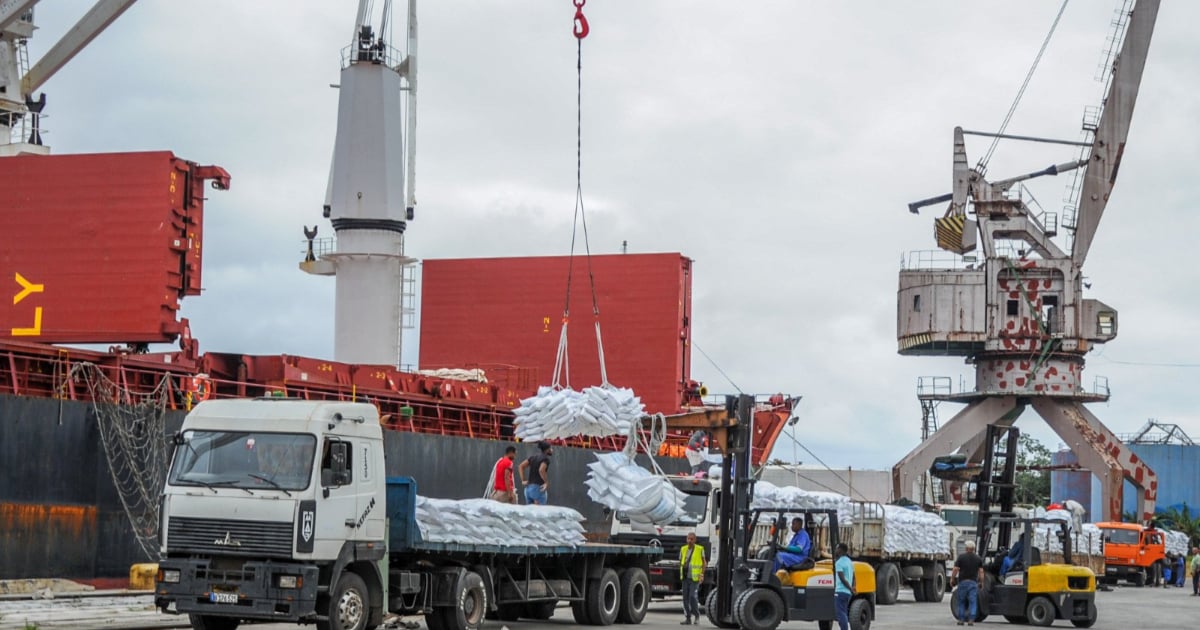
Official records from the U.S. Department of Agriculture directly contradict the narrative of a "total blockade." In 2024, U.S. exports to Cuba exceeded $370 million in agricultural products and food. These goods include frozen chicken, soybeans, corn, and wheat—the very staples that a supposedly "blockaded" country shouldn't be able to acquire from its primary geopolitical adversary.
The growth in trade has been both sustained and dramatic. By February 2025, these exports reached $47 million, marking the highest level since 2014. This increase represents a 75.1% jump compared to the same month the previous year. From January to June 2025, cumulative sales amounted to $243.3 million, a 16.6% growth over the same period in 2024. By the end of 2025, the total trade flow is projected to exceed $585 million based on current trends. According to USTEC records, Cuba's total purchases from the United States since 2001 amount to more than $7.679 billion.
This figure takes on its true significance when one realizes that the United States has become one of the top five food suppliers to the Cuban market. The paradox is hard to ignore: the country allegedly "blockading" Cuba to the point of starvation is regularly and increasingly selling it chicken, rice, milk, and medicines.
Beyond Food: A Diverse Trade Relationship
The scope of trade diversification goes far beyond food. In the early months of 2025, Cuba purchased used vehicles from the United States valued at $15.3 million, along with motorcycles, solar panels, agricultural machinery, medical equipment, industrial chemicals, and refrigeration systems. The import catalog includes everything from John Deere tractors to communion wafers, premium coffee, long-grain rice, fortified milk powder, and select cuts of pork.
The legal framework allowing these transactions has existed for decades, debunking the narrative of a besieged plaza. The Trade Sanctions Reform and Export Enhancement Act (TSREEA) of 2000 and the Cuban Democracy Act (CDA) of 1992 explicitly authorize the sale of food, medicines, and humanitarian supplies to Cuba. The only condition: the Cuban government must pay in cash. There is no credit, no deferred financing, but there is also no absolute prohibition on trade, especially concerning essential goods.
In 2023, Washington approved medical exports to Cuba worth over $800 million, doubling the figure from 2021. Restrictions primarily operate in the financial realm: Cuba cannot seek loans from U.S. banks or access New York's capital markets. However, purchasing basic products with cash has never been prohibited.
Financial Mismanagement and Missed Opportunities
The restriction Cuba faces in international markets has a precise name: credit distrust. For decades, the Cuban regime has built a catastrophic record as a debtor, marked by repeated defaults, endless renegotiations, and an apparent inability—or more precisely, a deliberate unwillingness—to honor its financial commitments.
The numbers from the Paris Club illustrate this dynamic with crystal clarity. Cuba drags a debt of $4.62 billion with this organization, positioning itself as the second-largest debtor in Latin America, only surpassed by Venezuela. This figure is notable on its own but takes on its true dimension when examined in its historical context.
In 2015, the Paris Club made an extraordinary decision: to forgive $8.5 billion of a total debt that reached $11.1 billion. The forgiveness eliminated over 75% of the debt. The remaining balance was restructured on exceptionally favorable terms: minimal annual installments until 2033, with a five-year interest-free grace period. Few countries have received such benevolent conditions.
The Cuban regime's response to this international generosity has been systematic default. Since 2019, Havana has failed to pay over $200 million in agreed-upon installments. Renegotiations have occurred every few months: in September 2023, in January 2025, and so on. Each meeting follows the same script: Cuba requests more time, creditors express "understanding of the difficulties," and the payment schedule is extended once more into an indefinite future.
This pattern of non-payment extends beyond the Paris Club. The list of debt forgiveness that Cuba has received over the past two decades is astonishing. China forgave $6 billion in 2011. Mexico forgave $487 million in 2013. Russia canceled $35 billion in 2014, eliminating 90% of a debt dating back to the Soviet era. Subsequently, Moscow has granted additional postponements for the outstanding amounts.
Despite these extraordinary reductions totaling over $54 billion in forgiven debt, Cuba continues to not pay and to accumulate new debts. The current balance shows an external debt exceeding $40 billion, including unpaid commitments to Brazil, Venezuela, Argentina, Spain, France, Austria, Belgium, and Japan, in addition to active lawsuits with private creditors.
The case of the CRF1 fund exemplifies the legal consequences of this behavior. The fund, established in the Cayman Islands, sued Cuba in London courts for over $78 million related to loans granted in the 1980s. The Cuban government refused to recognize the legitimacy of the claim.
The Hidden Wealth of Military Power
The official regime narrative about poverty caused by the "blockade" completely collapses when examining revelations about GAESA (Grupo de Administración Empresarial S.A.), the military conglomerate that controls the most lucrative sectors of the Cuban economy. The leak of 22 internal financial documents, analyzed by journalist Nora Gámez Torres for the Miami Herald, exposed a reality that the Cuban authorities have hidden for decades.
The financial statements for 2023 and 2024 reveal that GAESA accumulates at least $18.5 billion in liquid assets. Of this amount, $14.5 billion remains deposited in bank accounts and financial entities owned by them, available for immediate use. To understand the magnitude of these figures, it is enough to compare them with the international reserves of countries like Costa Rica and Uruguay or Panama.
During the first quarter of 2024 alone, the military conglomerate generated $2.1 billion in net profits. Cimex, its main company that manages retail, banking, and international trade businesses, contributed half of those profits. The tourism company Gaviota, another key subsidiary, had $4.3 billion in its bank accounts in March 2024. This single company holds nearly 13 times more liquid resources than the $339 million the regime itself estimates are needed to supply all the country's pharmacies for a whole year.
Economist Pavel Vidal characterized GAESA as a "parallel central bank" that operates entirely outside the formal economic system. The conglomerate accumulates foreign currency with an ultra-conservative policy: hoarding dollars and operating in pesos, thus protecting itself from inflation and devaluation that devastate the rest of the Cuban economy. This financial strategy ensures that resources remain concentrated in military hands while the population faces a critical shortage of all types of basic goods.
GAESA's organizational structure functions, as described by journalist Marc Bermúdez, like a multi-layered corporate matryoshka. Although formally attached to the Ministry of the Revolutionary Armed Forces, the conglomerate controls entire strategic sectors of the economy: tourism, remittances, retail, telecommunications, ports, customs, and finance. It operates through at least 25 companies identified in the leaked documents, including CIMEX, Gaviota, TRD Caribe, Almacenes Universales, and the Banco Financiero Internacional.
Opacity characterizes every aspect of GAESA's operations. The conglomerate does not report to the National Assembly or any civil auditing body. Former Comptroller General Gladys Bejerano publicly admitted in 2023 that she could not audit the military conglomerate because it operated outside her jurisdiction. Shortly thereafter, Bejerano was removed from her position without official explanation.
The leaked documents also reveal the destination of these massive resources. Despite extraordinary income, GAESA spent $5 billion in just five months between March and August 2024. Most of this budget was allocated to the construction of luxury hotels. Between 2021 and 2023, 36% of all government investments were channeled into hotel projects, while only 2.9% went to agriculture and a meager 1.9% to health programs.
The revelation of these figures provoked a furious reaction from the regime. The official portal Cubadebate launched a personal smear campaign against Nora Gámez Torres, accusing her of being a "CIA agent" and questioning her academic background. Significantly, the text did not discuss or refute a single figure from the investigation. If the documents were false or the figures inaccurate, the regime could simply publish its own financial statements and disprove the accusations. Instead, it chose personal attacks, indirectly confirming the veracity of the leak through its silence on the concrete data.
The resources exist. What does not exist is the willingness to use them to solve the crisis.
The question that naturally arises from these data is as obvious as it is unsettling: what could Cuba do with $18.5 billion in immediate liquidity?
Let's start with the health system, whose collapse the regime systematically attributes to the embargo. The regime estimates it needs $339 million annually to supply all the country's pharmacies with essential medicines. GAESA's liquid resources could cover this need for over 54 consecutive years without receiving a single additional dollar of income. Currently, the healthcare system lacks 70% of these essential medicines. The shortage is not due to a lack of resources but to their deliberate concentration in military hands.
The energy sector presents equally revealing calculations. Keeping the national electrical grid operational, including repairs, maintenance, and fuel, requires approximately $250 million annually, according to conservative technical estimates. With GAESA's resources, Cuba could guarantee stable electricity for 74 years. Meanwhile, the population endures blackouts lasting up to 20 hours daily, destroying perishable foods, paralyzing economic activity, and plunging entire neighborhoods into darkness for complete days.
External debt also finds immediate resolution with these resources. The $4.62 billion that Cuba owes to the Paris Club represents only 25% of GAESA's liquidity. Full payment of this debt, along with a significant reduction of other international commitments, would be covered, and more than $13 billion would still remain. The rehabilitation of Cuba's credit credibility, which would allow it to access international financial markets again, is within immediate reach with a political decision to use these funds.
Food imports constitute another clarifying calculation. Cuba imported food worth approximately $2 billion in 2024. With the liquidity available in military coffers, the country could secure all its food import needs for over nine years, while simultaneously enabling massive investment in agricultural recovery to reduce external dependence. Instead, seven out of ten Cubans stop having at least one daily meal due to a lack of money or available food.
The collapsed productive infrastructure also has a repair price. Modernizing the outdated industrial plant, renewing the public transport fleet, rebuilding rural roads that allow agricultural products to be brought from the fields to urban markets: all these critical investments would easily fit within the existing resources. Technical estimates suggest that a significant infrastructural transformation would require between $3 billion and $5 billion over five years. GAESA possesses almost four times this amount in immediately available cash.
Even assuming the continuation of massive fuel imports, the resources would allow for stable energy flow while developing alternatives. Oil and its derivatives cost Cuba approximately $3 billion annually. GAESA's $18.5 billion would cover more than six years of full oil imports at the current consumption rate.
This dynamic transforms the official embargo narrative into a tool of internal political management. While the population attributes its deprivations to external factors, the elite controlling GAESA can continue accumulating without facing questions about the distribution of resources. The extreme poverty of 89% of the Cuban population coexists with liquid reserves exceeding those of entire nations because the system is designed precisely to produce this result: concentration at the top, scarcity at the bottom, and a convenient external explanation that diverts all responsibility.
The Politics of Victimhood
The narrative of the "genocidal blockade" transcends domestic propaganda to become a tool of foreign policy with surgical precision. Each year, the UN General Assembly stages the same ritual: Cuba presents a resolution condemning the U.S. embargo and receives overwhelming support. In 2024, the vote resulted in 187 votes in favor, with only the United States and Israel opposing and Moldova abstaining.
This annual diplomatic victory serves multiple strategic functions for the regime. First, it internationally validates the victimhood narrative, legitimizing the Cuban explanation of its economic problems before the global community. Second, it reinforces the regime's political identity as David facing Goliath, a positioning that resonates deeply in the anti-imperialist sentiment of numerous Global South governments. Third, it allows the regime to present itself as a victim of international injustice deserving of solidarity and diplomatic concessions.
The numbers Cuba presents at these international forums reach stratospheric dimensions. The Ministry of Foreign Affairs denounces "losses of $7.556 billion in the last year" and "accumulated damages exceeding $170 billion" due to the embargo. These calculations lack transparent or verifiable methodology. They include abstract concepts such as "lost profits" and hypothetical earnings projections that Cuba would have obtained in an alternative scenario without an embargo.
The technical fragility of these figures dramatically contrasts with their political effectiveness. Few governments question the methodology or request empirical evidence. The condemnation of the embargo has become a diplomatic ritual that many countries perform automatically, without analyzing whether the factual premises that underpin it correspond to observable reality.
Here emerges a contradiction that votes at the UN systematically ignore: how can a genuinely "blockaded" country import hundreds of millions of dollars annually from its supposed blocker? How does this narrative explain that the United States is one of the top five food suppliers to the Cuban market? Why does a regime that denounces $170 billion in damages maintain $18.5 billion in liquid reserves without using them to alleviate the suffering of its population?
These questions rarely find space in multilateral debates. The UN voting format favors binary positions: voting against the embargo or in favor of it. The complexity of examining whether the embargo truly has the effects Cuba attributes to it, whether there are more determining domestic factors in the Cuban crisis, or whether the ruling elite shares significant responsibility for the population's privations is lost in this forced simplification.
Governments that year after year vote in favor of the Cuban resolution operate with diverse motivations. Some express genuine anti-imperialist solidarity. Others seek to maintain cordial relations with Havana. Several act out of institutional inertia, continuing positions established decades ago without critical reevaluation. Few seem to have updated their analysis based on current trade data or revelations about the financial resources that the Cuban regime effectively controls.
This international acquiescence produces tangible and harmful consequences. Each vote that validates the Cuban narrative without examining it critically strengthens the regime's position vis-à-vis its own population. When the United Nations condemns the embargo by 187 votes to 2, the Cuban government can show this result as irrefutable proof that the international community recognizes the embargo as the main cause of the country's problems. The Cuban population, bombarded daily with this message, has less room to question whether there are domestic responsibilities in its situation.
The Cuban diplomatic strategy also skillfully exploits broader geopolitical tensions. Presenting the embargo as a manifestation of American imperialism resonates in contexts where many countries harbor their own grievances or conflicts with Washington. Cuba positions itself as a symbol of resistance, turning its annual vote at the UN into a referendum on U.S. foreign policy rather than an objective assessment of the causes of the Cuban crisis.
While this diplomatic cycle perpetuates itself, the Cuban regime achieves symbolic victories in New York and Geneva that reinforce its international legitimacy, keeps alive a narrative that diverts responsibility for domestic economic disaster, and avoids accountability for decisions such as maintaining $18.5 billion in military reserves while the population lacks basic medications. Victimhood has ceased to be mere propaganda to become a governance structure: a mechanism that simultaneously justifies failure outwardly and disciplines dissent inwardly by systematically externalizing all responsibility.
The Mercenary Business
The moral contradiction of the Cuban regime reaches its crudest expression in the massive recruitment of young Cubans to serve as mercenaries in Russia's invasion of Ukraine. While Havana travels the world capitals demanding solidarity against the "genocidal blockade" that condemns its people to hunger, that same regime facilitates the sending of tens of thousands of its citizens to die in a war that does not belong to them.
The numbers confirmed by multiple sources are chilling. Ukrainian officials testified before the U.S. Congress that Russia has recruited approximately 20,000 Cubans, with 7,000 already deployed in active combat zones. Western intelligence estimates suggest the real figure could reach 25,000. This contingent makes Cuba the largest provider of foreign combatants for Moscow, surpassing even the 12,000 troops sent by North Korea.
The mechanics of recruitment expose the contradictions of the official discourse. The regime insists that these are "human trafficking networks" operating without government knowledge or permission. This narrative collapses under the weight of accumulated evidence. New direct Havana-Moscow air routes operated by Aeroflot began precisely when recruitment intensified. Military contracts arrive translated into Spanish. Recruits undergo medical exams coordinated in Cuban facilities. The passports of those who travel systematically lack exit stamps, a deliberate technique to avoid documentary traces of state participation.
Individual motivation of recruits emerges directly from the economic conditions the regime itself has created. Russia offers salaries of approximately $2,000 per month. In Cuba, the average salary barely reaches $20. For a young person who sees their family go hungry, who suffers 20-hour daily blackouts, who lacks prospects for improvement on the island, the Russian offer represents astronomical figures. One hundred times their current salary. The possibility of sending money home. Perhaps, eventually, access to Russian citizenship and definitive escape from the system that has condemned them to poverty.
Ukrainian authorities have captured several Cuban mercenaries during military operations. The testimonies of these prisoners coincide in key aspects: many believed they were going to construction jobs in Russia, only discovering upon arrival that they would be sent to the front lines. Their passports were confiscated. They were threatened with imprisonment or deportation if they refused to sign military contracts. They received minimal training, a week in many cases, before being dispatched to intense combat zones.
At least 40 Cubans have died on the Ukrainian front, according to figures confirmed by passports recovered by Ukrainian forces. The real figure likely multiplies this number several times. Andrey Kartapolov, head of the Russian Duma's Defense Committee, publicly confirmed in October 2025 the plans for mass recruitment. "A true Cuban patriot cannot be forbidden to love Russia," he declared, adding that Moscow welcomes those who wish to join the Russian Armed Forces in their "just struggle against global fascism." This official confirmation from Moscow occurred without Havana issuing any diplomatic protest, revealing the complicity of the Cuban regime.
Unveiling the Blockade Lie
The 89% of Cuban families living in extreme poverty, according to the Cuban Observatory of Human Rights. Seven out of ten people stopped having at least one daily meal due to lack of money or food. Blackouts last up to 20 continuous hours. The healthcare system, once the regime's pride, lacks 70% of essential medications. People search for food in the garbage.
All this happens while GAESA accumulates $18.5 billion, builds empty luxury hotels, and maintains international reserves exceeding those of entire nations. This poverty is the deliberate result of a system that prioritizes the accumulation of power and capital in the hands of a military elite over the basic needs of the population. The Cuban regime has built its political survival on a narrative that evidence demonstrates false in its fundamental premises. The "genocidal blockade" that supposedly explains every aspect of the Cuban tragedy collapses when examining actual trade flows, documented state financial capabilities, and the effective distribution of resources within the country.
Cuba maintains active trade relations with the United States and the rest of the world. It imports hundreds of millions of dollars annually in food, medicine, machinery, and technology from U.S. territory. It freely buys from Europe, Asia, and Latin America. The restrictions it faces do not operate in the realm of immediate commercial transactions, where it can purchase virtually any product by paying in cash.
The resources exist. The money is there. The humanitarian tragedy devastating Cubans does not emerge from deliberate political decisions on how to distribute abundant resources. The regime chooses to build empty luxury hotels while hospitals lack basic antibiotics. It prefers to accumulate millions in opaque accounts while seven out of ten families skip daily meals out of hunger. It maintains $18.5 billion in bank deposits while the population searches for food in the garbage.
The international community facilitates this operation each time it mechanically votes against the embargo without examining the factual premises supporting the Cuban position. Each UN resolution that ignores real trade figures, overlooks GAESA's existence and its billions, and accepts the regime's calculations without methodology, reinforces the narrative. Each government expressing solidarity with Cuba based on this distorted version of reality contributes to perpetuating the system that keeps Cubans in misery.
The consequences of this complicity are tangible. While the world condemns the embargo supposedly causing hunger in Cuba, 25,000 young Cubans are recruited as mercenaries to die in Ukraine, driven by the economic desperation the regime itself creates and maintains. While nations vote solidarity with the "blockaded Cuba," GAESA invests billions in hotels no one will occupy.
Unmasking this farce is not an abstract academic exercise. It matters because as long as it persists without being challenged with data and evidence, the Cuban people will continue to pay the price. Each day the world accepts the "blockade" narrative as a sufficient explanation of the Cuban crisis is another day the regime avoids accountability for its decisions. Each vote at the UN that validates this version without examining it is tacit permission for the continued concentration of resources in military hands while the population suffers avoidable deprivations.
As long as this narrative distortion operation continues to function in international forums, as long as governments keep voting based on ideological solidarity rather than empirical evaluation, as long as critical analysis of the Cuban regime's domestic responsibilities is considered politically incorrect, the current system will remain intact. And with it, the suffering of a people held hostage by an elite that has shown a preference for accumulating power and capital at the expense of collective well-being.
Understanding the Cuban Embargo and Its Implications
What is the U.S. embargo on Cuba?
The U.S. embargo on Cuba is a series of trade and economic sanctions imposed by the United States to restrict commercial, financial, and economic activities between the two countries. Initiated in 1960, the embargo aims to pressure the Cuban government to transition to a more democratic system by limiting its economic resources.
How does the embargo affect Cuba's economy?
While the Cuban government claims the embargo severely cripples its economy, in reality, Cuba maintains significant trade relations with other countries, including the United States. The embargo primarily restricts Cuba’s access to U.S. financial markets and credit, but it does not completely block trade, especially in essential goods such as food and medicine.
What is GAESA, and why is it significant?
GAESA (Grupo de Administración Empresarial S.A.) is a powerful military-owned conglomerate in Cuba that controls significant sectors of the economy, including tourism, retail, and financial services. It holds substantial liquid assets, which contradicts the regime's narrative of economic hardship due to the embargo, highlighting a mismanagement of resources.