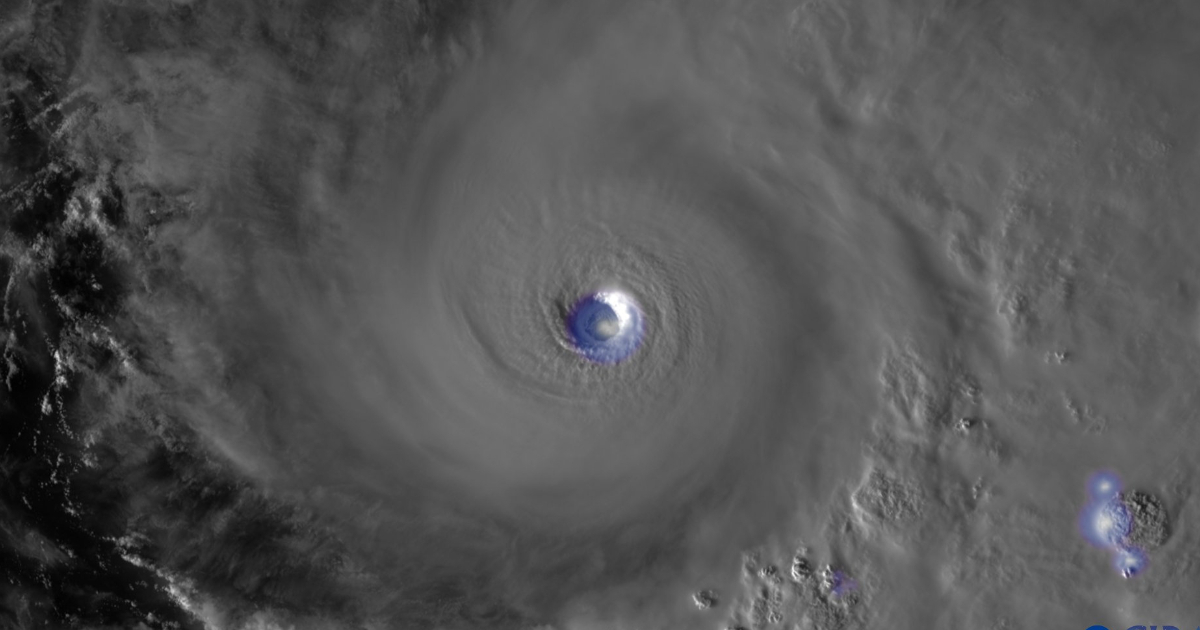
Hurricane Melissa is approaching eastern Cuba as a formidable Category 5 storm on the Saffir-Simpson scale. With sustained winds reaching 270 kilometers per hour and even stronger gusts, it ranks among the most severe cyclones to threaten the island in over a hundred years.
If Melissa maintains its current strength upon landfall, it could match or even surpass Cuba's most powerful hurricanes on record, such as those in 1924 and 1932. Both of these were Category 5 storms, remembered as the most destructive in the country's meteorological history. The 1924 hurricane struck the western region with estimated winds of 265 km/h, while the 1932 storm battered the central area with winds exceeding 240 km/h, resulting in thousands of casualties.
Unlike these historical events, Melissa is heading towards Cuba's eastern provinces, an area that has not faced a direct hit of this magnitude. This region, with its already fragile infrastructure and deteriorated essential services, is particularly vulnerable. Experts caution that the combination of extreme winds, storm surges, and heavy rains could lead to catastrophic damage in provinces such as Guantánamo, Santiago de Cuba, Holguín, Granma, Las Tunas, and Camagüey.
Historically, other destructive cyclones in Cuba include Hurricane Michelle in 2001, which struck as a Category 4 with winds of 225 km/h; Hurricane Ivan in 2004, which brushed the western part of the island as a Category 5; and Hurricane Flora in 1963, which caused over 1,000 deaths due to prolonged rainfall, despite having less intense winds.
Melissa, however, embodies all the elements of a severe hurricane: sustained winds exceeding 250 km/h, a central pressure below 910 hectopascals, and a slow movement that raises the risk of flooding and landslides. Meteorologists have described its development as an "explosive intensification," potentially making it one of the most violent tropical systems in recent Caribbean history.
Should it strike Cuba with its current intensity, Melissa would be the most powerful hurricane to hit the island since reliable records began. Civil Defense authorities have maintained a Cyclonic Alarm Phase across six eastern provinces, while rescue teams and electrical technicians prepare to respond to the aftermath of the storm.
The nation faces this new challenge amidst widespread power outages, resource shortages, and a limited communications network that could hinder emergency response. Projections suggest that Melissa's eye could approach the southeastern coastline between Tuesday night and early Wednesday morning, with a destructive potential that might forever alter Cuba's meteorological memory.
Understanding Hurricane Threats in Cuba
What makes Hurricane Melissa particularly dangerous for Cuba?
Melissa's combination of extreme sustained winds, low central pressure, and slow movement poses a high risk of severe flooding and landslides, especially in Cuba's vulnerable eastern regions.
How does Hurricane Melissa compare to past hurricanes in Cuba?
Melissa could surpass historical hurricanes like those in 1924 and 1932 in terms of strength and potential destruction, targeting an area less accustomed to such impacts.
What preparations are being made in response to Hurricane Melissa?
Authorities have declared a Cyclonic Alarm Phase in six eastern provinces, and rescue and technical teams are on standby to address the aftermath of the storm.