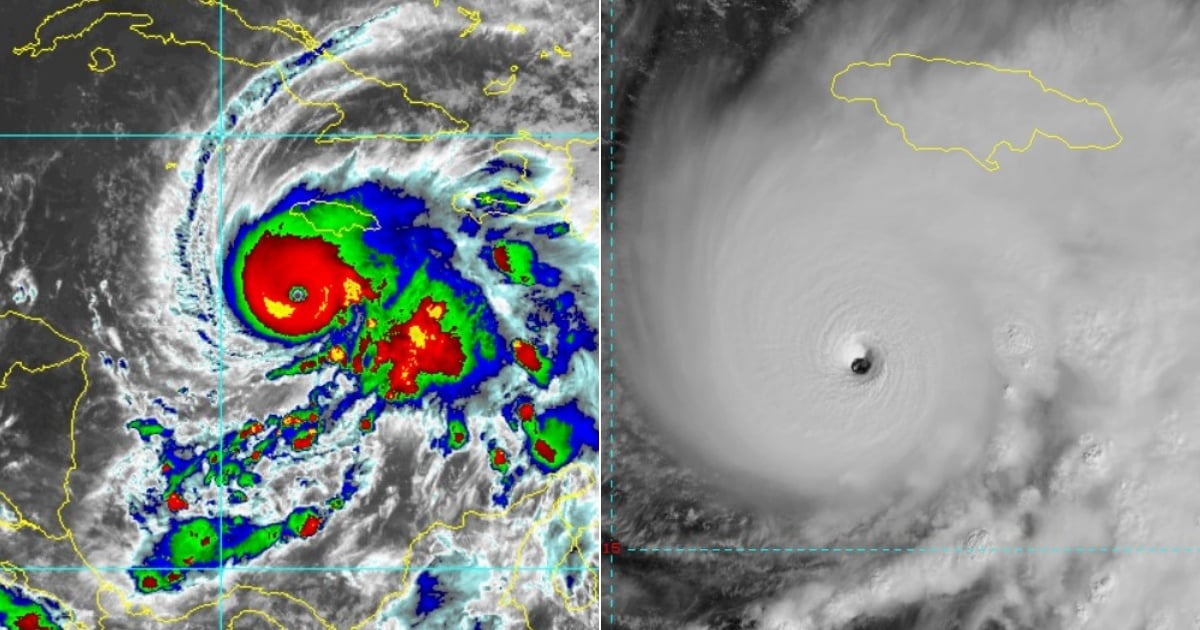
The intensity of Hurricane Melissa has surged, now boasting sustained winds of 168 mph (270 km/h) as reported in the latest update from the National Hurricane Center (NHC)
This new figure, 6 mph higher than the previous report, solidifies its status as a Category 5 hurricane, the most severe on the Saffir-Simpson scale. This development poses an extreme threat to Cuba and Jamaica, the latter being the hurricane's initial target in the Caribbean. "Melissa is a Category 5 hurricane [...] It is expected to reach southeastern Cuba as a very powerful hurricane," the NHC warned. Located approximately 330 miles southwest of Guantánamo, the storm is moving westward at a sluggish pace of 4 mph. However, a northward turn is anticipated tonight, potentially directing its core over Jamaica and subsequently into eastern Cuba by Tuesday night. Hurricane warnings are in place for the Cuban provinces of Granma, Santiago de Cuba, Guantánamo, and Holguín, signaling that hurricane conditions are expected in these areas within the next 36 hours. Additionally, Las Tunas is under a tropical storm warning, while regions such as the Bahamas and the Turks and Caicos Islands are on alert. "Tropical storm conditions are expected to begin in eastern Cuba on Tuesday. Hurricane conditions are expected to start in the hurricane warning area by Tuesday night." Cuban authorities are urged to hasten preparations to safeguard lives and property, particularly in coastal and mountainous regions where the impact of the winds could be magnified. With a minimum central pressure of 908 mb, Melissa has reached an exceptional intensity, even among the most destructive hurricanes in the region. The NHC has warned that hurricane-force winds extend up to 28 miles from the cyclone's center, while tropical-storm-force winds span a radius of up to 196 miles, covering an extensive area of the western Caribbean. In Cuba, the primary threat extends beyond the winds. Torrential rainfalls of 15 to 20 inches are anticipated in the eastern region, with potential for even greater local accumulations. This could lead to catastrophic flash flooding and landslides, especially in mountainous areas like the Sierra Maestra. "Total rainfall amounts of 15 to 20 inches are expected, with locally higher amounts, resulting in potentially catastrophic and life-threatening flash floods and numerous landslides," the NHC cautioned. Another significant risk is the storm surge that could severely affect the southern coast of eastern Cuba. Forecasts predict sea levels could rise between 7 and 11 feet above normal, accompanied by destructive waves. "There is a possibility of a significant storm surge along southeastern Cuba [...] It will be accompanied by large and destructive waves," the report warns. These effects will add to the already complex flooding situation caused by rains and waves, endangering not only coastal infrastructures but entire communities. While the eye of Melissa is expected to first impact Jamaica tonight, the bulletin makes it clear that Cuba is its next high-impact target: "the core of Melissa will move [...] into southeastern Cuba by Tuesday night." From there, it is projected to advance northeast over the Bahamas on Wednesday. The cyclone's current slow movement complicates forecasts and exacerbates the threat, as it prolongs exposure to intense rains, winds, and destructive waves in the affected regions. Hurricane Melissa poses an extreme threat to eastern Cuba, with the potential to cause widespread structural damage, loss of life, and mass displacements. Authorities must expedite evacuation plans in vulnerable areas, and the population should stay informed through official sources such as the Institute of Meteorology of Cuba and the U.S. National Hurricane Center. Upcoming bulletins will be crucial in determining the hurricane's final path and intensity as it makes landfall in Cuba. The island has endured devastating hurricanes in the past, but the current magnitude of Melissa, with sustained winds of 168 mph, places it in an exceptionally dangerous category. Hurricane Melissa is currently a Category 5 hurricane with sustained winds of 168 mph (270 km/h), posing a significant threat to Cuba and Jamaica. The hurricane poses a threat to Jamaica and eastern Cuba, particularly the provinces of Granma, Santiago de Cuba, Guantánamo, and Holguín. Other regions like the Bahamas and the Turks and Caicos Islands are also on alert. The expected impacts include catastrophic winds, torrential rainfalls leading to flash floods and landslides, and a significant storm surge potentially rising between 7 and 11 feet above normal sea levels.Severe Impact Forecasted for Cuba: Warnings in Effect
Catastrophic Winds and Intense Rainfall
Storm Surge Threat Looms: Potential for 11-Foot Surges
Path and Future Projections
Conclusions and Recommendations
Frequently Asked Questions About Hurricane Melissa
What is the current status of Hurricane Melissa?
What areas are under threat from Hurricane Melissa?
What are the expected impacts of Hurricane Melissa on Cuba?
Hurricane Melissa Intensifies, Reaching Catastrophic Wind Speeds
Monday, October 27, 2025 by Sofia Valdez