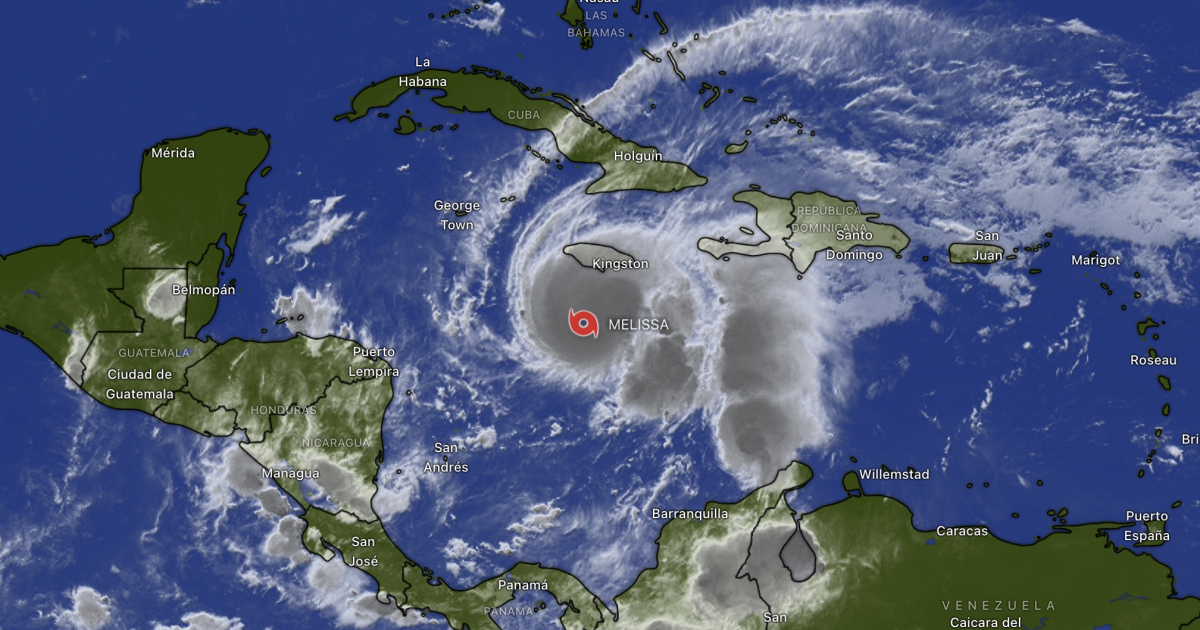
Hurricane Melissa is gaining momentum over the central Caribbean Sea, having escalated to a Category 4 storm on the Saffir-Simpson scale. The hurricane's maximum sustained winds have reached 150 miles per hour, with a minimum central pressure recorded at 926 millibars, as reported by the United States' National Hurricane Center (NHC) in their 2:00 AM advisory this Monday.
The hurricane’s center was located approximately 130 miles southwest of Kingston, Jamaica, and about 315 miles southwest of Guantánamo, Cuba. Melissa is currently progressing westward at a slow pace of 4 miles per hour. It is forecasted to veer northward, then northeastward, nearing Jamaica overnight and approaching eastern Cuba by Tuesday night.
Meteorologists anticipate that Melissa will sustain its Category 4 status in the coming hours, remaining a highly intense hurricane as it makes a direct hit on Jamaica. The island is bracing for extremely perilous conditions, including hurricane-force winds, destructive storm surges, and heavy rainfall that could lead to catastrophic flooding and landslides in mountainous and coastal regions.
The NHC has warned that rainfall totals in Jamaica could range from 15 to 30 inches, with localized areas potentially exceeding 39 inches. These intense downpours will also impact Haiti and the southern Dominican Republic, where accumulations between 8 and 16 inches are expected, posing a high risk of flash flooding and mudslides.
In eastern Cuba, particularly in the provinces of Granma, Santiago de Cuba, Guantánamo, and Holguín—all under a hurricane warning—rainfall is expected to accumulate between 10 and 15 inches, with peaks up to 20 inches in mountainous areas. These conditions could lead to river overflows, landslides, and significant coastal flooding along the southeastern shoreline.
The hurricane is also causing a dangerous storm surge along Jamaica's southern coast, with waves projected to reach between 10 and 13 feet, particularly in areas east of the impact point. In Cuba, the Institute of Meteorology (INSMET) has cautioned that rising sea levels and strong waves could severely affect coastal communities in Santiago de Cuba, Guantánamo, and low-lying areas of Granma.
According to the National Hurricane Center’s forecast, Melissa’s core will move over or very near Jamaica between Monday night and early Tuesday, traverse eastern Cuba on Tuesday night, and continue northeastward, crossing the Bahamas starting Wednesday. Although some fluctuations in intensity are expected, the U.S. agency predicts that the hurricane will maintain its status as a major system at least until it passes Cuba.
The Jamaican government has issued preemptive evacuation alerts for several southern coastal communities and has opened temporary shelters in anticipation of the hurricane's imminent arrival. In Cuba, the Civil Defense authorities have declared a hurricane warning phase for the eastern provinces, urging residents to reinforce roofs, secure homes, and stay informed through official updates.
Hurricane Melissa is also generating substantial waves in the Caribbean Sea, affecting the coasts of Haiti, the Dominican Republic, eastern Cuba, and the Cayman Islands. In the coming days, dangerous sea conditions will extend to the southeast and central Bahamas, and later, to Bermuda.
The National Hurricane Center emphasized that the most hazardous impacts of Melissa will be concentrated in Jamaica and eastern Cuba over the next 48 hours, with a focus on the risks of flash floods and landslides in mountain areas.
In its statement, the U.S. agency reiterated that preparations to safeguard lives and property should be finalized in Jamaica and expedited in Cuba, where winds will begin to intensify by Tuesday afternoon.
CiberCuba continues to closely monitor Hurricane Melissa's progression and the alerts issued by Caribbean meteorological services and the National Hurricane Center, providing updates on its path, intensity, and regional impacts.
Frequently Asked Questions About Hurricane Melissa
What is the current status of Hurricane Melissa?
Hurricane Melissa has intensified to a Category 4 storm with maximum sustained winds of 150 miles per hour, as per the latest advisory from the National Hurricane Center.
Which areas are most at risk from Hurricane Melissa?
The most at-risk areas include Jamaica and eastern Cuba, where the hurricane is expected to cause severe flooding, landslides, and storm surges.
What precautions are being taken in Jamaica and Cuba?
Jamaica has issued evacuation alerts and opened temporary shelters. In Cuba, the Civil Defense has declared a hurricane warning, urging residents to secure properties and stay informed.