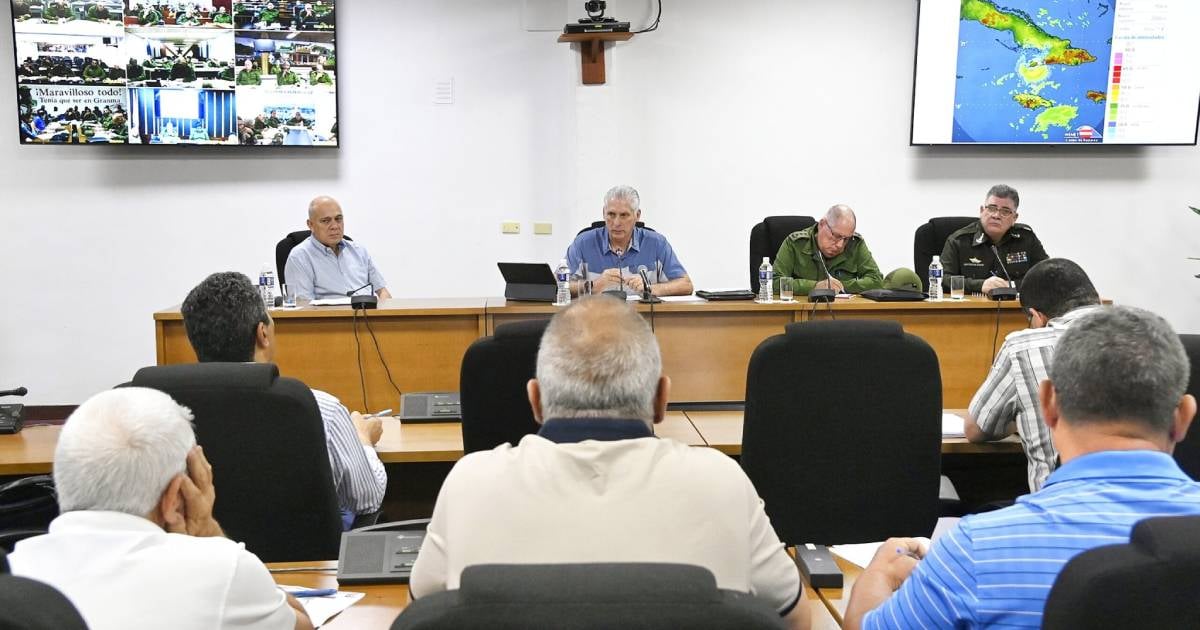
This Sunday, the Cuban government acknowledged that the provinces of Granma and Santiago de Cuba are facing extremely challenging conditions with the imminent arrival of Hurricane Melissa. This formidable system is moving towards the eastern part of the island, bringing winds exceeding 124 mph and intense rainfall that threaten coastal flooding and the overflow of rivers and reservoirs.
During a session of the National Defense Council led by Miguel Díaz-Canel, officials emphasized that the hurricane poses an "imminent danger" to the nation. Celso Pazos, director of the Institute of Meteorology (Insmet), specified that Melissa is expected to make landfall on Tuesday night in the eastern region, where it will linger for at least 12 hours before moving northward.
Potential for Severe Flooding
Vice Prime Minister Inés María Chapman highlighted the threat of significant flooding in Granma and Santiago. These areas are particularly vulnerable due to swollen rivers, full reservoirs, and low-lying coastal zones, exacerbating the hurricane's potential impact. "The situation is extraordinarily complex due to the convergence of several factors," Chapman noted, also referencing the overflowing reservoirs and the nighttime swelling of the Gulf of Guacanayabo, which hinders natural water drainage.
Amid these tense circumstances, local media reported that the Cauto El Paso dam, the largest in Granma, has begun releasing over 900 cubic meters of water per second as a preventive measure to manage the hurricane's rainfall. This reservoir, currently at 44% capacity, is channeling excess water towards low-lying areas in Holguín and Santiago de Cuba, under the supervision of engineers and provincial authorities.
Mass Evacuations Underway
Local authorities have confirmed large-scale evacuations. In Granma, Yudelquis Ortiz Barceló, the Provincial Defense Council president, announced plans to protect over 110,000 people. Meanwhile, in Santiago de Cuba, Beatriz Johnson Urrutia reported the relocation of 258,000 residents. Holguín and Guantánamo have also activated evacuation protocols and measures to ensure food supply, medical services, and animal safety.
President Díaz-Canel called for "constant communication with the public" and urged utilizing every possible measure to safeguard human lives amid what he described as a high-risk event. He also pointed out that the country is tackling this emergency while grappling with a critical electrical situation, which might complicate response efforts.
Eastern Cuba's Vulnerability
Hurricane Melissa, which has intensified to a Category 4 storm, is testing a region historically battered by cyclones and plagued by fragile infrastructure, prolonged power outages, and food shortages. Satellite images reveal a compact and intense system with an extensive cloud field already affecting eastern Cuba with intermittent rainfall.
In various parts of the country, citizens have voiced concerns over the lack of supplies, deteriorating housing, and limited capacity to respond to such a severe event. "Anything we don't address now, we will lose later," warned Díaz-Canel, stressing that the utmost priority is to save lives.
Anticipation and Anxiety
As the hurricane nears, the nation is engulfed in tense anticipation. Civil Defense has urged the population not to be complacent, to adhere to official instructions, and to evacuate high-risk areas without delay.
On social media, many Cubans express fear about the impending situation, recalling the devastating effects of past hurricanes such as Sandy, Ian, Matthew, and Oscar. As Melissa heads towards the southern coast of eastern Cuba, it signals one of the most significant meteorological emergencies in recent years, with a weary population bracing once again to withstand the storm amid uncertainty and hope.
Frequently Asked Questions About Hurricane Melissa's Impact on Cuba
What is the expected impact of Hurricane Melissa on Granma and Santiago de Cuba?
Hurricane Melissa is expected to bring strong winds exceeding 124 mph and heavy rainfall to Granma and Santiago de Cuba, posing risks of coastal flooding and overflowing of rivers and reservoirs.
How are Cuban authorities preparing for Hurricane Melissa?
Cuban authorities are conducting mass evacuations, releasing water from reservoirs, and implementing measures to ensure food supply, medical services, and animal safety.
What challenges does Cuba face in responding to Hurricane Melissa?
Cuba is dealing with a critical electrical situation that could complicate response efforts, along with concerns about fragile infrastructure, prolonged power outages, and food shortages.