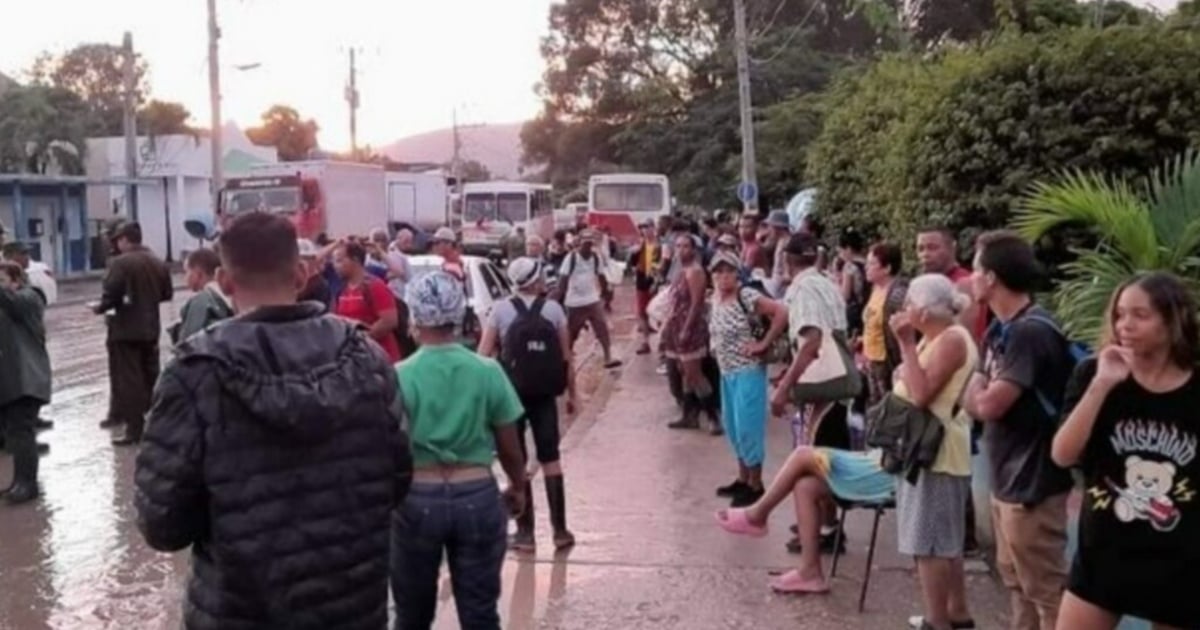
As Hurricane Melissa approaches, over 650,000 residents in Eastern Cuba are being evacuated. This large-scale operation involves people from various provinces: 258,573 from Santiago de Cuba, approximately 69,000 from Holguín, 139,914 from Guantánamo, around 72,000 from Las Tunas, and about 110,000 from Granma. These individuals will seek shelter in either evacuation centers or the homes of friends and family, according to a statement from the Cuban Presidency on X.
The announcement was made during an expanded virtual session of the Defense Council, led by the Cuban leader Miguel Díaz-Canel.
Areas Under Close Watch
In Santiago de Cuba, authorities are keeping a close eye on the reservoirs Protesta de Baraguá and Carlos Manuel de Céspedes. Meanwhile, in Granma, the situation is complicated by swollen rivers, overflowing reservoirs, and coastal flooding during the nighttime high tide in the Gulf of Guacanayabo, which is hindering natural drainage. As a result, 15% of the population, or 66,000 people, will be evacuated to centers.
Guantánamo plans to safeguard 30% of its residents in 108 centers, while Las Tunas has prepared 133 evacuation sites. Most evacuees here will stay with relatives or friends.
In the easternmost province, it was earlier announced that 108,000 evacuees will find refuge with family and friends. The official media reports that 83 centers have been set up for food preparation, and 69 schools will serve as evacuation sites.
Specifically, in Baracoa, 10,000 people will remain evacuated due to recent rains that have damaged mountain roads, the sewer system, and the main bridge in the area.
Hurricane Melissa's Path and Impact
Hurricane Melissa is expected to intensify on Monday and hit Eastern Cuba by Tuesday night. According to the U.S. National Hurricane Center (NHC) update from Sunday afternoon, Melissa was located near latitude 16.4 North, longitude 76.9 West.
This Category 4 hurricane is moving westward at around 5 mph (7 km/h). It is anticipated to continue this motion on Sunday, then turn north and northeast Monday and Tuesday. Melissa's core is projected to pass near or over Jamaica on Tuesday and over southeastern Cuba Tuesday night, before moving on to the Bahamas on Wednesday.
The storm currently has maximum sustained winds of about 140 mph (220 km/h), with stronger gusts. The NHC predicts further strengthening on Monday, followed by intensity fluctuations. Melissa is expected to be a powerful major hurricane when it impacts Jamaica late Monday or Tuesday morning and southeastern Cuba late Tuesday.
Hurricane conditions are possible in the eastern Cuban watch area from Tuesday to Wednesday, as per the advisory.
Melissa's hurricane-force winds extend outward up to 25 miles (35 km) from the center. The storm is poised to bring 10 to 15 inches of rain, with isolated amounts of up to 20 inches, across Eastern Cuba from Tuesday through Wednesday, potentially causing flash floods and numerous landslides.
Frequently Asked Questions About Hurricane Melissa
How many people are being evacuated in Eastern Cuba due to Hurricane Melissa?
Over 650,000 residents are being evacuated from various provinces including Santiago de Cuba, Holguín, Guantánamo, Las Tunas, and Granma.
What areas are under close observation in Santiago de Cuba?
Authorities are closely monitoring the Protesta de Baraguá and Carlos Manuel de Céspedes reservoirs in Santiago de Cuba.
What is the expected path of Hurricane Melissa?
Hurricane Melissa is expected to move near or over Jamaica on Tuesday, then across southeastern Cuba on Tuesday night, and proceed to the Bahamas on Wednesday.