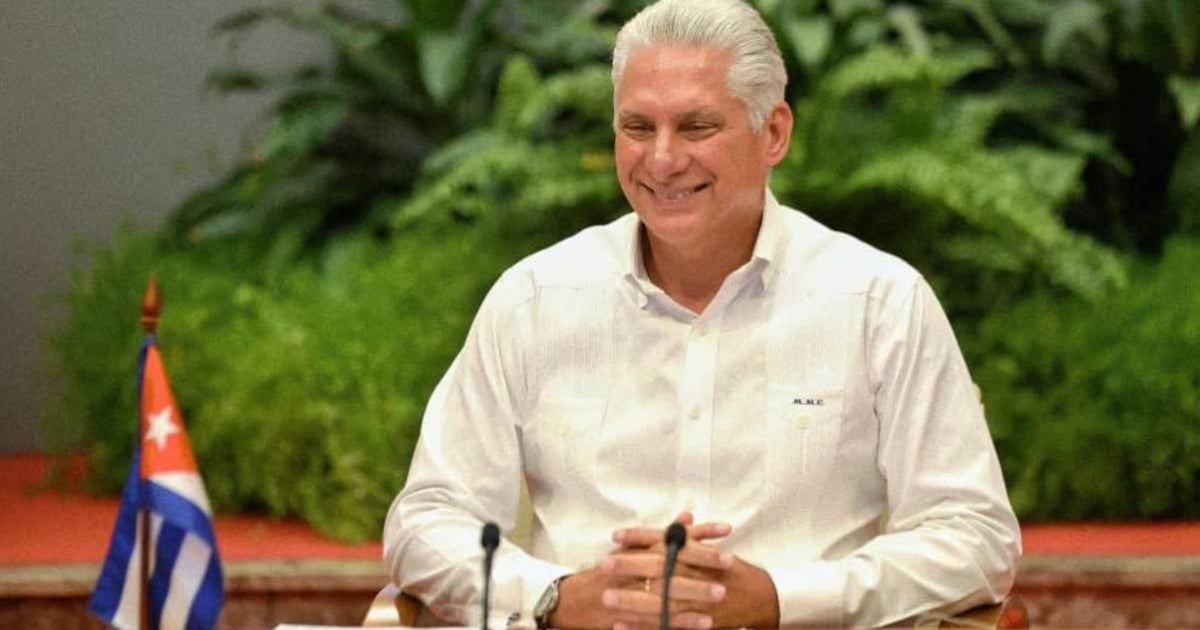
As the path of Hurricane Melissa is closely monitored by Cubans, poised to potentially hit the island, Miguel Díaz-Canel's government has taken the opportunity to unveil its new "Program to Correct Distortions and Revitalize the National Economy." This plan, comprising over 700 actions, indicators, and targets, claims to aim at "strengthening macroeconomic stability and socialist development."
Despite the looming meteorological emergency, the Cuban Presidency released this program, which outlines 10 general objectives, 106 specific goals, 342 actions, and 264 indicators and targets. These are supposedly designed to guide Cuba towards "sustainable recovery."
The document's release, which occurred earlier in October, has sparked suspicion among economists and citizens. Many see the timing as a tactic to introduce new measures without public debate, while the population is preoccupied with the immediate threat of the hurricane.
Key Objectives of the Economic Program
The official publication elaborates on each of the 10 general objectives. These include:
- Progressing with the Macroeconomic Stabilization Program.
- Increasing and diversifying the nation's external revenue streams.
- Boosting national production, with a focus on food.
- Restructuring and developing the socialist state enterprise and other economic actors as "complementary" forces.
- Enhancing strategic management of territorial development.
- Improving government, defense, and national security management.
- Strengthening social policies, particularly for vulnerable individuals and communities.
- Implementing measures to prevent and reduce crime, corruption, and illegal activities.
- Reviving the National Power System, which is deeply mired in a crisis of blackouts.
- Managing science, innovation, and digital transformation as tools for governmental development.
According to the official text, these objectives are "interconnected" and designed to complement one another in creating the "necessary conditions" to spur the country's development.
However, the document lacks specific details regarding funding sources, timelines, or concrete measures to address inflation, shortages, or the energy crisis plaguing the populace.
Controversial Measures in the Economic Plan
Here are some of the major themes in the extensive document:
- Gradual elimination of subsidies and undue gratuities. Basic goods subsidies will be replaced by subsidies for "vulnerable" individuals.
- Progressive increase in prices for electricity, water, transportation, and food.
- Introduction of Value Added Tax (VAT). A general VAT is considered, which would raise the cost of essential goods and services. Territorial taxes are also expanded for individuals with economic activity.
- Partial institutionalized dollarization. The government formalizes the "partial dollarization" of the economy, solidifying the dual MLC–CUP circuit, which further divides those with access to foreign currency from those without.
- Mandatory banking and digital oversight. Businesses are required to accept digital payments, with automatic tax deductions from bank accounts and state control over transactions.
- New pricing scheme in MLC. Stores in foreign currency must set "competitive prices to encourage shopping in Cuba rather than abroad," implying that basic goods remain priced in hard currency.
- Increased tolls and reduced state financing for housing. New toll collection segments will be created, and the housing sector will shift from a budgeted model to "self-financed."
- Tightening monetary control. "Monetary Regulation Letters" will be issued to absorb circulating money, aimed at reducing inflation but potentially worsening cash shortages.
- Currency market transformation. A new state mechanism will control currency allocation, perpetuating the dual exchange rate system.
- Militarization of civil management. Plans for defense, rapid response brigades, and reserves for "unconventional warfare scenarios" are to be kept current, reinforcing political and military control in civilian institutions.
This announcement, made during a meteorological crisis, seems more like a political maneuver than a genuine economic effort. With independent media focused on the hurricane and the public preoccupied with survival amidst severe weather, the regime has chosen an opportune moment to impose a plan that will scarcely be scrutinized or debated by citizens.
Meanwhile, the harsh reality persists. Cubans continue to endure daily blackouts, food shortages, rampant inflation, and meager wages, as the government clings to rhetoric about "revitalizing the economy" without acknowledging the systemic flaws of the entrenched socialist system that keeps the nation in turmoil.
Frequently Asked Questions about Cuba's New Economic Plan
What is the main goal of Cuba's new economic plan?
The plan aims to "strengthen macroeconomic stability and socialist development" through a series of objectives and actions intended to guide Cuba towards a "sustainable recovery."
Why is the timing of the economic plan's announcement controversial?
The announcement was made as Hurricane Melissa threatens Cuba, leading to suspicions that the government is using the crisis to introduce measures without public debate.
What are some key measures included in the economic plan?
The plan includes eliminating certain subsidies, introducing VAT, partial dollarization, mandatory digital banking, and more, aimed at restructuring the economy.