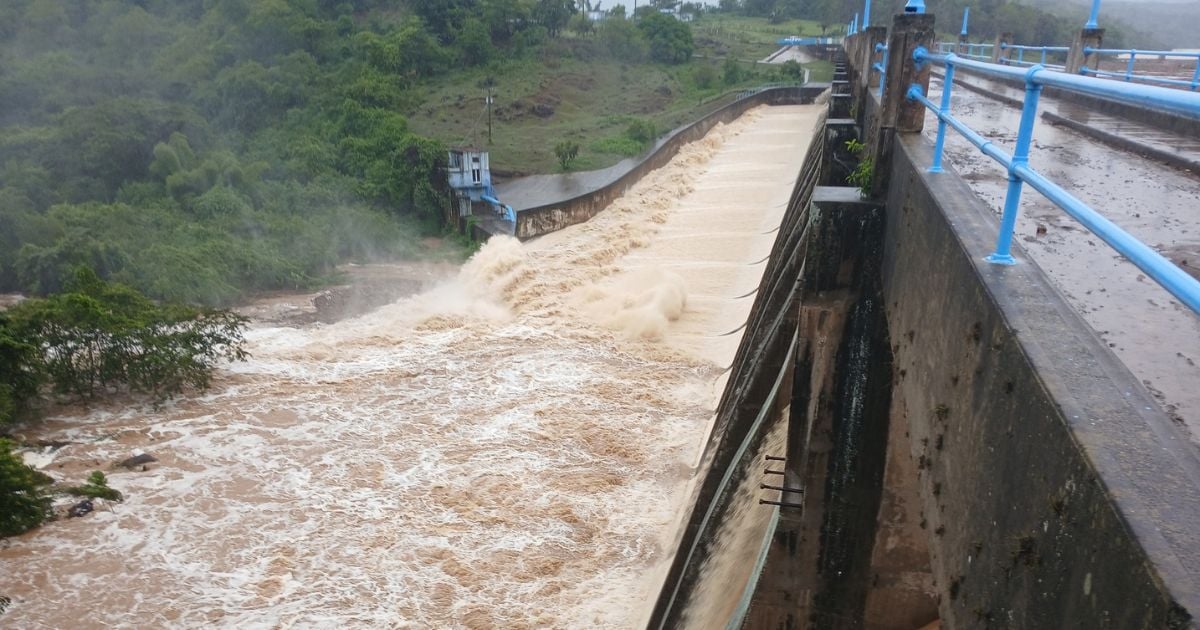
On Saturday, the Provincial Defense Council of Santiago de Cuba initiated an emergency plan due to the threat of two reservoirs potentially overflowing, as Hurricane Melissa, a formidable Category 4 storm, advances towards the eastern region of the island.
TV Santiago reported on its Facebook page that local officials assessed preventive measures to counter the serious threats of flooding, coastal surges, and landslides.
Beatriz Johnson Urrutia, head of the Provincial Defense Council, highlighted the dangers posed by the Carlos Manuel de Céspedes and Protesta de Baraguá reservoirs, which have been pinpointed as the primary areas of concern for overflow due to the expected increase in rainfall.
Authorities have mandated the immediate evacuation of residents living downstream from these reservoirs. These individuals will be relocated to emergency shelters prepared for the situation.
The evacuation process was instructed to be completed by 11:00 a.m. on Sunday.
The emergency plan emphasizes safeguarding vulnerable groups, including children, high-risk pregnant women, kidney patients, and homeless individuals, with the support of local health services and transportation systems.
The Defense Council also urged a reduction in vehicle and pedestrian traffic, focusing transportation efforts on evacuation and resource protection tasks.
The provincial president reaffirmed continuous monitoring of the reservoirs and river channels amid potential heavy rains and strong winds, as Hurricane Melissa looms closer, threatening the eastern Cuban region in the coming hours.
During the meeting, security measures such as tree trimming, dismantling of streetlights, traffic lights, and billboards, along with an intensive street cleaning and drainage system clearing plan, were also reviewed.
The Cuban Institute of Meteorology alerted on Sunday to the imminent threat of rough sea conditions along the southern coasts of Granma, Santiago de Cuba, and Guantánamo, caused by the approach of the powerful Hurricane Melissa, which has achieved Category 4 status on the Saffir-Simpson scale.
According to the latest tropical cyclone advisory No. 12 from the Forecast Center, the meteorological system has rapidly intensified in recent hours, with sustained winds of 220 kilometers per hour and a central pressure of 944 hectopascals.
The storm is currently positioned south of Jamaica, approximately 415 kilometers south of Santiago de Cuba, moving slowly westward at seven kilometers per hour.
Cuban authorities warned of the start of heavy seas along the southeastern coast, especially affecting the provinces of Granma, Santiago de Cuba, and Guantánamo, beginning Sunday.
The meteorological body urged extreme caution in coastal areas and advised against maritime activities due to the threat of dangerous waves.
FAQs about Hurricane Melissa's Impact on Santiago de Cuba
What measures are being taken to prevent flooding in Santiago de Cuba?
Local authorities have activated an emergency plan that includes the evacuation of residents near vulnerable reservoirs and the monitoring of river channels. Additionally, preventive actions such as tree trimming and clearing drainage systems are underway.
Why are the Carlos Manuel de Céspedes and Protesta de Baraguá reservoirs at risk?
These reservoirs are considered high-risk due to the potential for overflow as a result of increased rainfall from Hurricane Melissa, which threatens to exacerbate already saturated conditions.
How is the Cuban government supporting vulnerable populations during this emergency?
The government is prioritizing the protection of vulnerable groups, including children, high-risk pregnant women, kidney patients, and the homeless, by providing shelters and support from health and transportation services.