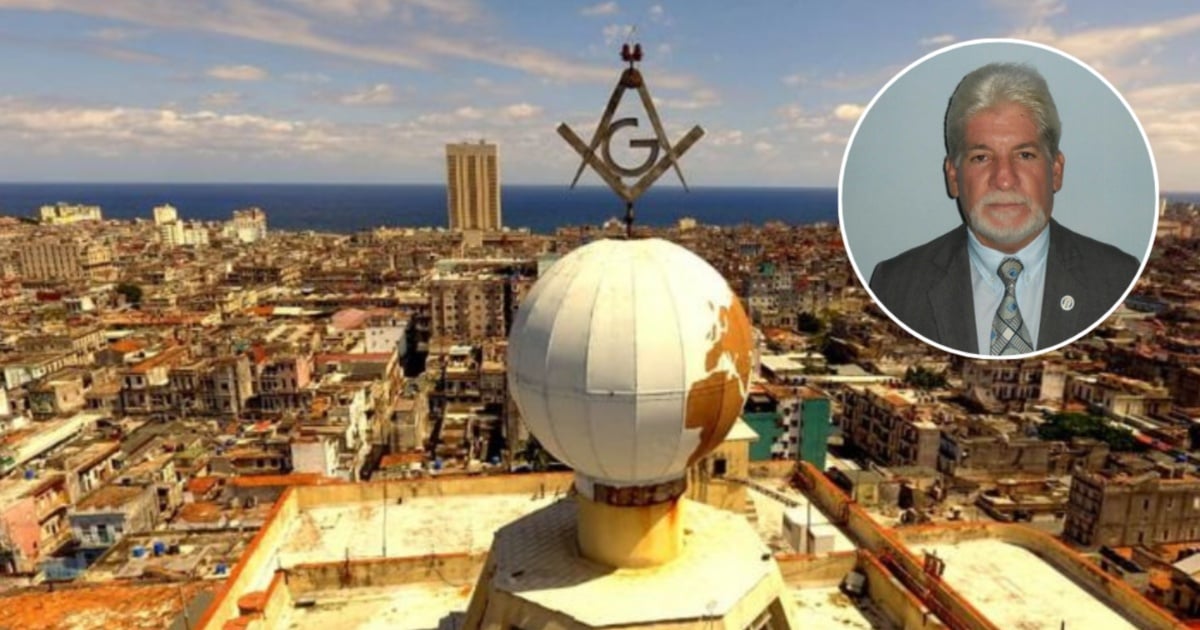
On Saturday, Cuban Freemasonry elected Manuel Valdés as the new Grand Master of the Grand Lodge of Cuba. The election process was overshadowed by internal conflicts and warnings of potential external meddling, as highlighted in messages from mason and dissident Ángel Santiesteban-Prats.
These communications reveal a sense of relief among the masons at the departure of the former leadership. They announced that the session would proceed to formalize consequent steps, urging the authorities to acknowledge the election results.
Reports indicate that government officials, who had met with lodges across various provinces in the days leading up to the election, promised to honor the outcomes of the Grand Lodge. The masons are now demanding that this commitment be fulfilled.
Past events are recalled, particularly the imposition of Urquía, when the Masonic Chamber's decisions were not recognized, igniting the conflict that led to Valdés's election. This scenario was described as an unprecedented struggle within the institution.
Calls for Fair Process Amid Surveillance Concerns
The previous leader, Filema, is accused of attempting to convene the Chamber without the presence of suspended lodges that voted for his removal. The majority insist on a process inclusive of all representatives.
Concurrently, there are concerns about State Security monitoring the vicinity of the headquarters and the homes of some members. This has fueled fears of interventions or arrests if the masons strive to "establish democracy."
If the election is not validated, the communications warn that the dispute could escalate into an "international battle" within the Masonic sphere.
A Turning Point for Cuban Freemasonry
According to Santiesteban-Prats, the regime aims to exhaust the masons and their limited resources by compelling them to travel to Havana from distant regions, thus wearing them down.
Manuel Valdés’s election is seen as a pivotal moment for the Grand Lodge of Cuba. Proponents celebrate it as a step towards a “second independence” for Freemasonry, free from external influences, and a return to statutory normalcy.
Despite the lack of detailed official statements, masons are demanding respect for their decision, the reopening of the Chamber with all lodges present, and an unambiguous validation of the new Grand Master, who is already receiving congratulations via internal channels.
In 2024, the Cuban Freemasonry was rocked by a corruption scandal involving former Grand Master Mario Urquía Carreño, plunging it into a significant crisis.
This scandal has tarnished the reputation of Cuban Freemasonry, further exacerbated by the regime's interference in its internal affairs. The Grand Lodge of Cuba now faces public discredit, internal division, and perceived state intervention aimed at controlling the institution.
Understanding the Current Crisis in Cuban Freemasonry
What led to the election of Manuel Valdés as the new Grand Master?
The election of Manuel Valdés was a result of internal conflicts and the need for a leadership change within Cuban Freemasonry. The previous leadership had been marred by disputes and a lack of recognition for the Masonic Chamber's decisions.
How has the Cuban government been involved in the affairs of the Freemasons?
Government officials had met with various lodges and promised to respect the election outcomes. However, there are concerns about state surveillance and potential intervention, which has sparked fears among the masons.
Why is the current situation described as a "second independence" for the masons?
The election of Manuel Valdés is seen as a move towards independence from external interference, allowing the Freemasons to adhere to their statutes and self-govern without outside pressure.