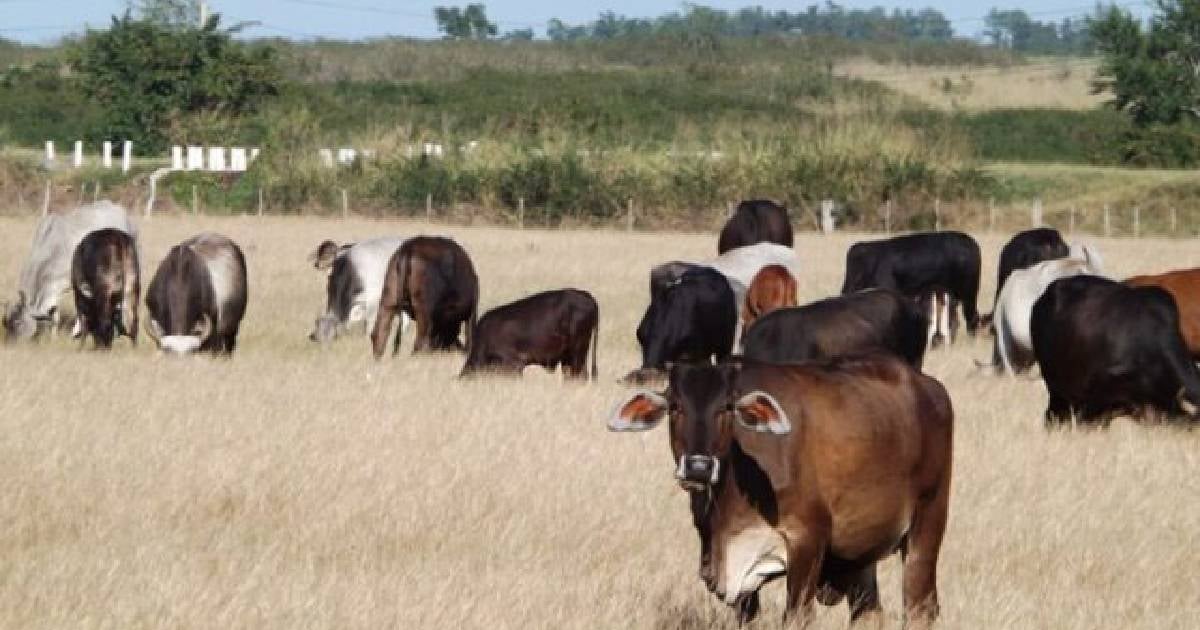
In Guantánamo and Niceto Pérez, municipal courts have sentenced two individuals to prison for engaging in the illegal slaughter of cattle and assaulting a police officer, alongside additional penalties.
One defendant received a six-year prison sentence from the Guantánamo Municipal People's Court for unlawfully slaughtering cattle and trafficking beef. During the trial, a combination of expert, documentary, and witness evidence established the defendant's guilt, as reported by the official newspaper Venceremos.
Meanwhile, a 19-year-old was sentenced by the Niceto Pérez Municipal People's Court to three years in prison for assaulting a Revolutionary National Police officer on June 11, according to the source.
Both individuals were also subjected to supplementary sanctions, including the loss of public rights, travel bans, and the confiscation of assets seized during the investigation.
The press outlet emphasized that procedural guarantees and due process, as enshrined in the Constitution, were observed.
Earlier in October, the First Criminal Chamber of the Artemisa Provincial People's Court sentenced two individuals to seven and eight years in prison, respectively, for theft and illegal cattle slaughter.
In late September, the Mayabeque Provincial People's Court handed down a 10-year prison term to a man convicted of robbery with violence and intimidation after breaking into a home in Güines and threatening a father and son with a machete.
Recently, four individuals were apprehended in Ciego de Ávila for systematically stealing cattle from farmers in the La Palma area, operating with apparent impunity.
In Sancti Spíritus, a prisoner on temporary release took the opportunity to steal and slaughter a horse at his own home on Bayamo Street.
Additionally, a young man was caught attempting to steal a cow on the grounds of the former Salvador Rosales sugar mill, known as Algodonal, in Santiago de Cuba. He was restrained by residents and forced to walk behind a horse-drawn cart with his hands tied.
This public display took place across several streets in the municipality of Songo-La Maya, aiming to publicly expose him.
In Holguín, a man was recorded on video slaughtering a horse in broad daylight, sparking outrage and fear among residents due to the brazen nature of his actions.
A few weeks later, authorities in Granma arrested a group of individuals transporting beef in various private vehicles.
Cuban farmers continue to report that cattle theft and slaughter remain rampant across the island's countryside, severely impacting agricultural economics and food security.
Key Questions About Illegal Cattle Slaughter and Crime in Cuba
What penalties are imposed for illegal cattle slaughter in Cuba?
Penalties for illegal cattle slaughter in Cuba can include lengthy prison sentences, as well as additional sanctions like travel bans and asset confiscation.
How do authorities handle cattle theft and slaughter cases?
Authorities in Cuba handle cattle theft and slaughter cases through trials in municipal courts, where evidence is presented to establish guilt, and sentences are issued accordingly.
What impact does cattle theft have on Cuban agriculture?
Cattle theft severely affects Cuban agriculture by disrupting the local economy and threatening food security, as it reduces livestock populations crucial for agricultural productivity.