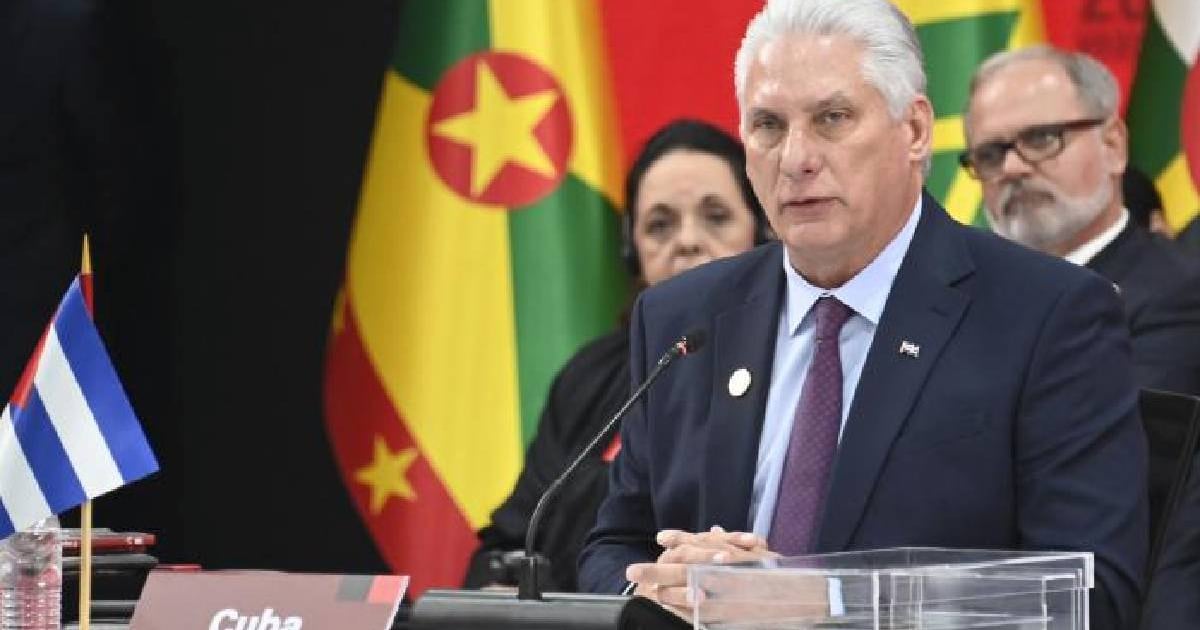
The United States delivered a stern warning to the Cuban regime on Friday, just days before the United Nations General Assembly's annual vote on the resolution opposing the U.S. embargo. Historically, Havana has used this event as a platform for political propaganda.
"Voting with the Cuban regime means endorsing its oppression of religious leaders, the Ladies in White, UNPACU, the San Isidro Movement, and all those brave Cubans who dare to speak out for freedom," stated the Bureau of Western Hemisphere Affairs of the State Department on the social network X.
This message, echoed by Deputy Secretary Brian A. Nichols, signals a shift in Washington's strategy, aiming to diminish international support for Havana in the vote scheduled for October 29.
In contrast, the Cuban regime has activated its diplomatic and media apparatus to denounce the embargo, claiming that the sanctions cause "massive financial losses" and "cumulative damage" to the national economy. However, none of the figures presented have been independently verified.
The Ministry of Foreign Affairs (MINREX) maintains that the embargo has caused over $7.5 billion in losses over the past year and a total damage exceeding $170 billion since its inception, figures lacking technical or academic backing.
The United States, on the other hand, emphasizes that the embargo does not restrict the sale of food, medicines, or humanitarian equipment to Cuba, noting that regular trade with the island continues under humanitarian licenses, which even increased by 16% in 2024.
According to the U.S. Department of Agriculture (USDA), U.S. exports to Cuba in 2024 surpassed $370 million, primarily consisting of frozen chicken, corn, wheat, and soybeans. Washington argues that the root cause of Cuba's crisis lies in its political and economic model, not the sanctions.
The Diplomatic Strategy of the U.S. Administration
The U.S. administration's diplomatic approach seeks to isolate the Cuban regime on the international stage and highlight its alliance with Russia in the war against Ukraine.
A leaked cable from Reuters reveals that the State Department has instructed its embassies to persuade allied governments to abstain or vote against the Cuban resolution.
The document asserts that Cuba "can no longer portray itself as a victim," but rather acts as an accomplice to Moscow by allowing the recruitment of hundreds of Cubans to fight alongside Russian troops, a practice condemned as human trafficking in the latest Trafficking in Persons (TIP) Report 2025.
According to analysts consulted by CiberCuba, the goal is not to reverse the outcome—which is expected to again show a majority in favor of Havana—but to undermine the moral legitimacy of a regime that presents itself as a victim of the embargo while maintaining alliances with dictatorships and repressing its people.
Diplomatic sources indicate that, although the result at the U.N. will symbolically favor Cuba, the margin of support could decrease if some European or Latin American countries choose to abstain to avoid aligning with an ally of Vladimir Putin.
Key Questions on the U.S. Strategy Against Cuba's Regime
What message did the U.S. send to the Cuban regime before the U.N. vote?
The U.S. warned that voting in favor of the Cuban regime implies supporting its repression of various groups and individuals advocating for freedom, emphasizing the regime's oppressive actions.
How has Cuba reacted to the U.S. embargo?
Cuba has activated its diplomatic and media machinery to condemn the embargo, claiming it causes significant financial losses and damage to its economy, though these claims lack independent verification.
What is the U.S. administration's diplomatic strategy regarding Cuba?
The strategy aims to isolate Cuba internationally, highlighting its alliance with Russia and undermining its portrayal as a victim, while encouraging allies to abstain or oppose the Cuban resolution at the U.N.