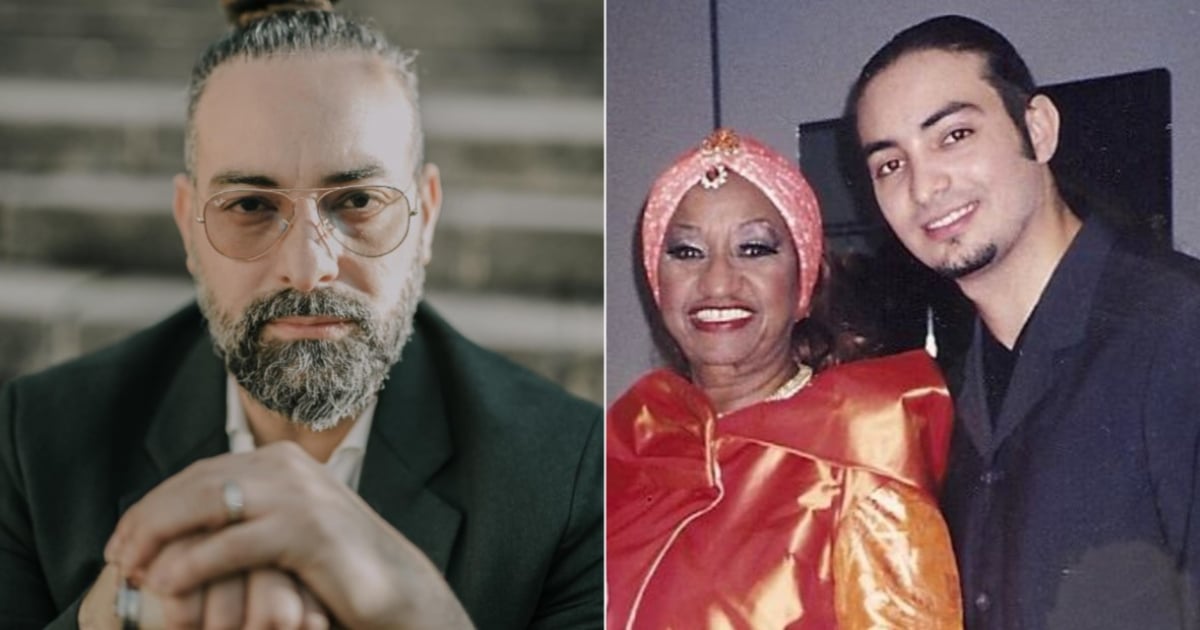
Renowned Cuban musician Alain Pérez has openly criticized the censorship and lack of official acknowledgment for tributes to Celia Cruz on her centennial anniversary.
"It's regrettable... and I personally believe it's a mistake for institutions to try to obscure and restrict the significance of Celia at this point in the world," Pérez expressed in an interview with EFE during a mass in Havana's Cathedral commemorating the legendary artist's 100th birthday.
Pérez, who held the role of musical director on several tours for the Queen of Salsa and collaborated with her as an arranger and composer, voiced these sentiments last Tuesday at the mass honoring Cruz, Cuba's most globally recognized singer.
The ceremony took place at the Parish of Our Lady of Charity of El Cobre, located in the heart of Central Havana. Artists, diplomats, and fans gathered to pay tribute to the Queen of Salsa, despite her long-standing censorship by the regime.
This sacred space, a beacon of faith for Cubans both on the island and abroad, witnessed a ceremony few thought possible: a tribute to an artist who had been silenced for decades by the authorities.
Among those present were singer Haila Mompié, reggaeton artist Yomil Hidalgo, and the head of the U.S. diplomatic mission in Cuba, Mike Hammer. They took part in an event that blended faith, music, and remembrance, as captured in images shared by journalist Wilfredo Cancio.
The mass, held under the banner "United for Celia," was one of the most poignant moments of the global celebrations marking the 100th birthday of the "La vida es un carnaval" singer.
This peaceful homage quietly defied the recent censorship that halted an artistic gala in Cruz's honor, planned by Teatro El Público and the Cuban Art Factory (FAC).
The cancellation sparked outrage among artists and citizens alike. In response, FAC staged a symbolic act: an illuminated empty chair on stage, with the message "Celia lives." Today, that phrase reverberated within the Havana church, turned into a prayer and a remembrance.
Celia Cruz, who died in exile in 2003 without returning to her homeland, remains deeply cherished by the Cuban people. Her voice, which brought rhythm and pride to countless generations, transcended politics and borders. A century after her birth, her iconic "¡Azúcar!" continues to resonate as a national identity, a declaration of presence amid silence.
The October 21st mass not only commemorated the artist but also acknowledged the history of a nation that bid her farewell without a proper embrace. Through flowers, prayers, and songs, Celia returned—at least spiritually—to Havana, to the neighborhood of her birth, and to the land where her voice was banned but never forgotten.
The faces of the attendees reflected the emotion of a reunion that censorship could not prevent: Celia Cruz returned to Cuba, this time through the pathway of faith.
Exploring Celia Cruz's Legacy and Censorship in Cuba
Why was Celia Cruz censored in Cuba?
Celia Cruz was censored in Cuba due to her defection from the island and her open criticism of the Cuban government. Her music was banned as a result of political differences following her decision to not return to Cuba after leaving in 1960.
What significance does Celia Cruz hold for the Cuban people?
Celia Cruz is a symbol of cultural pride and resilience for the Cuban people. Her music and iconic phrases, like "¡Azúcar!", embody the spirit and identity of Cubans worldwide, transcending political barriers.
How did the Cuban community react to the cancellation of the artistic gala in her honor?
The cancellation of the artistic gala provoked a wave of indignation among artists and citizens. In response, the FAC held a symbolic act, displaying an empty chair with the message 'Celia lives', highlighting the ongoing admiration for Cruz despite the censorship.