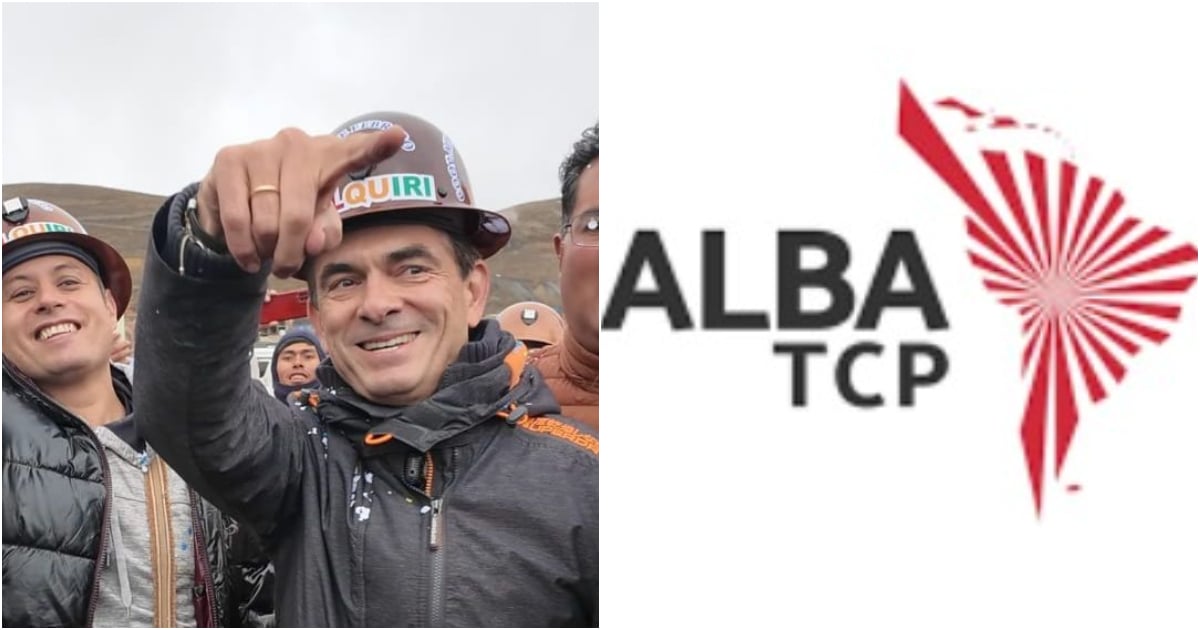
The Bolivarian Alliance for the Peoples of Our America (ALBA) has announced that it is suspending relations with the incoming Bolivian government, which it described as "far-right" and accused of exhibiting "anti-Bolivarian, anti-Latin American, pro-imperialist, and colonialist" behavior.
In a statement shared via the X account of Venezuela's Embassy in Cuba, the alliance, which includes Cuba, Venezuela, and Nicaragua, among others, clarified that this decision will not impact the "permanent and supportive bonds" with the Bolivian people. However, the suspension will remain in place "while the political conditions" in Bolivia are assessed.
The statement criticized the new Bolivian government for making "unacceptable" remarks against the regimes in Cuba, Venezuela, and Nicaragua, and highlighted the "historic achievements" of socialist cooperation in areas such as health, education, and economic development during Bolivia's active participation in ALBA.
This suspension comes in the wake of the electoral defeat of the socialist ruling party and concludes two decades of dominance by the Movement for Socialism (MAS), signaling a significant political shift in the relationship between La Paz and the bloc championed by Hugo Chávez (1954-2013) and Fidel Castro (1926-2016).
The newly elected president of Bolivia, Rodrigo Paz Pereira from the Christian Democratic Party (PDC), confirmed that his administration will not extend invitations to the leaders of Cuba, Venezuela, and Nicaragua for the inauguration ceremony scheduled for November 8.
"Our relationship is based on democracy," Paz stated. "None of those three (Cuba, Venezuela, and Nicaragua) are democratic. Clearly, they are not, and I wouldn’t want my country to resemble any of them," he remarked in reference to the governments of Miguel Díaz-Canel, Nicolás Maduro, and Daniel Ortega, during an exclusive interview with CNN.
This decision represents a dramatic shift in Bolivia's foreign policy after two decades of close ties with regimes aligned with 21st-century socialism.
Meanwhile, the administration of President Donald Trump officially congratulated Paz and pledged to support his government in economic recovery, institutional strengthening, and market openness.
With 54.6% of the vote, Paz defeated former President Jorge "Tuto" Quiroga and committed to a government focused on macroeconomic stability and Bolivia's reintegration into international markets.
Key Questions About Bolivia's Political Shift
What is ALBA?
ALBA, or the Bolivarian Alliance for the Peoples of Our America, is a regional bloc founded to promote social, political, and economic integration among Latin American and Caribbean nations with a socialist orientation.
Why did Bolivia withdraw from ALBA?
Bolivia's withdrawal from ALBA followed the electoral defeat of its socialist party, marking a shift in foreign policy towards a more democratic and economically open approach under President Rodrigo Paz Pereira.
How did the international community respond to Bolivia's election results?
The international community, including the United States under President Donald Trump, welcomed the election results, congratulating President-elect Rodrigo Paz Pereira and expressing willingness to cooperate on economic recovery and strengthening democratic institutions.