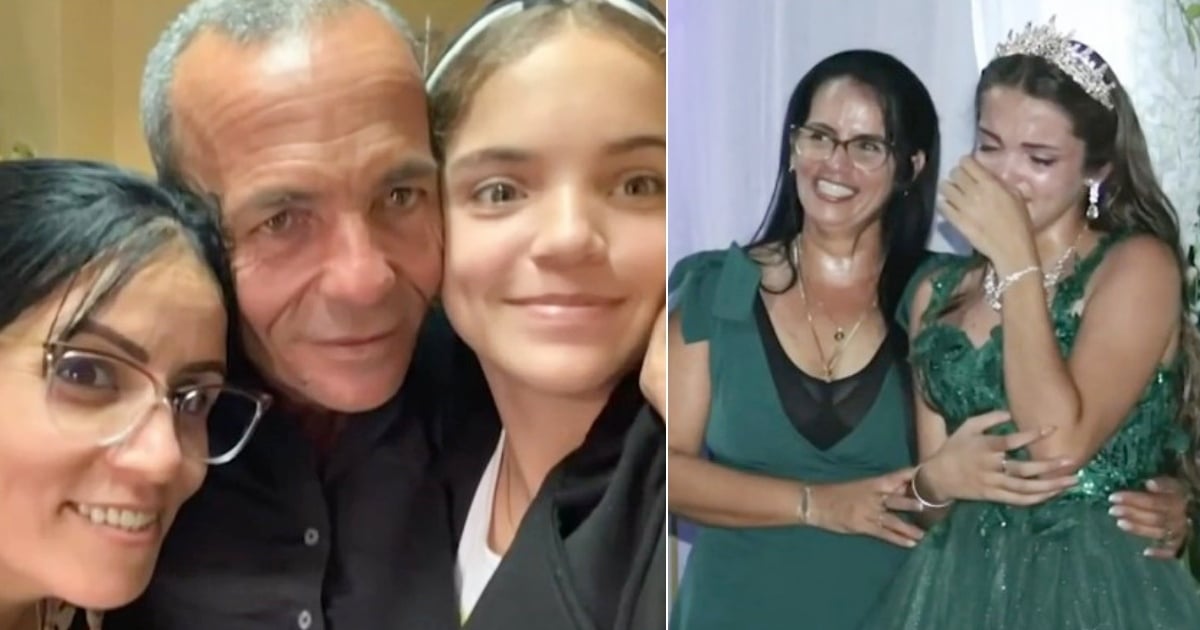
A Cuban family, torn apart by restrictive immigration policies, faces the heartbreak of separation and an uncertain future. They are pleading for a humanitarian exception to allow a young girl to reunite with her parents in the United States.
At the heart of this emotional story is Lauren, a 15-year-old girl who remains in Cuba, unable to join her parents who relocated to Miami three years ago through a legal family reunification process.
Three Years Apart and an Unforeseen Barrier
In 2022, Leymi Reyes Figueredo and her husband embarked on a journey to the United States after being sponsored by the husband's son, an American citizen. As part of their immigration process, they temporarily left Lauren in Cuba with her maternal grandparents, planning for her to join them later through an F2A visa, intended for unmarried children under 21 of legal permanent residents.
"The plan was to bring her over with an F2A immigrant visa," Reyes explained, recalling how they even had the support of Senator Marco Rubio's office to expedite the process.
However, everything changed in June 2025 when a presidential proclamation, driven by President Donald Trump, took effect. This "travel ban" restricts entry to the United States for citizens from several countries, including Cuba, citing "national security" concerns.
A Presidential Order Denies a Visa
Despite their efforts and the documentation submitted, their hopes for reunification crumbled with an official notification. "On August 8th, we were informed that Lauren's visa was denied by the presidential proclamation," Reyes recounted, still shaken by the news.
This measure directly impacts applicants from various visa categories, including family reunification (F1, F2A, F2B, F3, F4), tourism (B1/B2), academic exchange (J), student (M), and even the well-known visa lottery (DV). Exemptions are only considered for critical medical situations, humanitarian reasons, or cases deemed of "public interest."
A Grandmother's Heartfelt Plea
Among the most poignant voices is that of Lauren's grandmother, Eva Figueroa, who is battling cancer. She lives not only with her illness but also with the fear of never seeing her granddaughter again. Through tears, she issued a desperate call to President Trump to allow an exception for her granddaughter's case.
"I have faith in God, but Trump needs to help us with this," Figueroa told Telemundo 51. She painfully shared how Lauren begins to question if she is truly welcome in the country where her parents reside: "She asks me if she should even try coming to a place where she's not wanted."
For Eva, the separation is not only unjust but also cruel: "Release the minors from the travel ban… children don't come to cause harm," she insisted, her voice breaking with emotion and illness.
The Reyes-Figueroa family asserts that their situation is not unique. Many Cuban children find themselves trapped in a migration limbo, separated from their parents due to a policy that fails to consider the human stories behind each visa application. Thus, they appeal to the U.S. government for exceptions in family reunification cases to ensure that children are not collateral damage of political decisions.
Understanding the Impact of Trump's Travel Ban on Cuban Families
What is the "travel ban" and how does it affect Cuban families?
The "travel ban" is a presidential proclamation that restricts entry to the United States for citizens from certain countries, including Cuba, citing national security concerns. It affects Cuban families by denying visas for family reunification and other categories, leaving many separated from their loved ones.
What visa was Lauren supposed to apply for to join her parents in the U.S.?
Lauren was supposed to apply for an F2A visa, which is designed for unmarried children under 21 of legal permanent residents, to join her parents in the United States.
Are there any exceptions to the travel ban for family reunification?
Exceptions to the travel ban may be made for critical medical situations, humanitarian reasons, or cases considered of public interest. However, many families remain affected as these exemptions are not easily granted.