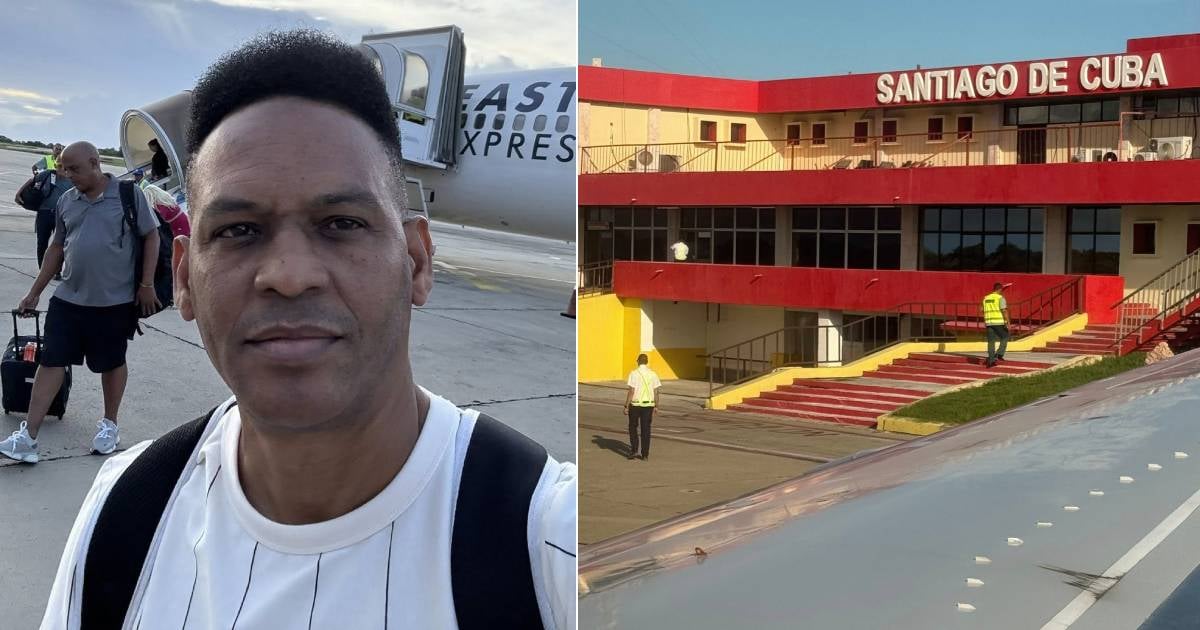
Cuban pastor Alain Toledano Valiente reported this Thursday that he has been exiled from his homeland for the second time after attempting to enter Cuba to be with his eldest daughter, Susana, who is battling advanced breast cancer.
"The tyrants were waiting for me, orchestrating a spectacle upon my arrival. They detained me at immigration and denied me entry. I am being exiled from my own country once more," Toledano shared on Facebook, accompanied by several photos from the Santiago de Cuba airport.
Toledano, who has been living in exile in the United States since 2022, decided to travel to the island to spend time with his family and support his daughter, whose health has worsened in recent months. However, upon landing in Santiago de Cuba, immigration officials barred his entry, forcing him to return in yet another act of repression against dissenting voices.
"The tyrants in Cuba take pleasure in harming Cuban families, committing any crime to maintain their grip on power. I am exiled once again, but I will soon return to a Cuba free of murderous tyrants," the pastor declared.
Known for his leadership of the Emanuel Church and his role in the Apostolic Movement, a Christian protestant network unrecognized by the Cuban government, Toledano has been a frequent target of State Security harassment for holding unauthorized services and advocating for religious freedom.
In 2022, after being threatened with imprisonment should he not leave the country, the pastor departed for the United States with the help of Outreach Aid to the Americas (OAA), which facilitated his exit with U.S. authorities. Since then, he has consistently spoken out against the harassment of independent religious leaders and the use of exile as a political punishment.
This past May, Toledano was already denied entry to Cuba when he attempted to visit his ill daughter. At that time, the regime labeled him a "threat to State Security," preventing him from boarding his flight.
Organizations like Christian Solidarity Worldwide (CSW) and human rights activists have condemned the measure, describing it as "unlimited cruelty."
Toledano's case is part of a growing list of Cubans whom the regime has forbidden from returning home, including activists Anamely Ramos and siblings Omara and Ariel Ruiz Urquiola. International jurists have classified this as a practice of "forced exile," violating Article 13 of the Universal Declaration of Human Rights.
Beyond the political implications, the situation is deeply human, with a father unable to embrace his sick daughter, a citizen locked out of his homeland for his beliefs.
"Every Cuban has the right to be in their homeland," the pastor stated months ago. Today, his plea revives a painful question many Cubans, both on the island and abroad, continue to ask: Who decides who can return to Cuba?
Key Questions About Forced Exile in Cuba
What led to Alain Toledano's exile from Cuba?
Pastor Alain Toledano was exiled due to his critical stance against the Cuban regime and his attempts to visit his ill daughter, which led to him being labeled a "threat to State Security."
How has the international community reacted to Toledano's situation?
International organizations like Christian Solidarity Worldwide have condemned the Cuban regime's actions, describing them as acts of "unlimited cruelty" and violations of human rights.
What does "forced exile" mean in the context of Cuba?
"Forced exile" refers to the Cuban regime's practice of preventing citizens, particularly those critical of the government, from returning to their homeland, which contravenes international human rights laws.