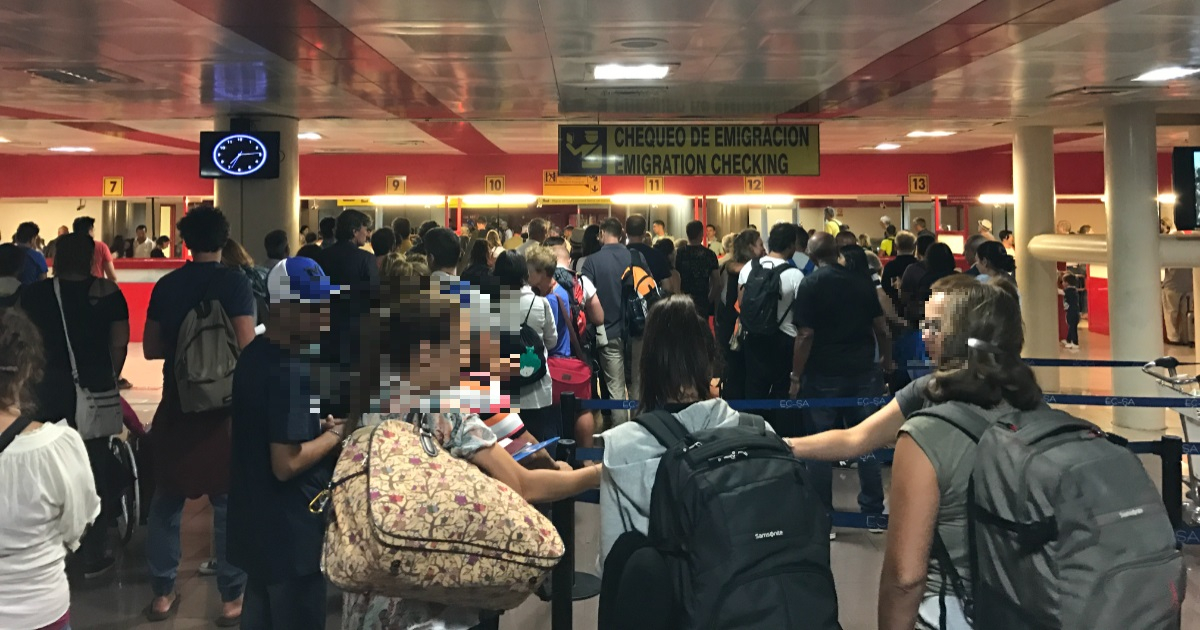
A recent report has surfaced about a scam in Cuba involving WhatsApp, where criminals impersonated a family member in a ploy to extract money under the guise of an emergency at the airport.
According to the statement received by our editorial team, the victim explained how the scammers reached out to a cousin of their mother, pretending to be her, and claimed they were "at the airport, needing money to cover baggage fees." The cousin believed the deception and transferred 40,000 pesos. The victim urged that this case be publicized "to prevent others from falling victim, considering the dire needs in Cuba and the malevolence of these individuals."
Chat screenshots reveal the impostor adopting an affectionate tone, using terms like "my dear" and "cousin," while requesting secrecy to "keep it a surprise." To lend credibility, they sent a photo of the airport and claimed they had "baggage issues," urgently requesting a transfer. Additionally, they demanded proof of the transaction: "Send me the receipt so I can show it here and get my bags through."
The supposed evidence photo, however, was not recent but a 2017 image from CiberCuba, taken at Havana's José Martí International Airport Terminal 3, reused by the scammers to make the story believable.
The report also noted that the profile picture associated with the phone number was initially of a woman, which was later removed. "This was the image on the contact, which they later deleted," the complainant specified.
Furthermore, they indicated that other family members and Facebook contacts were approached by the same number, hinting at a coordinated operation rather than an isolated incident.
"I went to the police, and they did nothing, claimed it wasn’t a crime." After the account was shared on CiberCuba Noticias on Facebook, many users reported receiving similar messages from strangers claiming to be relatives or friends supposedly stuck at the airport needing urgent funds.
"They attempted the same with me, I played along, sent a fake transfer, and the audacious scammer called me to say I hadn't sent the money," shared one user. Another added: "My mom experienced this too; someone impersonated my cousin, claiming they were at the airport, luckily she didn't fall for it." "This happened to me months ago, complete with airport photos. I reported it to the police, and they did nothing, saying it’s not considered a crime," another reader expressed, outraged.
Frequent comments highlighted that scammers "use real photos and data from social media," exploiting people's trust and need. Some remarked that such scams "have been happening for years" and criticized authority inaction: "If the transfer is made to a card, the bank knows the account holder; they just don’t want to put in the work," a user noted.
There were also warnings and advice: "If they don't video call, it's a scam," "never send money through texts," or "family should call directly before believing these stories."
Preventive Measures and Warnings
Cybersecurity specialists advise against sending money or personal information without verifying the sender's identity first and maintaining privacy on social media to prevent misuse of photos or family data. They also recommend skepticism towards any emotionally charged messages or those that present urgent travel, health, or financial issues.
The evidence and testimony confirm that scammers operate from Cuban numbers, exploiting family trust and manipulating victims with messages crafted to incite urgency and empathy. To date, Cuban authorities have not issued a public warning or initiated an investigation into this matter.
Understanding WhatsApp Scams in Cuba
How do scammers impersonate family members on WhatsApp?
Scammers manipulate their victims by adopting familiar language and emotional tones, often using stolen images or personal information from social media to lend credibility to their claims.
What should you do if you receive a suspicious message on WhatsApp?
Always verify the sender's identity through a direct call or video call. Avoid sending money or personal information without confirmation, and maintain privacy on social media to protect your data.
Why have the authorities not acted against these scams?
There seems to be a lack of initiative or resources from authorities to classify these actions as criminal offenses, leading to minimal intervention in such cases.