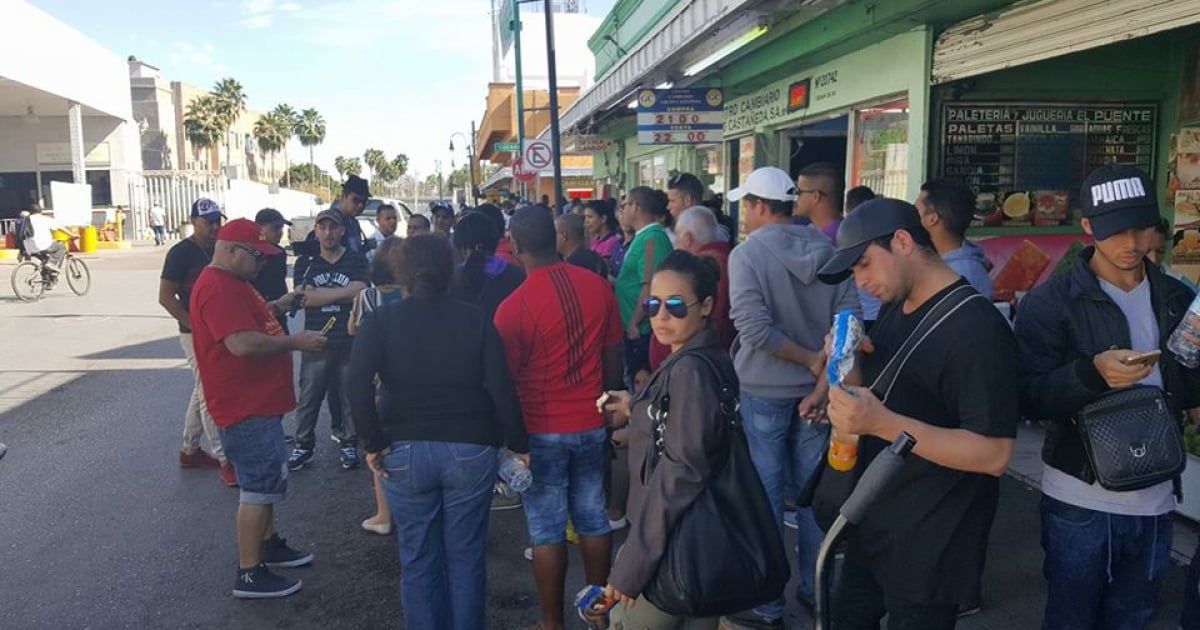
The financial burden on migrants in Mexico has intensified with the government's recent approval of a reform that doubles the costs of migration procedures, significantly impacting Cubans residing in the country or seeking to legitimize their status. As reported by Aristegui Noticias and El Economista, the Chamber of Deputies passed the reform to the Federal Rights Law (LFD) on Wednesday, as part of the 2026 Economic Package, with 352 votes in favor and 133 against.
Driven by President Claudia Sheinbaum, the proposal now moves to the Senate for final review. This reform updates and increases the fees charged by the Mexican government for public services in areas such as migration, airport operations, finance, health, and culture, with expected revenues exceeding 157 billion pesos.
Higher Migration Costs
In the migration sector, the price hikes are substantial: the fee for foreign visitors without work permits will rise from 860 to 983 pesos. For temporary residents, the charges nearly double, ranging from 5,328 to 11,740 pesos for one year; from 7,984 to 16,693 pesos for two years; from 10,112 to 21,142 pesos for three years; and from 11,984 to 25,907 pesos for four years. Permanent residents will see their fees increase from 6,494 to 13,578 pesos.
Additional charges are introduced, including a fee of 297.89 pesos for authorizing visits to high-seas vessels and a 294-peso charge for exit authorization forms for minors or legally protected individuals.
Impact on the Cuban Community
Although there are 50% discounts in certain humanitarian cases—such as family reunification or cultural invitations—opposition groups and legislators argue that the reform disproportionately affects vulnerable migrants, including thousands of Cubans who reside in Mexico without a stable status or must renew their residency annually.
According to La Razón de México, the Senate received the decrees reforming the Federal Fiscal Code and the Federal Rights Law, previously approved by the Chamber of Deputies as part of the 2026 Economic Package. Laura Itzel Castillo Juárez, President of the Senate's Board of Directors, stated that these drafts will be sent to committees for further analysis and discussion before a potential full Senate vote.
Economic Strain in Key Cities
In cities such as Tapachula, Mexico City, Mérida, and Cancún, where a sizable Cuban community lives, these increases represent an unaffordable expense for those working in the informal economy or reliant on family remittances. The measure also affects those planning to immigrate to Mexico or awaiting a response from the Mexican Commission for Refugee Aid (COMAR), as it raises the cost of procedures and lengthens regularization processes.
Over recent months, Mexico has tightened its migration policies under pressure from the United States, escalating deportations, reducing stay permits, and restricting internal mobility for migrants. This fee increase reinforces those trends, adding an economic burden to those already facing precarious conditions and legal uncertainty.
While the ruling party claims the measure aims to "align fees with the real cost of public services," the opposition describes the reform as a regressive revenue-generating law. Noemí Luna, a deputy from the PAN party, criticized the increases for directly impacting migrants and the poorest sectors, whereas Eduardo Gaona of the Citizen Movement party warned that the law "violates human rights and raises barriers to culture and mobility access."
The reform also includes hikes in entrance fees to museums, archaeological sites, and aeronautical services, with some increases exceeding 100%, viewed as part of a broader revenue-raising strategy. The Senate must now decide whether to approve or amend these increases.
Meanwhile, Cubans in Mexico fear that the cost of remaining legally in the country could become unattainable amid inflation, low wages, and existing bureaucratic hurdles that already make life in exile challenging.
FAQs on Mexico's New Migration Fee Increases
Why is the Mexican government increasing migration fees?
The government claims the increase is to align fees with the actual cost of public services, but critics argue it's primarily a revenue-generating measure that disproportionately affects vulnerable migrants.
How will these fee hikes impact Cuban migrants in Mexico?
The fee hikes will significantly increase the financial burden on Cuban migrants, many of whom work in informal sectors or depend on remittances, making legal residency potentially unaffordable.
Are there any exceptions or discounts available under the new reform?
Yes, the reform includes a 50% discount for certain humanitarian cases, such as family reunification and cultural invitations, although these are limited and do not cover all migrants.