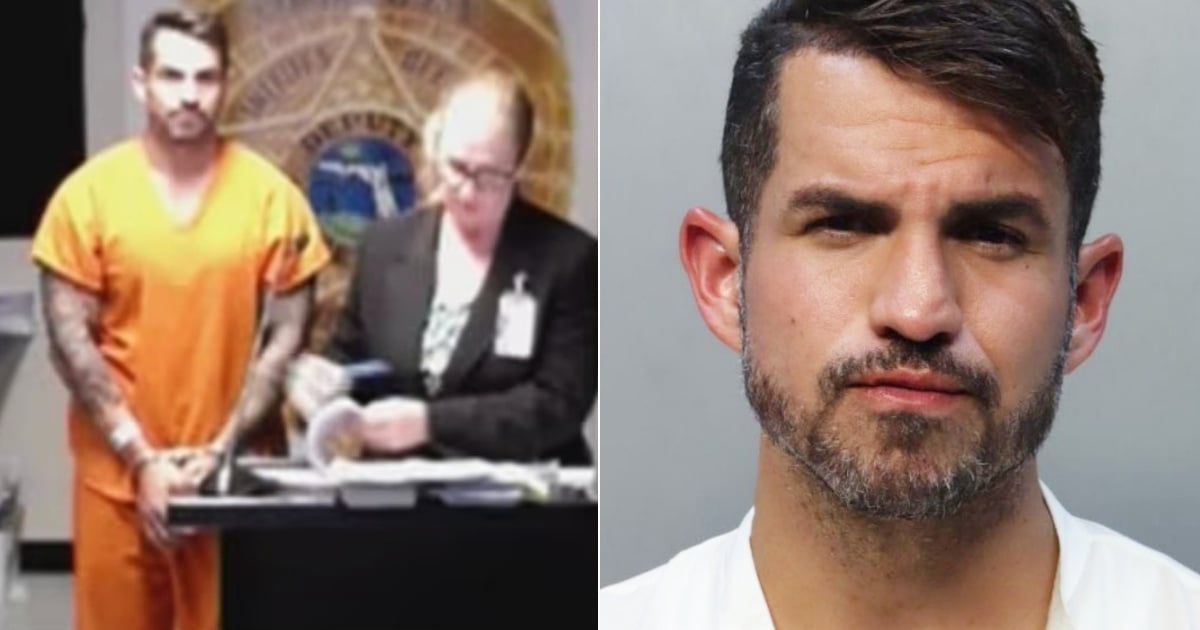
Alfredo Javier Cedeño, a 35-year-old Miami resident, found himself behind bars on October 20 after allegedly placing a GPS tracking device on his ex-girlfriend's car without her knowledge or consent. Authorities have formally charged him with harassment and invasion of privacy, marking one of the first cases in Florida to be prosecuted under the state's new law that classifies such actions as felonies.
According to the police report, which was referenced by local media, Cedeño had been in a relationship with the victim for nearly two and a half years. Despite the absence of children from their union, interactions between the two did not cease after their breakup. It was a few weeks post-separation that the victim began noticing something odd: Cedeño's frequent appearances at various locations she visited raised red flags.
On July 19, her suspicions led her to examine her vehicle, where she uncovered a hidden GPS device. Alongside this physical evidence, she provided police with text messages where Cedeño allegedly confessed to installing the tracker, allowing investigators to promptly advance the case.
Prosecution Under New Tracking Law
Following his October 20 arrest, Cedeño was booked into the Turner Guilford Knight Correctional Center in Miami-Dade County. In the subsequent court hearing, the judge found probable cause to charge him with a third-degree felony under Florida Statute 934.425, which took effect on October 1, 2024. This statute criminalizes the use of tracking devices or applications on someone else's vehicle without consent, carrying penalties of up to five years in prison. This legal reform marks a significant shift, as such behavior was previously deemed a misdemeanor.
The law aims to address the harassment facilitated by modern technology, which had previously operated in a legal gray area. Additionally, the statute imposes harsher penalties—up to 15 years in prison—if it is proven that the tracking device was used to commit major crimes such as murder, kidnapping, rape, or robbery.
Protective Measures Enforced
During the hearing, the judge also imposed protective measures for the victim, including a restraining order mandating that Cedeño keep a distance of at least 500 feet (152 meters) from his ex-girlfriend, her residence, workplace, and any educational institutions she attends. Court records reveal that the charges are supported not only by the physical presence of the device in the car but also by direct evidence from communications between the parties, in which Cedeño reportedly acknowledged his actions.
A public defender was assigned to Cedeño, and his bail was set at $2,500. As of the article's publication, he remains in custody.
A Precedent in the Digital Harassment Era
This case is among the initial arrests in Miami under the new tracking law, highlighting a growing concern: the ease with which technological tools, such as low-cost GPS devices, can be used for control and surveillance without consent. Women's rights organizations warn that this type of technological harassment can often serve as an early form of gender-based violence, potentially escalating into more severe forms of aggression if not addressed promptly.
The new legislation seeks to bridge this legal gap, safeguarding privacy in a context where the boundaries between public and private life are increasingly blurred. For now, the victim has chosen not to make public statements regarding the case or her relationship with Cedeño. The judicial process is ongoing.
Understanding Florida's New Anti-Stalking Law
What charges is Cedeño facing under the new law?
Cedeño is charged with a third-degree felony under Florida Statute 934.425, which criminalizes the unauthorized use of tracking devices on another person's vehicle.
What penalties could Cedeño face if convicted?
If convicted, Cedeño could face up to five years in prison. The law also allows for harsher penalties, up to 15 years, if the tracking device was used to commit major crimes.
How did the victim discover she was being tracked?
The victim became suspicious after noticing Cedeño's frequent appearances at places she visited, prompting her to inspect her car and find the GPS device.
What measures have been taken to protect the victim?
A restraining order has been issued, requiring Cedeño to stay at least 500 feet away from the victim, her home, workplace, and any schools she attends.