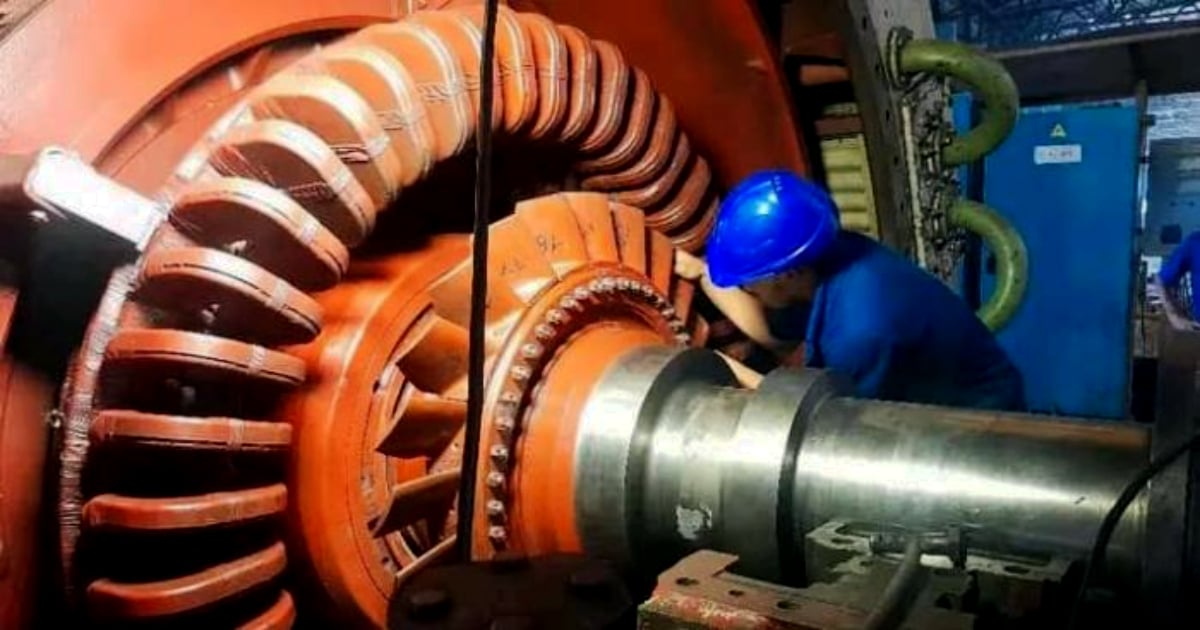
The energy crisis in Cuba has intensified following the shutdown of one of the nation's main power plants. The Antonio Maceo Thermoelectric Plant, commonly referred to as Renté, located in Santiago de Cuba, went offline Tuesday night due to "Automatic System issues," as verified by the Unión Eléctrica (UNE). The disruption occurred at 7:38 PM on Monday when Renté's Unit 6 ceased energy production, adding to the existing malfunctions at other crucial plants within the National Electric System (SEN), including Felton (Unit 2), Santa Cruz (Unit 3), and Mariel (Unit 8).
Additionally, the UNE reported that the nation experienced power disruptions throughout the day, with a peak deficit of 1,703 megawatts (MW) at 7:40 PM. The situation remains dire. At 6 AM, the SEN's available capacity was only 1,554 MW, compared to a demand of 2,609 MW, leaving 1,068 MW of unmet demand due to capacity shortages. During peak evening hours, the deficit could exceed 1,700 MW, indicating that over half of the country might once again be plunged into darkness.
Though there are plans to bring Santa Cruz's Unit 3 (45 MW) and Renté's Unit 3 (55 MW) back online, the power generation remains inadequate. This is compounded by 67 distributed generation plants being offline due to fuel shortages, accounting for 641 MW, and another 163 MW unavailable due to a lack of lubricant, totaling 804 MW affected by these issues.
Meanwhile, the 32 new photovoltaic solar parks managed to contribute only 2,745 MWh of energy, a figure that barely alleviates the severe energy crisis gripping the island. The Cuban populace, enduring daily blackouts and their exhausting consequences, faces yet another day marred by heat, darkness, and uncertainty, as the regime continues to fail in providing structural solutions to a collapsed electrical system.
Understanding Cuba's Ongoing Energy Crisis
What caused the recent power outages in Cuba?
The outages were primarily caused by the shutdown of the Antonio Maceo Thermoelectric Plant, also known as Renté, due to issues with its Automatic System. This added to existing problems at other key plants and a general shortage of fuel and lubricants.
How significant is the energy deficit in Cuba?
The energy deficit is severe, with peak shortages reaching over 1,700 MW. This means that over half of the country could be left without power during peak times.
Are there any plans to address the power shortages?
There are plans to reactivate some units at Santa Cruz and Renté, but these efforts are insufficient. The ongoing crisis is exacerbated by fuel and lubricant shortages affecting numerous other plants.