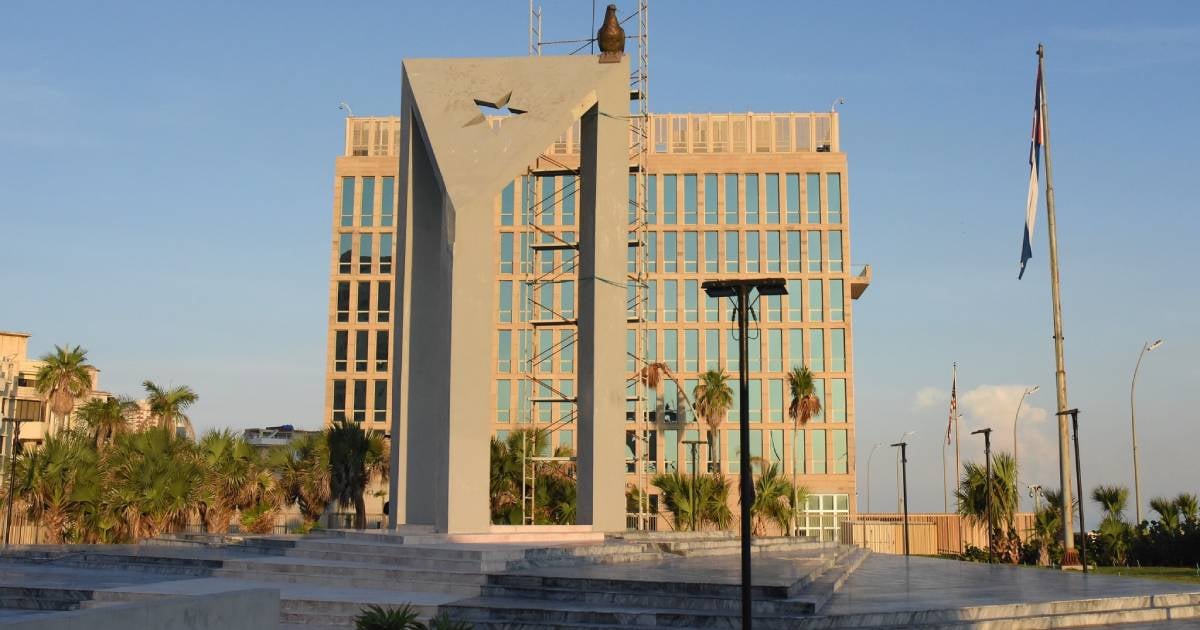
The United States has begun to firmly enforce a policy that may deny visas to Cuban citizens associated with the Communist Party of Cuba (PCC)
A State Department official, quoted by Pentón, confirmed that "taking part in protests organized by the regime in front of the U.S. Embassy in Cuba, sharing anti-American propaganda on social media, and expressing disdain for democratic values" are sufficient grounds for immediate visa revocation. "People are going to start questioning whether it's worth being a member of the Communist Party of Cuba and participating in anti-American protests," the official stated anonymously. The diplomat further emphasized that "having a visa to enter the United States is not a right; it is a privilege. If you wish to come to the U.S., you must show respect for our country." This measure is supported by Section 221(i) of the Immigration and Nationality Act (INA), which allows Washington to revoke an already issued visa if new information arises questioning the holder's eligibility. This can include suspicions of fraud or misinformation, as well as indications that the individual might pose a potential threat to public or national security. The case, also confirmed by the magazine El Toque, highlights the tightening of consular processes that the U.S. Embassy in Havana has been implementing for months, with particular focus on applicants or beneficiaries with work or ideological ties to the Cuban state apparatus. Mike Hammer, the Chargé d'Affaires of the Embassy, indicated in May that immigration policies are being rigorously applied to prevent visas from being granted to individuals with recent connections to the PCC or state institutions. "We want to prevent oppressors from roaming the streets of South Beach, sipping mojitos. That can't happen; it’s not fair," Hammer declared at a press conference in Miami. These measures have led to numerous visa denials for Cubans who, without being communist militants, have worked in state entities or companies controlled by the regime. Cases like Amarilys Pérez, a Cuban-American citizen whose parents were rejected despite submitting sworn statements denying any political affiliation, illustrate the human impact of this policy. "Working to survive should not be confused with ideological militancy," Pérez lamented in a letter to CiberCuba. The tightening of consular screening also impacts the family reunification program, a legal avenue that has allowed thousands of Cubans to reunite with loved ones in the United States for years. However, according to testimonies gathered by this outlet, even those who meet all legal requirements now face automatic rejections for having had state employment or indirect ties to the PCC. Immigration attorneys in Miami, like Willy Allen, have labeled the exclusion pattern applied in Havana as "concerning." "There has to be a more decent way to investigate people, not just accuse for the sake of accusing, and deny for the sake of denying," the expert told CiberCuba. Although the Department of State avoids commenting on individual cases, the recent visa revocations and consular denials send an unequivocal message: the United States will harden its stance towards those maintaining connections with the political or ideological apparatus of the Cuban regime, even if those ties were solely occupational. Meanwhile, uncertainty looms over thousands of Cuban families awaiting a consular appointment or the reactivation of their cases, fearing that a past job or a social media post could suddenly slam shut the door to the American dream. Participating in anti-American protests, sharing anti-American propaganda on social media, and expressing disdain for democratic values can lead to visa revocation for Cubans. The U.S. can revoke a visa under Section 221(i) of the Immigration and Nationality Act, if new information questions the holder's eligibility, including suspicions of fraud, misinformation, or potential security threats. Even applicants meeting all legal requirements for family reunification programs may face rejections if they have had state employment or indirect ties to the PCC.Occupational Ties and Visa Denials
Families Caught Between Law and Distance
A Clear Political Message
Understanding U.S. Visa Policies for Cubans
What actions can lead to a visa revocation for Cubans?
How does the U.S. justify revoking visas?
Are there exceptions for family reunification programs?
U.S. Warns: Communist Party Membership or Joining Anti-American Protests Could Jeopardize Your Visa
Tuesday, October 21, 2025 by Albert Rivera