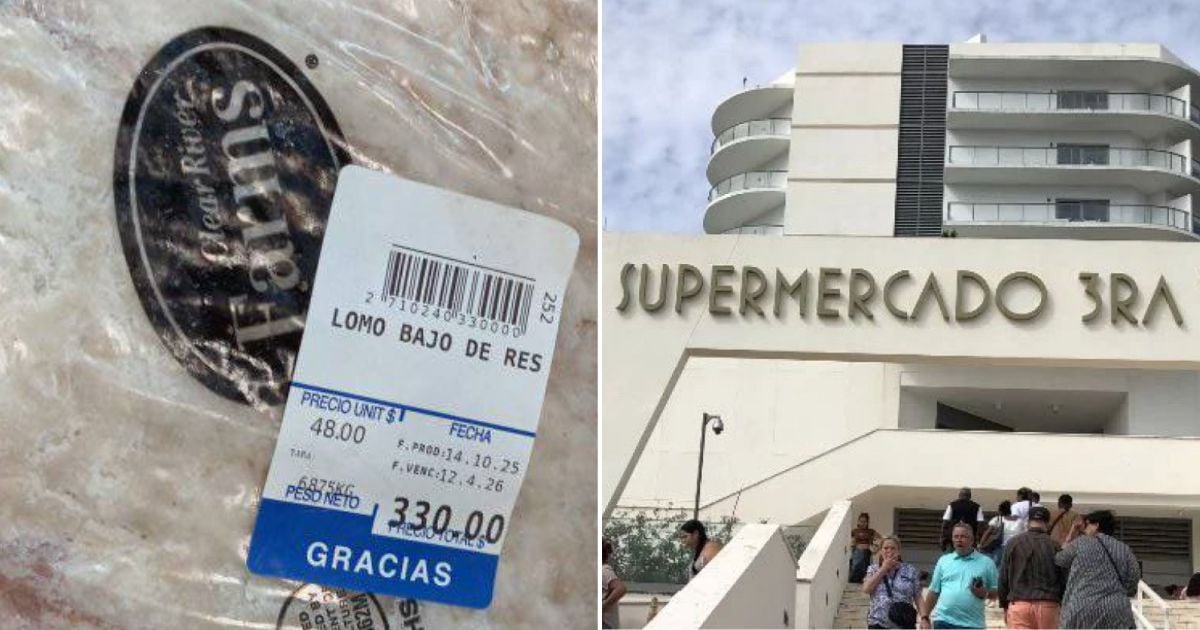
At the upscale 3rd and 70th market in Miramar, Havana, imported beef from the United States is being sold at exorbitant prices. A single cut of beef tenderloin is priced at $330, as confirmed by Carlos Herrera Rodríguez on his personal Facebook page.
Herrera posted images featuring a Clear River Farms beef tenderloin, stamped with the United States Department of Agriculture (USDA) seal. The label shows a total price of $330.00 and a unit price of $480 per unit of measure.
In the comments of his post, Herrera explained that this amount translates to over 155,000 Cuban pesos at the current informal exchange rate. "330 × 470 = 155,100 pesos, draw your own conclusions," he wrote, highlighting the stark contrast between the price and the average income of the Cuban population.
The Economic Divide in Havana's Markets
The availability of such imported goods at the 3rd and 70th market—one of Havana's most exclusive shopping centers and the first established in dollars—demonstrates the economic chasm between Cubans with access to foreign currency and the majority who survive on state salaries.
With the average salary in Cuba barely exceeding 6,000 pesos, a single piece of beef represents more than two years of work for a state employee. Despite being a highly prized cut due to its texture and flavor, the presence of American beef tenderloin on the shelves of 3rd and 70th does not signify an improvement in the national food supply. Rather, it underscores an economy mired in inequality, where essential goods are priced in dollars while the Cuban peso continues to plummet.
Symbol of Scarcity and Privilege
In a country where beef is almost non-existent in the average diet, witnessing a piece of meat sold for $330 has become emblematic of the stark contrast between the widespread scarcity faced by most Cubans and the abundance available to the few with access to foreign currency.
Understanding Havana's Market Prices and Economic Disparities
Why is beef so expensive in Havana's 3rd and 70th market?
The high price of beef at Havana's 3rd and 70th market is a result of being imported from the United States, coupled with the economic policies that create a disparity in access to foreign currency among Cubans.
What does the price of $330 for beef signify in Cuba?
A $330 price tag for beef in Cuba highlights the stark economic inequality and the challenges faced by the average Cuban in accessing basic goods, as this amount far exceeds the average monthly salary.
How does the salary in Cuba compare to the price of imported beef?
With the average Cuban salary exceeding 6,000 pesos, the cost of a single cut of imported beef equates to more than two years of work for a government employee.