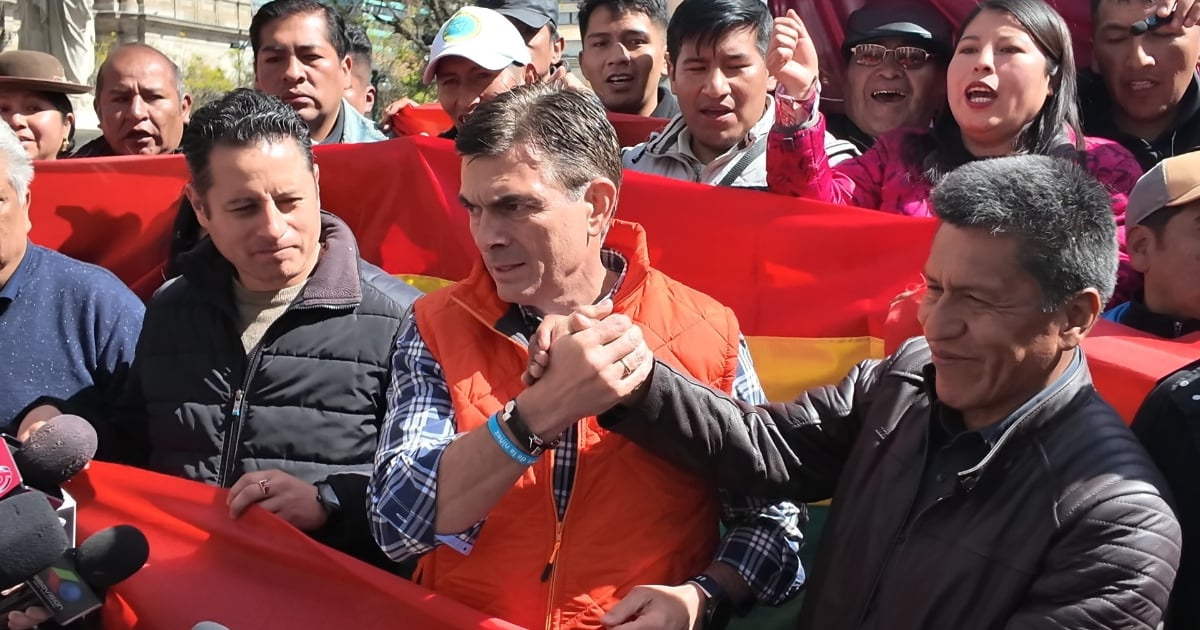
Bolivia has embarked on a significant political transformation. Rodrigo Paz Pereira, a senator from the Christian Democratic Party (PDC), has been elected as the new president with 54.61% of the votes, surpassing former president Jorge "Tuto" Quiroga, who garnered 45.39%, according to the preliminary count by the Supreme Electoral Tribunal with 97.86% of the ballots verified. As the progeny of former presidents, Paz signifies a departure from two decades of governance under the Movement for Socialism (MAS), the party associated with Evo Morales and the "indigenous revolution." At 58, and born in exile in Santiago de Compostela, Paz is set to take office on November 8, bringing an end to a period characterized by populism and state intervention.
"The country begins a new chapter. It's time for unity and to work for our homeland. Bolivia first," declared Vice President-elect Esman Lara, a police captain who gained popular support through his anti-corruption rhetoric and his connection with working-class citizens via social media. The new administration will hold a relative majority in the Plurinational Parliament (70 out of 155 seats), necessitating negotiations with Libre (53 seats) and Oppositional Unity (35 seats). The MAS, which once dominated all four branches of government, will only retain two seats, indicating its political collapse.
Challenges Facing the New Leadership
The most pressing challenge for Paz will be to revitalize Bolivia's economy, which is suffering from inflation, currency shortages, and long lines for fuel. His policy platform, summed up by the phrase "capitalism for everyone and money for the people," aims to attract private investment and establish agreements with American companies to import gasoline and diesel from Brazil, Paraguay, and Argentina.
Impact on Cuba's Political Landscape
Why does Bolivia's political shift matter to Cuba? The election of Rodrigo Paz not only alters Bolivia's domestic politics but also affects the alliance map across Latin America. Under Evo Morales, Bolivia stood as a principal ally of the Cuban regime, alongside Venezuela, Ecuador, and Nicaragua. Breaking away from this ideological bloc represents a notable loss of support for Havana, which has seen its regional influence wane.
Several agreements established during Morales' tenure—such as the contentious Bolivian Aviation (BoA) airline contract to maintain an unprofitable route to Havana, with losses exceeding $2.5 million as reported by parliamentary sources—could be reevaluated by the new government, which is more pragmatic and less inclined to sustain politically motivated projects.
Furthermore, this shift could have direct repercussions for Cuban migrants in Bolivia, where recent months have seen detentions and asylum seekers held at airports. The advent of a more institutional and less ideological government might initiate a different dialogue with Cubans in transit and revisit migratory practices impacting Island compatriots.
The fall of the MAS also holds symbolic power for Cuba. As the Díaz-Canel regime grapples with economic turmoil, blackouts, food shortages, and mass exodus, Bolivia's political pivot illustrates that authoritarian, personality-driven projects can falter and that the Latin American electorate is leaning toward moderate alternatives focused on governance and economic recovery.
The message is clear: the region is moving towards change, and while Havana may resist, its political environment is no longer the same. Rodrigo Paz’s victory could signal the beginning of the end for regional support of 21st-century socialism, ushering in a new phase of isolation for the Cuban regime, alongside regional pressure and encouragement for its independent civil society.
The Implications of Bolivia's Political Shift
How will Rodrigo Paz's presidency affect Bolivia's economy?
Paz plans to rejuvenate the economy by attracting private investment and forming agreements with American firms to import gasoline and diesel from neighboring countries, addressing inflation and currency shortages.
What impact could Paz's election have on Cuba?
Rodrigo Paz's election might diminish Cuba's influence in Bolivia, leading to potential reevaluation of previous agreements and impacting Cuban migrants in the country, as well as symbolizing a broader regional political shift.
Why is the defeat of MAS significant for Cuba?
The defeat signifies a decline in support for authoritarian and populist regimes, reflecting a regional trend towards moderate governance, potentially isolating Cuba further on the political stage.