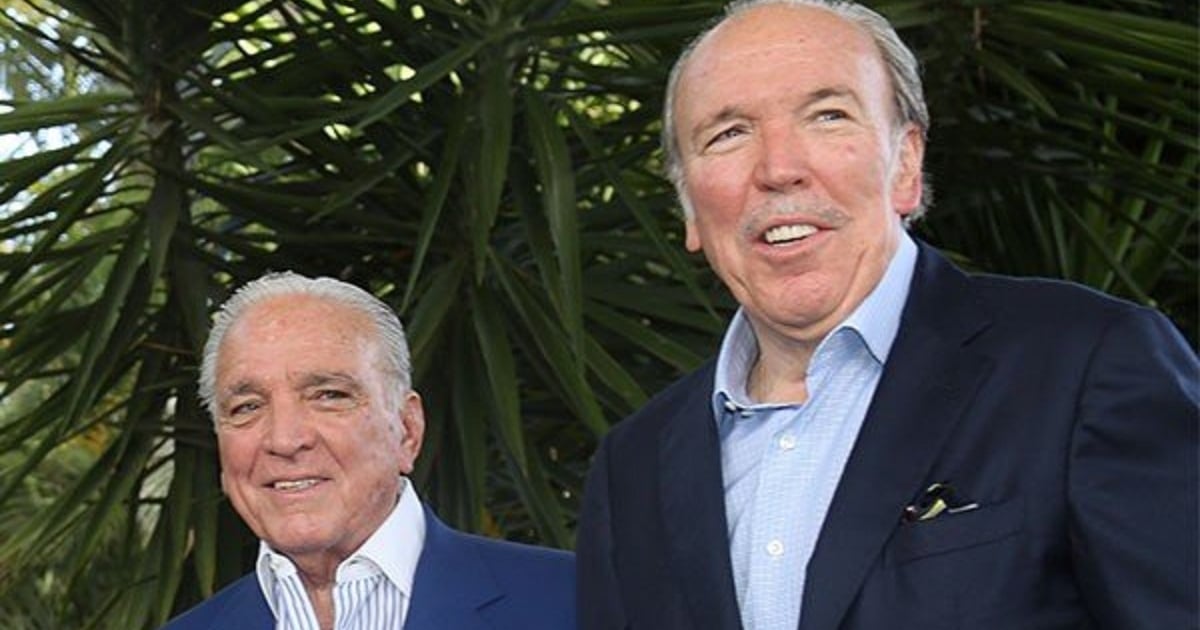
The Fanjul brothers, Cuban exiles and proprietors of a vast sugar empire in the United States, have once again captured media attention following an in-depth feature in Forbes magazine. The article sheds light on their wealth, political sway, and close ties with President Donald Trump.
According to the report, a key moment rekindling the family's prominence was a conversation between Trump and Coca-Cola CEO James Quincey during Trump's second presidential inauguration. Upon discovering that the company didn't use cane sugar in its flagship product, Trump contacted his long-time friend, José “Pepe” Fanjul—then 81 years old—to question this decision. This call eventually led to the announcement of a new Coca-Cola line featuring cane sugar grown in the United States, with the Fanjuls reportedly playing a role in the venture.
With an estimated net worth of $4 billion, the siblings—Pepe, Alfy, Alexander, Andrés, and Lillian—have control over Domino Sugar, Florida Crystals, and the world's largest cane sugar refinery. Florida Crystals alone reported revenues of $5.5 billion in 2024, as cited by the magazine. The family also owns the Casa de Campo resort in the Dominican Republic and holds interests in Central Romana, the nation’s largest private employer and landowner.
The Fanjuls arrived in the United States in 1959 after losing everything during the Cuban revolution. They pooled resources from fellow exiles and started anew in Florida, purchasing land in the agricultural belt near Lake Okeechobee. Their major breakthrough came in 1984 with the acquisition of Gulf and Western's operations, establishing them as a dominant force in the sugar industry. Today, the ASR group they oversee is recognized as the leading cane sugar refiner globally, according to the aforementioned source.
Beyond their business triumphs, the family's political influence remains significant and widespread. Historically contributing to both political parties, since 2016, the family and their enterprises have donated over $7 million to Trump's fundraising committees and super PACs. Pepe Fanjul has hosted numerous fundraisers and, as per Forbes, even organized an event on the day Trump faced conviction for falsifying business records in New York.
The article also explores the controversies surrounding the clan: accusations of environmental damage in Florida, forced labor on their Dominican plantations, and a lobbying network exceeding $20 million since 1999 to secure subsidies and tariff protections. The price of sugar in the U.S.—nearly double the global rate—is maintained through policies driven by power, many of which have been bolstered under Trump's Big Beautiful Law.
Despite the criticisms, a spokesperson for the family defended their legacy as a testament to the "American dream," asserting that their success stems from hard work and perseverance. Nevertheless, entities like the Cato Institute argue that it’s a tale of economic power shaped by political influence and privileges.
Insights into the Fanjul Family and Their Influence
Who are the Fanjul brothers and what is their significance?
The Fanjul brothers are Cuban exiles who have built a multi-billion dollar sugar empire in the United States. They are significant due to their vast wealth, political influence, and their role in the sugar industry.
How did the Fanjul family re-establish themselves in the United States?
After arriving in the U.S. in 1959, the Fanjul family regrouped with the support of fellow exiles, buying land in Florida and eventually acquiring Gulf and Western's operations in 1984, which solidified their position in the sugar industry.
What controversies have surrounded the Fanjul family?
The Fanjul family has faced allegations of environmental pollution in Florida, forced labor on their plantations in the Dominican Republic, and extensive lobbying efforts to maintain beneficial subsidies and trade protections.