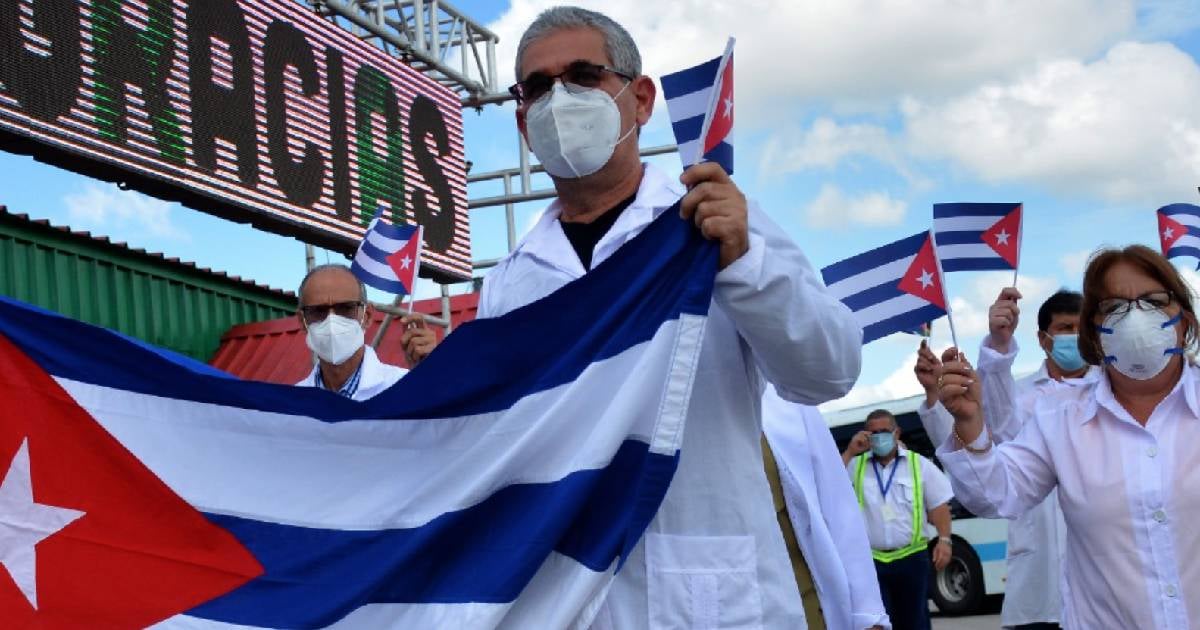
A recent message filled with government propaganda was circulated on social media aiming to discredit Cuban doctors who have emigrated and publicly criticized the island's healthcare shortcomings. This statement was shared by the state-run TV Santiago on its Facebook page, attributed to the Public Health Union. However, it serves as an extension of the regime's narrative to criminalize dissent and demand ideological loyalty, even from those in exile.
Under the headline "Don't Bite the Hand That Fed You," the message starts by questioning those who studied medicine in Cuba and now allegedly "insult the very system that made them doctors." Yet, this message merely highlights the healthcare system's collapse, a reality known by everyone. Using a moralistic tone, it argues that such criticism is not legitimate but rather an act of "ingratitude" and "betrayal."
Notably, if ingratitude is the focus, one must also consider the plight of doctors who, after dedicating years to the regime's health system, seek release only to face punishment: their freedom to leave the country is restricted, forcing them to delay personal aspirations and live in a modern form of confinement for choosing a different path.
The statement acknowledges structural challenges, such as resource shortages and healthcare worker fatigue, and the need for improvements, yet it insists that Cuban medicine remains "dignified," "humane," and "solidary." It claims that the white coat in Cuba symbolizes resilience, while dismissing reports of inadequate hospital conditions and supply shortages.
The message attacks emigrated professionals who have spoken out against the healthcare system's reality, accusing them of using their freedom to "disparage their roots." It defends Cuban medical education as one of ethical and vocational excellence, labeling critics as driven by "hatred" and "resentment."
Although the statement is signed by the Public Health Union, its content mirrors the typical rhetoric of the Communist Party's ideological apparatus, which seeks to symbolically shield Cuban medicine from external criticism. As with similar messages, dissent is not tolerated, nor is there recognition of the legitimacy of professionals who have experienced the system's deficiencies firsthand.
The narrative closes with a defiant phrase: "Cuban medicine is a beacon. And beacons are not extinguished by the venom of those who forget their origins."
The regime's official stance against emigrated Cuban doctors does not occur in isolation. It responds to an increasing wave of testimonies that, from exile, starkly reveal the healthcare system's ruins in Cuba. Dr. Manuel Guerra, now in the United States, described the Cuban system as "a dying organism," crippled by medication shortages, healthcare worker exodus, and the structural decay of hospitals and clinics. In contrast, he shares that medical care in his new environment is immediate, effective, and dignified.
Other professionals have also raised their voices. One exiled doctor reflected that "staying in Cuba meant self-destruction," recalling that what is recognized worldwide as professional dignity is punished in the island with surveillance, blackmail, and repression for independent thinking. In his experience, dedication dwindles when faced with hunger, exhaustion, and lack of freedom.
The accounts of these doctors dismantle the narrative of a "medical powerhouse." Another physician, who trained in Cuba and later in Spain, revealed that thousands of doctors survive on meager salaries in hospitals lacking water and materials, while the state treats them as exportable commodities and punishes those who choose to leave the system.
Even years ago, Dr. Alexander Figueredo warned that no doctor in the world sacrifices as much as a Cuban doctor. Expelled from the system for exposing its flaws, Figueredo has become a symbol of silenced professional dignity in the island. His testimony foreshadowed the wave of voices challenging propaganda with their lived truth today.
Understanding the Criticism of Cuba's Healthcare System
Why are Cuban doctors emigrating?
Cuban doctors are leaving due to inadequate salaries, poor working conditions, and a lack of professional freedom. Many seek better opportunities abroad where they can work in more dignified conditions.
What are the main criticisms of the Cuban healthcare system?
Critics point to severe shortages of medications, deteriorating hospital infrastructure, and oppressive working conditions as major issues plaguing the Cuban healthcare system.
How does the Cuban government respond to criticism from emigrated doctors?
The Cuban government tends to dismiss the criticisms as acts of ingratitude and betrayal, often labeling the emigrated doctors as ungrateful for the education they received in Cuba.