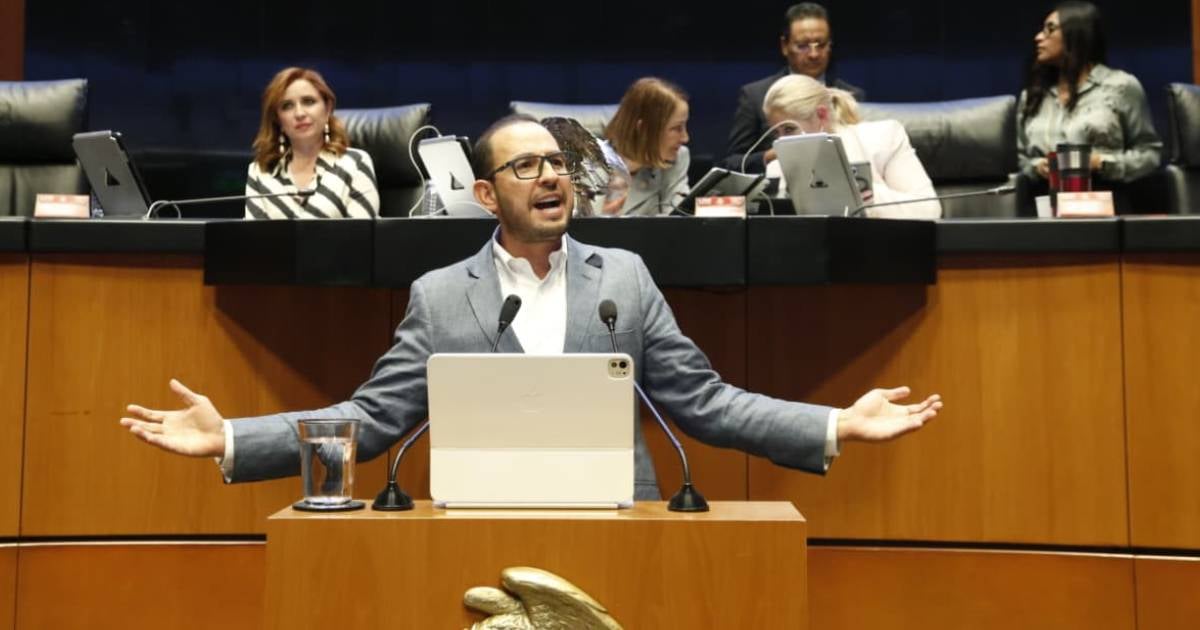
Senator Marko Cortés Mendoza has called on the administration of Claudia Sheinbaum to urgently clarify the subsidized oil shipments to Cuba. Recent investigations uncovered that Mexico has increased its crude oil exports to the island threefold in recent months. In a statement to the Senate, the legislator from the National Action Party (PAN) requested that Energy Secretary Luz Elena González and Pemex Director Víctor Rodríguez Padilla provide details on the volumes, routes, costs, and subsidies involved in what the federal government has labeled as "humanitarian aid."
Cortés argued, "They can't call it humanitarian aid when the Cuban regime holds over a thousand political prisoners, including women and children," referencing reports from the organization Prisoners Defenders. According to PAN, between May and August 2025, the Pemex subsidiary Gasolinas Bienestar, S.A. de C.V., established to export hydrocarbons to Cuba, reportedly sent fuel worth over $3 billion—three times the amount shipped during the last two years of López Obrador's presidency.
Part of these shipments was transported by the vessel Sandino, which is under sanctions by the U.S. Treasury Department for links to illicit activities, potentially exposing Mexico to financial and diplomatic penalties. Cortés emphasized that using public funds to subsidize a foreign regime "lacks moral and economic justification" and demanded full transparency regarding the reported losses of over 5.8 billion pesos incurred by the subsidiary due to fuel shipments to the island.
Internal and External Criticisms
The PAN's appeal adds to a wave of recent criticisms directed at Sheinbaum's administration. Businessman Ricardo Salinas Pliego, owner of TV Azteca, accused the Mexican government of "stealing public money to support the Cuban dictatorship," suggesting that some of the funds might even benefit the ruling party, Morena. Meanwhile, the organization Mexicanos Contra la Corrupción y la Impunidad (MCCI) documented that crude and derivative shipments to Cuba reached "extraordinary" levels despite Pemex's financial losses and its debt exceeding $100 billion.
However, the Mexican president acknowledged sending diesel to Cuba and defended the action as a gesture of "humanism and solidarity." "Mexico will always provide humanitarian aid to Cuba and other countries in need. That's our essence," declared Sheinbaum, asserting that the agreements are conducted "transparently."
Nevertheless, the opposition challenges this narrative, arguing that while Mexico contends with internal issues of security, health, and natural disasters, billions of pesos are being allocated to economically support a regime accused of human rights violations.
Transparency, Sovereignty, and Human Rights
Senator Cortés warned that the Mexican government cannot "invoke sovereignty" to justify opaque practices or ignore the human rights principles that should guide its foreign policy. "This money should be used to address national priorities, not to fund dictatorships," the legislator concluded.
The debate over oil shipments to Cuba is set to intensify within the Mexican Congress, maintaining the tension between Sheinbaum's humanitarian aid discourse and accusations of political subsidy to the regime of Miguel Díaz-Canel.
Key Questions on Mexico's Oil Shipments to Cuba
What is the main concern of Senator Marko Cortés regarding oil shipments to Cuba?
Senator Marko Cortés is primarily concerned with the lack of transparency and justification for using public funds to subsidize the Cuban regime, which he argues cannot be classified as humanitarian aid.
How much fuel has Mexico reportedly sent to Cuba in recent months?
Between May and August 2025, Mexico's Pemex subsidiary is reported to have sent over $3 billion worth of fuel to Cuba, tripling previous amounts shipped in the last years of López Obrador's presidency.
What are the potential repercussions for Mexico due to these oil shipments?
Mexico could face financial and diplomatic penalties as some shipments were transported by a vessel sanctioned by the U.S. Treasury for links to illicit activities.
What has been the response from the Mexican government regarding these allegations?
The Mexican government, represented by President Sheinbaum, has defended the oil shipments as acts of "humanism and solidarity," stating that the agreements are made transparently.