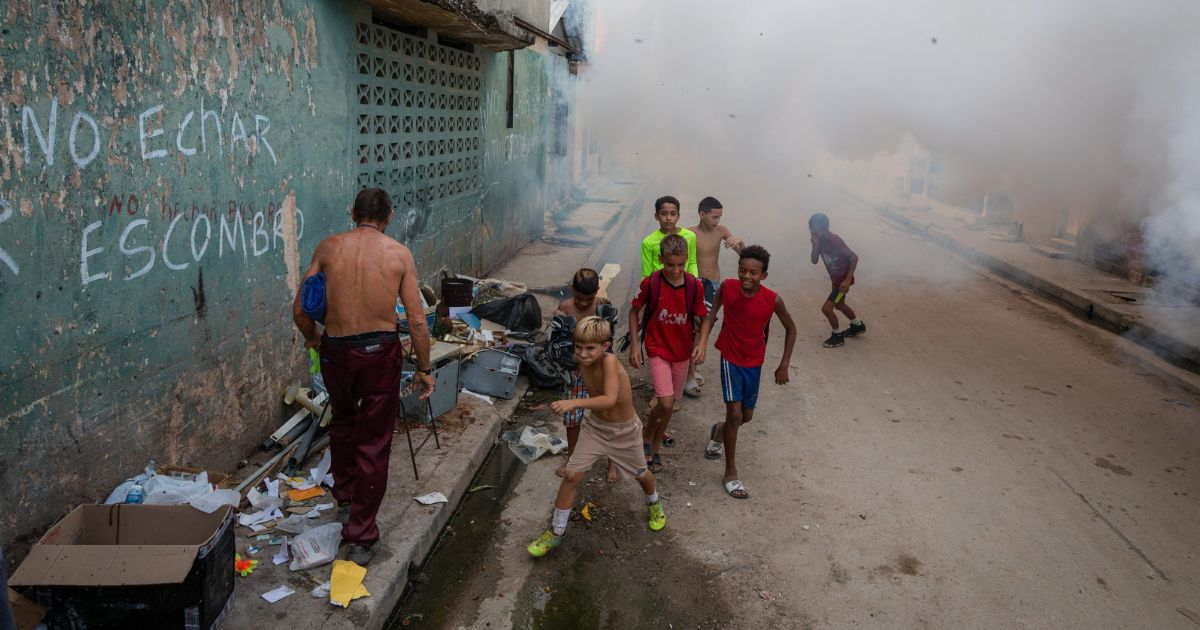
The rapid increase in dengue, chikungunya, and oropouche cases among children in Guantánamo has set off health alarms, with local hospitals and healthcare facilities struggling to manage the overwhelming number of patients. This crisis, which requires swift and decisive action, is being hindered by bureaucratic delays and inefficiencies.
Miguel Reyes, a journalist, highlighted the issue through a Facebook post, sharing citizen testimonies and expressing concern over the strain on institutions like the Children's Hospital and Dr. Agostinho Neto General Teaching Hospital. According to Reyes, these facilities are overwhelmed by the influx of patients.
Need for Grassroots Action and Institutional Support
Reyes criticizes the weak institutional response, which has been characterized by excessive meetings and a lack of concrete actions on the ground. He emphasizes the importance of combating vector-borne diseases at the community level—starting in neighborhoods, backyards, micro-dumps, and every place where mosquitoes can breed. He calls for an urgent, coordinated strategy involving all social actors.
The journalist underscores the crucial role of families, communities, and local councils in breaking the transmission cycle. However, he points out that these efforts are futile if the regime remains passive, as seen in multiple Cuban provinces. Prioritizing domestic hygiene, maintaining clean common areas, and ensuring institutional and workplace responsibility in environmental sanitation are essential steps that cannot be postponed.
Challenges in Surveillance and Reporting
The report also highlights significant failures in health screenings, which are often conducted superficially or routinely, leading to inadequate documentation of suspected cases. This negligence turns unreported patients into invisible transmission sources, escalating healthcare response costs.
Reyes calls for moving beyond mere statistics, advocating for consistency, transparency, and genuine commitment. While Cuba has experience in handling outbreaks, it is crucial to reinstate epidemiological discipline and enhance active surveillance in affected areas.
Public Criticism and Government Inaction
Despite the journalist's "optimistic" stance, public comments reveal a different reality. Placido Ferreiro noted the silence of authorities and official media when he reported on garbage pile-ups, suggesting that the current situation directly results from this inaction. Kamy Suárez criticized the lack of innovation in developing simple repellents or effective control mechanisms against sandflies and mosquitoes, despite the country's talented scientists and doctors.
Elizabeth Betancourt demanded those who made empty declarations now demonstrate creativity in demanding real solutions. Other voices, like María Elena Selguera, Elma Hernández, and Blanca Sánchez, pointed out structural issues such as fuel shortages, lack of medicines, fumigation, and waste collection as barriers to effectively addressing the crisis.
Catherine Valles summed up the sentiment of many: without concrete government action and visible institutional responsibility, the emergency will only worsen, leaving citizens to bear the burden alone.
Understanding the Health Crisis in Guantánamo
What diseases are currently affecting children in Guantánamo?
Children in Guantánamo are experiencing an increase in dengue, chikungunya, and oropouche infections.
How are local healthcare facilities coping with the crisis?
Local hospitals and healthcare facilities are overwhelmed, struggling to handle the influx of patients due to the rising number of infections.
What is being done to combat the spread of these diseases?
Efforts are being made to combat the diseases at the community level, but there is a call for a more coordinated and urgent strategy involving all social actors.