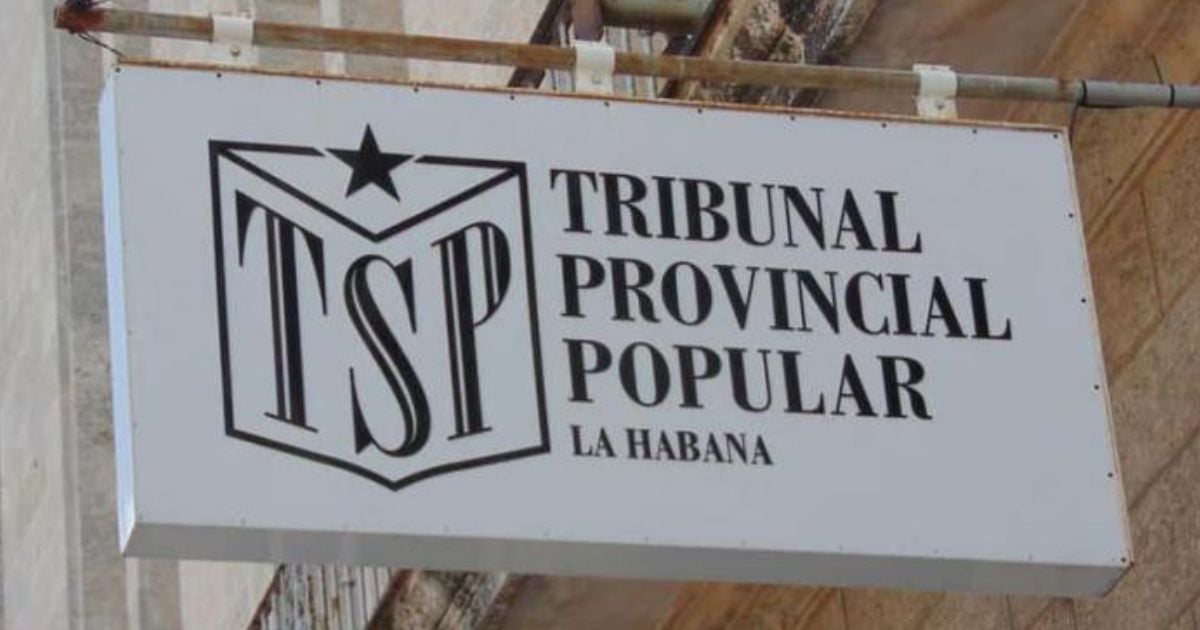
The Provincial People's Court of Havana announced the verdict issued by the Arroyo Naranjo Municipal Court on September 29, 2025, regarding case number 84 of that year. In this public trial, Daima Rodríguez Núñez and Carlos Díaz González faced charges of child corruption, acts detrimental to children's development, and sexual abuse, as highlighted in a statement on the Supreme People's Court website.
Throughout the proceedings, evidence showed that Daima Rodríguez Núñez, the biological mother and legal guardian of four girls aged 10, 7, 4, and 1 — with the eldest three having cognitive impairments and attending special schools — repeatedly neglected her caregiving responsibilities. The children suffered from inadequate education and healthcare, and their nutrition was poor, despite municipal government support. Additionally, the mother frequently left the home for extended periods, including overnight, leaving the girls in vulnerable conditions.
Investigations further uncovered that Rodríguez and her partner, Carlos Díaz González, forced the children to wander the streets at various times to beg for food and money from neighbors and strangers, resources they then used to purchase alcohol. In this environment of neglect, Díaz exploited the situation to approach the seven-year-old girl inappropriately, touching her over her clothes, a behavior the mother allowed without interference.
As a result of the judicial process, the court found Daima Rodríguez Núñez guilty of child corruption and other acts contrary to child development, sentencing her to eight years of imprisonment. Carlos Díaz González received a ten-year prison sentence for child corruption and lewd acts. Additional penalties included suspending Rodríguez's parental rights over her daughters, and both defendants were stripped of civil rights and barred from leaving the country.
In Matanzas, the death of a two-year-old boy with visible signs of physical abuse has sparked concern about child violence in Cuba. The child was admitted in critical condition to Eliseo Noel Caamaño Pediatric Hospital, with bruising, fever, and breathing difficulties, leading medical staff to discover internal perforations. Despite emergency surgery, he died shortly after. The incident was reported as a potential infanticide, causing outrage in the community. Days later, it emerged that three other abused children had been treated in Matanzas hospitals this year, surpassing all of 2024's figures.
Pediatricians and psychologists warn that many of these instances are disguised as domestic accidents, when they are actually indicative of negligence, abandonment, or systemic violence. Health professionals and legal institutions point out that while Cuban laws allow for the removal of parental rights, there is a concerning underreporting due to institutional silence and ineffective reporting.
Amid this climate of insecurity, activist Maylen Díaz Delgado has condemned the Cuban judicial system for allowing her daughter to remain exposed to her aggressor, a man convicted of sexual abuse. Despite legal stipulations, a Camagüey court ruling might restore the father's parental rights, contradicting the Penal Code, Family Code, and Constitution. Feminist organizations support her call for an urgent review of this decision, highlighting the risk of child revictimization.
Child Neglect and Legal Concerns in Cuba
What charges were Daima Rodríguez Núñez and Carlos Díaz González convicted of?
They were convicted of child corruption, acts detrimental to child development, and sexual abuse.
What penalties did the court impose on the defendants?
Daima Rodríguez Núñez received an eight-year prison sentence, while Carlos Díaz González was sentenced to ten years. Both were stripped of civil rights and barred from leaving the country.
How has the community in Matanzas reacted to recent child abuse cases?
The community has been outraged, especially following a potential infanticide case, leading to increased awareness and concern over child violence.
What legal actions are being taken to address child abuse in Cuba?
Although laws allow for the removal of parental rights, there is an issue with underreporting and ineffective enforcement, prompting calls for legal reform and better protection for children.