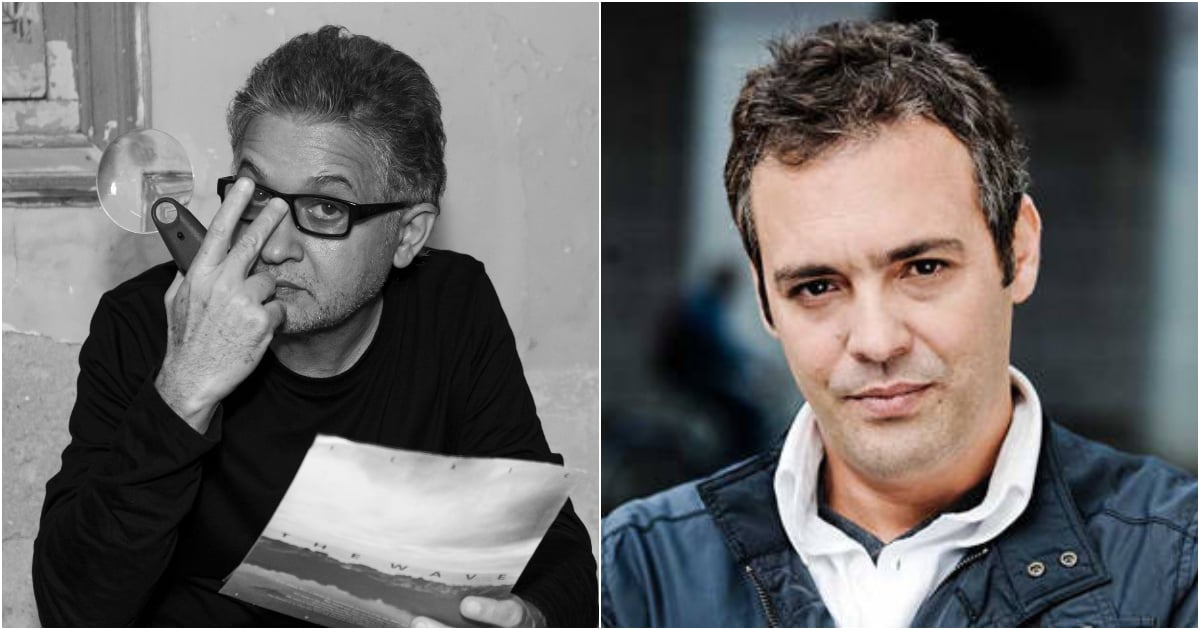
Cuban director and screenwriter Enrique "Kiki" Álvarez has accused the Cuban Institute of Cinematographic Art and Industry (ICAIC) of abruptly ending his professional relationship, along with that of fellow filmmaker Esteban Insausti, without prior notice. Álvarez alleges that the institute fabricated a "voluntary resignation" that never occurred.
In a detailed Facebook post, Álvarez—known for works like La Ola (1995), Jirafas (2014), and Venecia (2016)—disclosed that ICAIC terminated their contracts on August 1, 2025, without offering any notification or explanation. He discovered this only when he approached Human Resources regarding delayed payments, where he was informed of his "self-decided" departure, a claim unsupported by documentation.
Álvarez criticized the administrative falsification, linking it to his outspoken critiques against censorship, irregularities in the Film Development Fund, and his involvement with the Assembly of Cuban Filmmakers (ACC). "Goodbye ICAIC," he wrote, "our relationship was always tense, marked by my desire to transform you into an institute capable of ensuring filmmakers' rights to express the harsh reality we live in."
Similarly, Insausti—creator of films such as Las manos y el ángel (2002), 3 veces 2 (2003), and Larga distancia (2010)—learned of the decision through Álvarez's post. He lamented that ICAIC has become a bureaucratic stronghold. "I once believed that institutions did not belong to the officials in charge, and that they are our collective property. This disastrous state is partly our responsibility; this cancer isn't new, it's decades old, and our tolerance for various reasons has allowed much of what is happening today," he argued.
The incident sparked a wave of reactions from artists and intellectuals. Director Orlando Rojas labeled ICAIC as an "Institution of Corrupt Authoritarians and Infamous Commissars," urging a boycott of the upcoming Festival of New Latin American Cinema scheduled for December in Havana.
Filmmaker Rosa María Rodríguez criticized the violation of multiple rights and described it as another act of exclusion against a filmmaker for differing views. Meanwhile, journalist and critic Joel del Río praised Álvarez as "one of the Cuban filmmakers who has done the most to refresh the stagnant narratives of Cuban cinema," noting that ICAIC views him as dispensable, a fate he expects for himself following his comments.
Legal scholar Julio César Guanche called the episode a "never-ending disgrace," and filmmaker Pavel Giroud expressed outrage at "sycophantic ‘colleagues’ who see their golden opportunity in mediocrity" yet remain silent on censorship.
Troubling Patterns in Cuban Cultural Institutions
Filmmaker Yasmany Castro Caballero highlighted that Álvarez's dismissal coincides with theatrical cancellations during National Culture Day. "Disgusting silence and deceit that don't come from imperialism, but from the bureaucracy of this reformed North Korea of the Caribbean," he remarked.
This new act of exclusion adds another chapter to the long history of institutional censorship in Cuban cinema, further distancing it from some of its most prominent creators.
In a related event, a planned tribute by Teatro El Público, directed by Carlos Díaz, to celebrate Celia Cruz's (1925-2003) 100th birthday with the Cuban Art Factory (FAC) was abruptly canceled by the National Center of Popular Music.
Researcher and critic Rosa Marquetti shared on Facebook that some involved received personal summonses and unappealable orders with warnings of potential consequences for disobedience.
Similarly, the theater company El Ciervo Encantado announced on Facebook the cancellation of their weekend performances due to a supposed "high-level official event" at the Cultural Plaza opposite their venue in Havana's Vedado district.
Reactions and Solidarity Among Cuban Artists
By the end of 2024, the ACC issued a strong call for the defense of creative freedom and highlighted ongoing censorship affecting Cuban cinema. "Our culture cannot continue to be managed by the same repressors and censors with long-standing impunity. The damage accumulated by their years of practice is evident," stated the ACC, directly pointing fingers at those responsible for the degradation of the island's cinematic structures.
The organization condemned another act of institutional violence against young filmmaker Orlando Mora, whose film Matar a un Hombre was censored at the latest Havana Festival of New Latin American Cinema.
Additionally, in early January, the Havana Provincial Court dismissed filmmaker Juan Pin Vilar's lawsuit against the Educational Channel, which aired his documentary La Habana de Fito without consent.
In April, the 26th Buenos Aires International Festival of Independent Cinema (BAFICI) awarded the Special Jury Prize in the Avant-Garde and Genre competition to Crónicas del Absurdo (2024) by Cuban filmmaker Miguel Coyula. The 77-minute documentary, filmed with hidden recordings, portrays the reality of independent artists in Cuba, subjected to state control and harassment.
Key Concerns About Cuban Cinema and Censorship
What led to the termination of Álvarez and Insausti's contracts with ICAIC?
Their contracts were terminated without prior notice, and a false "voluntary resignation" was fabricated. The termination is linked to their criticism of censorship and involvement with the Assembly of Cuban Filmmakers.
How has the artistic community reacted to the ICAIC incident?
The incident has sparked outrage, with artists and intellectuals condemning ICAIC's actions and calling for boycotts of cultural events, highlighting a broader issue of institutional censorship and exclusion.
What are the broader implications for Cuban cinema?
The termination reflects ongoing censorship and challenges facing Cuban filmmakers, impacting creative freedom and the development of the island's cinema industry.