The United States government firmly denied on Friday that the release and subsequent exile of Cuban opposition leader José Daniel Ferrer was part of any negotiation with the Havana regime. This statement directly contradicts claims broadcasted by Cuban state television.
In a primetime program, the official media on the island alleged that Ferrer's release—who is recognized as a prisoner of conscience by Amnesty International—was the result of a supposed "exchange" between Washington and Havana. This exchange purportedly involved the return of a "wanted criminal" to Cuban authorities.
However, a spokesperson from the U.S. State Department unequivocally refuted this narrative in comments made to Martí Noticias. "As José Daniel Ferrer himself stated, the regime forced him into exile. There was no negotiation or quid pro quo. The Trump administration had consistently demanded Ferrer's release and that of all political prisoners held by the dictatorship. Once Ferrer made the tough decision to leave Cuba, the U.S. government facilitated his entry into our country," the official remarked.
Cuban regime, through a televised report led by journalist Jorge Legañoa Alonso—recently appointed director of the official agency Prensa Latina—claimed that Ferrer's departure resulted from "systematic exchanges and collaboration" between both governments.
"As part of these exchanges, the United States has handed over some criminals wanted by our authorities for legal issues. Recently, one of these fugitives arrived in Havana. I will withhold the name, but he was serving a 20-year prison sentence when he fled to the United States," Legañoa declared during the broadcast.
The program's intent, as analyzed by experts, was to portray the opposition leader's release as the outcome of a bilateral agreement rather than the result of international pressure on the regime for its human rights violations.
Sources from the State Department and three U.S. officials consulted by Martí Noticias categorically denied any fugitive exchange agreement between the two countries. "Completely false," they asserted.
"If the illegitimate regime has an issue, they know how to file a formal request," added a spokesperson, referring to the existing diplomatic channels between the two governments for extradition or repatriation requests, processes that have been virtually frozen since 2018.
According to sources in Washington, the unnamed individual mentioned by Cuban state television is likely Giamny Santos Chávez, a Cuban immigrant with a criminal record in the U.S., also wanted by the island's authorities for human trafficking.
Santos Chávez arrived in the U.S. by sea in 2007 under the "wet foot, dry foot" policy, which at the time allowed Cubans to regularize their immigration status. In 2009, he received a final deportation order, but the Cuban regime refused to accept him.
For over a decade, his case remained stalled, similar to that of more than 40,000 Cubans with deportation orders that Havana has refused to accept, despite bilateral migration agreements signed since the 1990s.
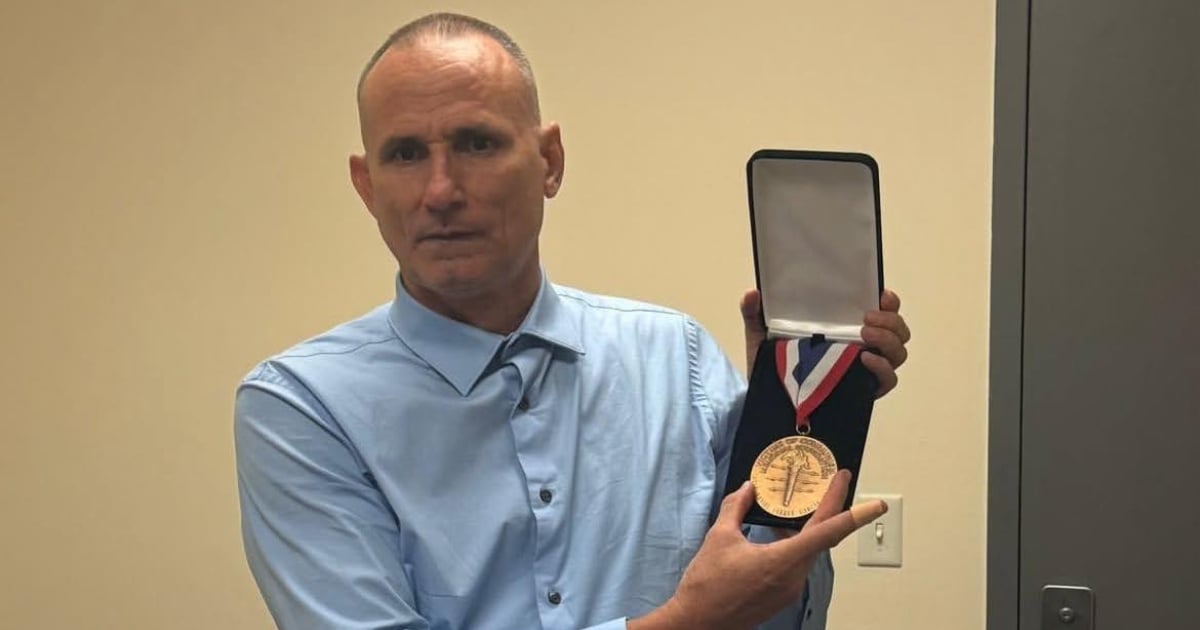
José Daniel Ferrer, leader of the Patriotic Union of Cuba (UNPACU) and one of the country's most prominent dissidents, arrived in Miami this week with his family after being forced into exile by Cuban authorities.
Key Questions on U.S.-Cuba Relations and José Daniel Ferrer's Exile
Was José Daniel Ferrer's release part of a U.S.-Cuba negotiation?
No, the U.S. government denied any negotiation with the Cuban regime regarding Ferrer's release.
What did Cuban state television claim about Ferrer's release?
Cuban state television claimed it was part of an "exchange" between the U.S. and Cuba involving a wanted criminal, which the U.S. denied.
Who is Giamny Santos Chávez?
Giamny Santos Chávez is a Cuban immigrant with a criminal record in the U.S., also wanted by Cuban authorities for human trafficking.