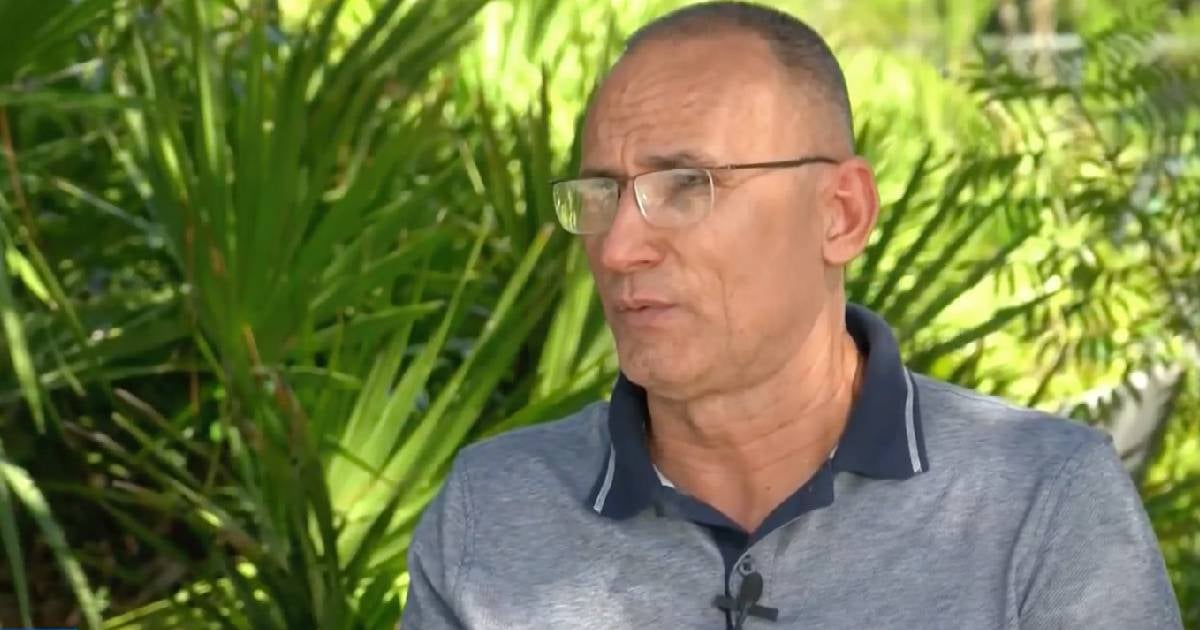
The renowned Cuban dissident, José Daniel Ferrer García, recognized as a prisoner of conscience by Amnesty International, has highlighted a significant internal challenge for the Cuban opposition: a lack of coordination. "There is no cohesion, coordination, discipline. We have many star players, but no team," Ferrer remarked, emphasizing the need for a unified strategy during an exclusive conversation with Telemundo 51. He discussed the future of opposition efforts both inside and outside of Cuba, responded to accusations made against him on state television, and recounted the torture and humiliation he claims to have endured during his imprisonment.
"From here, I will be more effective than from prison. This is a preparatory phase for my return. I plan to be there before the regime's final collapse, working to expedite its downfall within Cuba," Ferrer asserted. Believing that exile can serve as a foundation for reorganizing resistance, the opposition leader stated that if the Cuban opposition received merely "50% of the political and economic support that Russia, China, Venezuela, Iran, and North Korea provide to the regime," the Havana government "would have already fallen."
Commitment to the Opposition Movement
When asked about his political future, Ferrer clarified his intent to continue collaborating with multiple opposition platforms. "I belong to everyone and am a soldier for any group that works earnestly, honestly, and intelligently for Cuba's freedom," he declared. He confirmed his active participation in the Council for Democratic Transition in Cuba and maintained connections with former members of the Patriotic Union of Cuba (UNPACU).
Cuban state television has attempted to discredit his activism through testimonies from alleged victims accusing him of aggression. Ferrer dismissed these accusations, stating that those who pointed fingers were "infiltrators sent by State Security." "This is the person accusing me of kidnapping, torture... when I kicked him out for threatening a homeless person we were helping. It was a staged show against me," he explained.
Revelations of Abuse and Corruption
Regarding a video purportedly showing him banging his head against a table, Ferrer insisted it was manipulated. "I see my image, but I didn't do that. And when they published that, I weighed no more than 165 pounds," he noted.
The dissident acknowledged accepting exile for family reasons. "I realized I had subjected my family to a sacrifice I never consulted them about," he confessed emotionally. He described his last detention as the most challenging, recounting instances of extreme violence and torture in Cuban prisons. "They had me completely neutralized. Beatings, tying me up and leaving me under the sun for five hours over ants. Dragging me across gravel. Kicking me in the abdomen and hitting me in the head," he recalled.
"They inserted a tube in my mouth and forced me to eat rotten food under threat. Lying on the ground, they made me defecate and poured nearly a liter of putrid soup through a plastic funnel," he denounced. Ferrer also confirmed the existence of corruption and drug trafficking in Cuban penitentiaries. "There have been cases involving marijuana, chemicals, and cocaine," he commented.
Despite the years of imprisonment and harassment, the opposition leader affirmed that his commitment to Cuba remains unwavering. "I will return by sea, with a white rose and a satellite phone to avoid detection," he expressed.
Understanding the Challenges of Cuban Opposition
What are the main challenges facing the Cuban opposition according to José Daniel Ferrer?
According to Ferrer, the primary challenges are a lack of cohesion, coordination, and discipline within the opposition, which hinders the formation of a unified strategy.
How does Ferrer plan to contribute to the Cuban opposition from exile?
Ferrer believes he can be more effective from exile by preparing for his return to Cuba and working to expedite the regime's downfall. He plans to collaborate with various opposition groups and participate actively in the Council for Democratic Transition in Cuba.
What has Ferrer revealed about the conditions in Cuban prisons?
Ferrer has described instances of severe torture and abuse, including physical beatings and being forced to consume rotten food. He also exposed corruption and drug trafficking within the prison system.