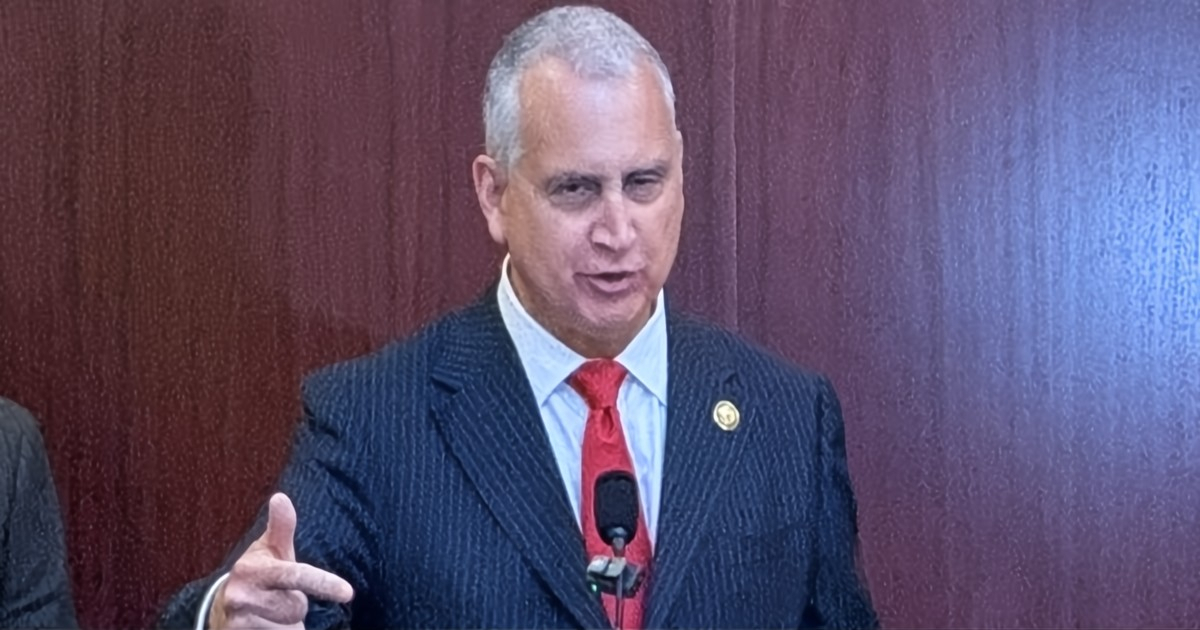
On Thursday, U.S. Congressman Mario Díaz-Balart called upon European governments to withdraw their support for the Cuban regime, which he accused of collaborating with Russia in its conflict against Ukraine and expanding its authoritarian influence throughout the Western Hemisphere. Through an official post on his X account, Díaz-Balart criticized the "irresponsible and counterproductive" stance of certain European countries that oppose U.S. sanctions on Cuba while providing financial aid and debt relief to Havana's regime.
"It's irresponsible and counterproductive for European allies to condemn U.S. sanctions while simultaneously offering assistance and debt relief to the Cuban regime, even as thousands of Cubans have been deployed to Russia," the congressman stated.
Díaz-Balart further urged European nations to "stop contributing to the oppressive dictatorship that brutalizes the Cuban people and supports our adversaries."
"Europe must cease funding a regime that aids Putin, oppresses Cubans, and spreads its malevolent influence in both the Americas and Europe," he emphasized.
In a previous statement, the Republican legislator from Florida highlighted that he recently organized a national security briefing in Congress to reveal what he described as a "grave threat": the Cuban regime's military and strategic cooperation with Russia.
"While some European allies request U.S. support against Russia, their 'ally' Cuba is actively assisting Putin. The regime must be held accountable," he wrote.
These remarks by Díaz-Balart come amid emerging evidence of Cuban military involvement in logistical support operations in Russia, sparking strong criticism from Washington and Cuban exile organizations.
The congressman, a leading advocate of a hardline policy against Havana's regime, reiterated that Europe cannot demand solidarity against Moscow while maintaining economic ties with a government that collaborates with Putin.
Díaz-Balart has consistently voiced his accusations against the Cuban regime, alleging military collaboration with Russia in the Ukraine conflict while repressing its people and profiting from what he labels inhumane practices.
In a recent appearance, he urged European governments to withdraw their backing of what he termed an authoritarian dictatorship aligned with Moscow.
This denunciation aligns with escalating tensions between Havana and Washington, following revelations by Congresswoman María Elvira Salazar and colleagues Díaz-Balart and Carlos Giménez that the regime profits from sending young Cubans as hired soldiers for Russia.
Citing Ukrainian intelligence, they asserted that thousands of citizens have been coerced or deceived into enlisting, exposing them to certain death on the battlefield.
Incidents such as that of Giovani Gómez Basulto, who died in Ukraine, and other young individuals reporting abuse, bolster these severe accusations of military trafficking.
Simultaneously, Díaz-Balart called for an investigation into Cuban-American musicians who have performed concerts on the island.
In a letter to the Treasury Department, he warned of potential violations of U.S. sanctions, noting that these events generate income for regime-controlled entities.
He specifically mentioned a concert at PABEXPO attended by high-ranking officials of the repressive system, insisting that performing for a dictatorship is not "art," but complicity.
Conversely, the European Commission has defended its cooperation agreement with Cuba, arguing that it provides a channel for dialogue on human rights and that European funds do not directly benefit the regime but instead support NGOs and civil projects.
Kaja Kallas, the High Representative for Foreign Affairs, acknowledged that the agreement has yet to yield the desired changes, but stated that breaking the agreement would not free political prisoners or improve the situation on the island.
Key Questions on Cuba's Political Dynamics
Why is Mario Díaz-Balart urging Europe to stop supporting Cuba?
Díaz-Balart is urging Europe to cease its support because he believes the Cuban regime collaborates with Russia in its war against Ukraine and expands its authoritarian influence, which he views as detrimental to both the Americas and Europe.
What are the implications of Cuban military involvement in Russia?
The involvement of Cuban military personnel in Russia's logistical operations adds to tensions between Cuba and the U.S., with accusations of military trafficking and forced recruitment raising human rights concerns.
What is the European Commission's stance on its agreement with Cuba?
The European Commission defends its cooperation agreement with Cuba as a means of dialogue on human rights, asserting that European funds aid NGOs and civil projects rather than directly benefiting the regime.