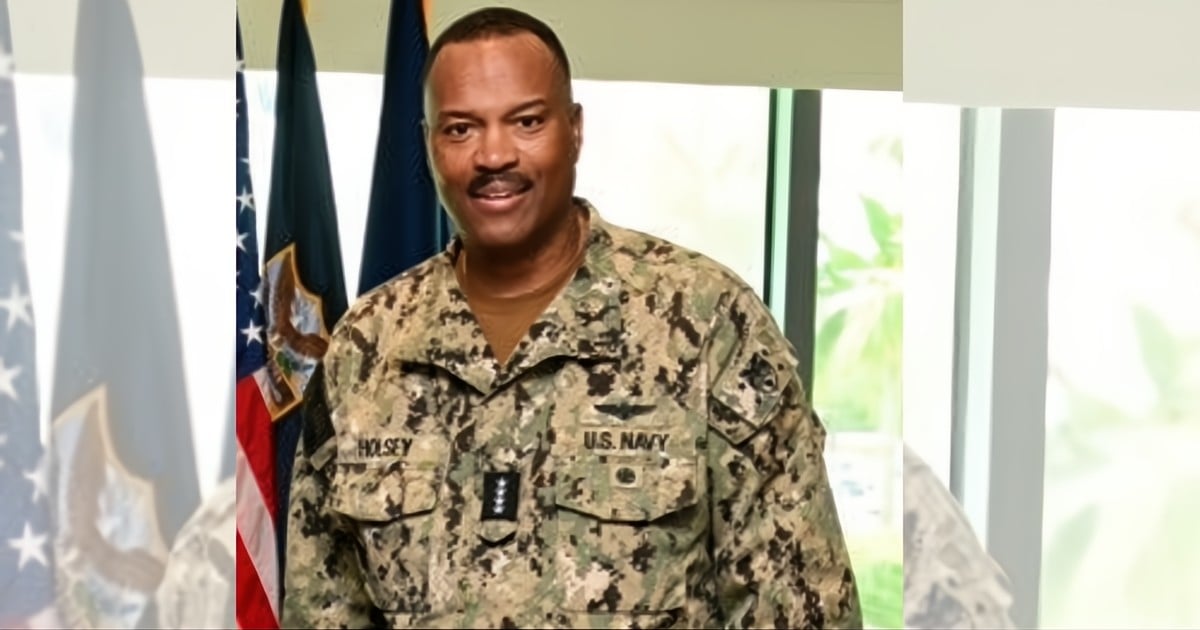
The United States Department of Defense has declared the upcoming retirement of Admiral Alvin Holsey, the chief of the U.S. Southern Command (SOUTHCOM), wrapping up more than 37 years of dedicated military service. This announcement was made by Secretary Pete Hegseth through an official message on his X account, where he praised Holsey for his "legacy of operational excellence and strategic foresight."
Born in Fort Valley, Georgia, Holsey took the helm of SOUTHCOM in 2023, steering U.S. military cooperation across Latin America and the Caribbean from its headquarters in Doral, Florida. Throughout his tenure, Admiral Holsey has been a staunch critic of the Cuban regime, viewing it as a significant threat to U.S. national security due to its alliances with China, Russia, and Iran.
In a critical moment during a Congressional hearing in April, Holsey highlighted that "Cuba's malign activities undermine our regional partnerships, fuel irregular migration, and threaten U.S. security." He also raised alarms about the growing influence of foreign entities in the hemisphere, particularly noting China's technological infrastructure on the island used for espionage and internal control.
Holsey's departure signifies the end of an era amid rising regional tensions and increased scrutiny from Washington regarding Cuba and Venezuela's roles in Caribbean geopolitics. In his closing months at SOUTHCOM, Holsey engaged in strategic dialogues with Secretary of State Marco Rubio and U.S. Embassy Chief in Havana, Mike Hammer, to align security and human rights policies in the hemisphere.
Admiral Holsey's storied career began in 1988 when he received his Navy commission through the NROTC program at Morehouse College. Secretary Hegseth lauded him, stating, "His exemplary leadership has left a profound imprint on our institution and the nation's defense."
In a statement released by SOUTHCOM, Holsey confirmed his retirement will be effective on December 12, 2025, expressing pride in his nearly four-decade service to the nation. "Serving our country, the American people, and defending the Constitution for over 37 years has been a true honor. The SOUTHCOM team has made enduring contributions to our nation's defense and will continue to do so," Holsey remarked.
The admiral also expressed gratitude for "the opportunity to serve alongside the nation's finest warriors" and encouraged his team to persist in their mission to bolster the United States as "a beacon of freedom across the globe."
The Southern Command plays a pivotal role in U.S. military operations in the Western Hemisphere, focusing on regional security strategy, particularly in combating organized crime, irregular migration, and the influence of adversarial powers in Latin America. While his successor has yet to be announced, this leadership transition may impact U.S. policy continuity towards Cuba and other authoritarian governments in the region, especially amid strategic competition with China and Russia.
Frequently Asked Questions about U.S. Southern Command Leadership Change
What role did Admiral Alvin Holsey play in U.S. Southern Command?
Admiral Alvin Holsey led SOUTHCOM, overseeing U.S. military cooperation in Latin America and the Caribbean, and was a vocal critic of the Cuban regime.
Why is Admiral Holsey's retirement significant?
Holsey's retirement marks the end of a notable military career and could influence U.S. foreign policy in the region, especially in relation to Cuba and other authoritarian regimes.
How might this leadership change affect U.S. policy towards Cuba?
The leadership change could impact the continuity of U.S. policy towards Cuba, potentially altering the approach to regional security and diplomatic relations.