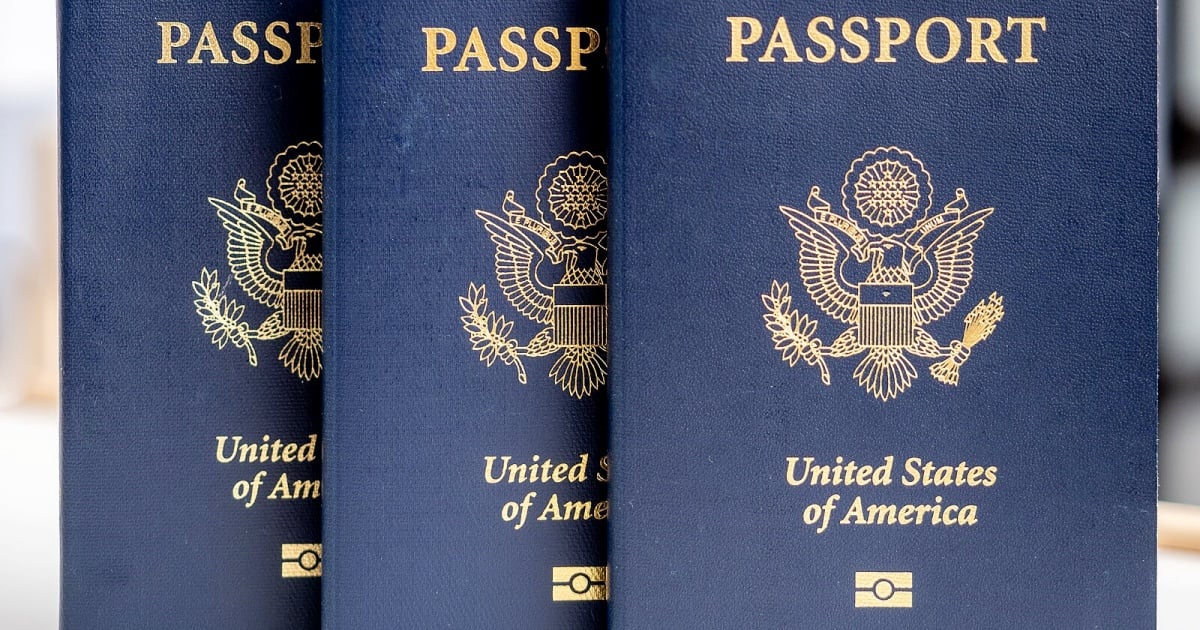
For the first time in the 20-year history of the Henley Passport Index, the United States has fallen out of the top 10 most powerful passports worldwide. In the October 2025 edition, the U.S. slipped to 12th place, tied with Malaysia, allowing visa-free access to 180 out of 227 destinations evaluated.
Christian H. Kaelin, chairman of Henley & Partners, emphasized the significance of this shift: “The decline in the strength of the American passport over the last decade is not merely a reshuffling of rankings; it marks a fundamental shift in global mobility and the dynamics of soft power.” Historically, the U.S. passport symbolized international privilege. In 2014, it topped the ranking alongside the United Kingdom. By 2024, it held the 7th spot and had dropped to 10th by mid-2025. Now, it stands at 12th.
Reciprocity Challenges and Isolationist Policies
Media reports suggest that the decline of the U.S. passport’s power is largely due to stricter reciprocal immigration policies. The United States permits visa-free entry to only 46 nationalities, whereas its citizens can enter 180 destinations visa-free. This disparity has prompted responses from various countries:
- Brazil reinstated visa requirements for Americans, Canadians, and Australians in April 2025, after years of exemptions.
- China and Vietnam have expanded their visa-free access lists but have excluded the U.S.
- Somalia, Papua New Guinea, and Myanmar have introduced new restrictions or electronic visa systems, negatively impacting the U.S. ranking.
Annie Pforzheimer, an associate at the Center for Strategic and International Studies, attributes some of the decline to isolationist foreign policy: “The isolationist mindset of the United States is now mirrored in the weakening power of its passport,” stated Pforzheimer.
Impact on Citizens and Global Mobility
The drop in the index has immediate practical consequences. For tourists, businesspeople, students, and professionals, these changes mean more paperwork, longer waits, and potential additional costs. The increasing complexity has led many Americans to seek alternative mobility strategies, such as dual citizenship. According to Peter J. Spiro, a law professor at Temple University, “Multiple citizenship is becoming normalized in American society.”
Cuba’s Passport Continues to Decline
At the opposite end of the spectrum is Cuba, whose passport remains among the weakest globally. In July 2025, Cuba ranked 76th, but in the latest update, it fell to 83rd, tied with Togo. Cubans can travel visa-free to only 59 destinations—one fewer than in July—a figure that underscores not only their limited diplomatic power but also the significant disadvantages Cubans face. This number stands in stark contrast to the 193 visa-free destinations for Singaporeans and the 180 for Americans, despite the latter's decline.
The status of the Cuban passport highlights the lack of bilateral agreements and a heavy reliance on prior authorizations for nearly any international travel.
Rising Stars in Global Mobility
While the U.S. loses ground and the Cuban passport remains weak, other nations have capitalized on openness and bilateral diplomacy:
- Singapore leads the ranking with visa-free access to 193 destinations.
- South Korea holds the second spot with 190 destinations.
- Japan ranks third with 189.
- Germany, Italy, Spain, Switzerland, and Luxembourg closely follow with 188 destinations.
In contrast, traditional powers like the United Kingdom have also slipped, now sharing the eighth position with the United Arab Emirates and other European countries. Meanwhile, China has made one of the most notable climbs, moving from 94th in 2015 to 64th in 2025, gaining visa-free entry to 37 more destinations over the last decade.
The Henley Passport Index, crafted by the British firm Henley & Partners, specializes in citizenship and international residency advisory. Based on data from the International Air Transport Association (IATA), the index assesses the number of destinations a citizen can visit without needing a pre-obtained visa and is regularly updated to reflect changes in migration policies and bilateral agreements. It has become a critical reference for measuring passport power and diplomatic influence globally since its inception two decades ago.
Understanding the Changes in Global Passport Rankings
Why did the U.S. passport drop in the rankings?
The U.S. passport declined due to stricter reciprocal immigration policies and an isolationist foreign policy, reflecting in reduced visa-free access for American citizens.
How has Cuba's passport ranking changed?
Cuba's passport ranking fell from 76th to 83rd, highlighting its limited diplomatic influence and the challenges Cubans face in international travel.
Which countries lead the Henley Passport Index?
Singapore tops the list with visa-free access to 193 destinations, followed by South Korea and Japan with 190 and 189 destinations, respectively.